The New Contrarian Investment Strategy by David Dreman is a 1982 economics book about contrarian investing, behavioral finance, value investing. Low P/E stocks have historically outperformed high P/E stocks over long time horizons, not because investors are irrational but because their rationality is systematically distorted in predictable ways.
Summary
The New Contrarian Investment Strategy is David Dreman's argument that systematic investor overreaction to both good and bad news creates predictable, persistent mispricings in the stock market that a disciplined contrarian investor can exploit. Published in 1982 and drawing on several years of empirical research, the book predated what became behavioral finance by a decade and offered one of the first systematic, data-supported cases for a value-oriented, low-expectation investing approach.
Dreman's central finding is that stocks with low price-to-earnings ratios — the so-called "out of favor" stocks that analysts and investors have given up on — consistently outperform stocks with high P/E ratios over long time horizons. The explanation he offers is psychological rather than purely financial: investors systematically overestimate the future prospects of glamour stocks (high P/E, high expectations) and underestimate the recovery potential of fallen favorites (low P/E, low expectations). Because expectations are too extreme in both directions, the market regularly delivers positive surprises to low-expectation stocks and disappointments to high-expectation ones.
The psychological mechanism Dreman identifies — which he calls the availability heuristic in investing — is that recent performance, dramatic events, and analyst consensus have disproportionate weight on investor judgment, and that this effect is systematic rather than random. It cannot be arbitraged away by rational investors because the behavioral biases are themselves stable and shared. This anticipates by a decade the more formal treatment of overreaction in the behavioral finance work of De Bondt and Thaler.
The book's practical recommendations are straightforward: buy stocks with low P/E ratios, low price-to-book, or low price-to-cash-flow from sectors currently out of favor, hold them patiently, and resist the narrative pull that makes high-expectation stocks feel like obvious buys. Dreman is specific about time horizons and realistic about the psychological difficulty of maintaining a contrarian position when the consensus is going the other way. Readers should note the book is from 1982 and some sections read as a period document, but the behavioral argument has only accumulated more empirical support since.

Talk to The New Contrarian Investment Strategy like its author wrote you back.
Get the ideas that fit your life — not generic summaries.
- Chat with the book
- Audiobook-style main ideas
- Adapts to your life and goals
- Helps you take action
Key takeaways
- 1.
Low P/E stocks have historically outperformed high P/E stocks over long time horizons, not because investors are irrational but because their rationality is systematically distorted in predictable ways.
- 2.
Investors overreact to both good and bad news, creating excess pessimism about out-of-favor stocks and excess optimism about favored ones. Mean reversion in expectations is what drives contrarian returns.
- 3.
The availability heuristic means recent dramatic events — good earnings, scandals, rapid growth — have disproportionate weight on analyst forecasts and investor sentiment.
- 4.
Analysts systematically overestimate the persistence of high-growth trajectories and underestimate recovery from low periods. This forecast error is the central inefficiency contrarian investors exploit.
- 5.
Holding a contrarian position is psychologically very difficult because the stocks feel wrong and the consensus feels right. The difficulty is structural: if it were easy, the mispricing would be arbitraged away.
- 6.
The contrarian strategy works over three-to-five-year horizons. Short-term volatility on out-of-favor stocks can be severe, and the strategy requires patience most investors cannot sustain.
- 7.
Dreman's framework extends to price-to-book and price-to-cash-flow in addition to P/E. The common thread is buying low-expectation assets rather than trying to identify high-quality companies at high prices.
Discussion questions
Use these on your own, with a book club, or as chat starters in Superbook. Book club version, ready to copy or print →
- 1.
Dreman's argument is that investors systematically overreact. How does that claim square with the efficient market hypothesis, and which evidence do you find more persuasive?
- 2.
The contrarian strategy requires buying stocks that feel uncomfortable — stocks whose stories are bad, whose charts are ugly, whose analysts have abandoned them. Have you ever deliberately bought something on a bad narrative? What happened?
- 3.
Dreman identifies the availability heuristic as a core driver of mispricing. Where else in your financial or business decisions does the availability of vivid recent information distort your judgment?
- 4.
The strategy has historically worked, but any strategy that becomes widely known faces pressure from arbitrage. Is the contrarian approach still exploitable, or has awareness of it closed the gap?
- 5.
Dreman says the psychological difficulty of staying contrarian is itself part of why the returns persist. What mechanisms do you use to maintain a position that consensus views as obviously wrong?
- 6.
Low P/E stocks can be low-P/E for fundamental reasons — genuine business deterioration — not just for behavioral reasons. How do you distinguish value traps from genuine mispricing?
- 7.
Analysts' forecasts are systematically optimistic about high-growth companies. Why doesn't competition among analysts correct that bias, and what does its persistence tell you about incentive structures in the industry?
- 8.
Dreman published this in 1982. Which of his behavioral arguments have accumulated more empirical support since then, and which have been challenged?
- 9.
The book recommends three-to-five-year holding horizons. What institutional structures — quarterly reporting, career incentives, fund mandates — work against that kind of patience?
- 10.
Dreman is critical of technical analysis and chart-reading. Is that dismissal supported by the same evidence base as his defense of value investing, or is it a separate argument?
- 11.
If you could apply the contrarian approach to a domain outside investing — to talent acquisition, urban development, research priorities — what would that look like?
Themes
Frequently asked questions
-
Is The New Contrarian Investment Strategy still worth reading?
Yes, particularly for the behavioral argument. The specific market data is dated, but the psychological mechanisms Dreman identifies — overreaction, availability bias, analyst herding — have been extensively validated since 1982. The conceptual framework remains sound.
-
How does this differ from value investing in the Buffett tradition?
Both buy undervalued stocks, but Dreman's approach is more mechanical — buy low P/E systematically — while Buffett's focuses on the quality of the underlying business. Dreman is more interested in the behavioral error creating the mispricing than in the business fundamentals underlying the price.
-
Has the contrarian strategy's edge been arbitraged away?
The evidence is mixed. Value investing underperformed significantly in the 2010s before recovering in the early 2020s. Dreman would argue that the psychological biases that create the premium are stable enough to prevent permanent arbitrage, but the strategy clearly has cycles.
-
What's the main risk of a contrarian approach?
Value traps: stocks that are cheap because the business is genuinely deteriorating rather than temporarily out of favor. Dreman's screens for low P/E, low price-to-book, and low price-to-cash-flow help, but they don't eliminate the risk of buying a declining business at a low price.
-
Who should read this?
Individual investors considering a systematic value approach, anyone interested in the early history of behavioral finance, and people who want to understand why they consistently make the same mistakes when evaluating investments.
Similar books
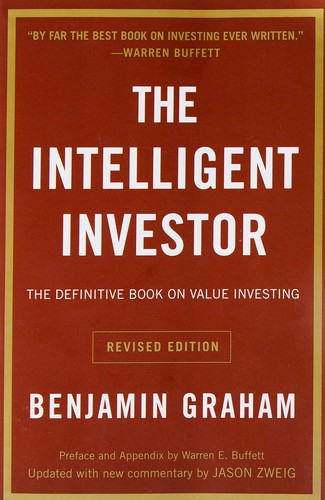
The Intelligent Investor
Benjamin Graham
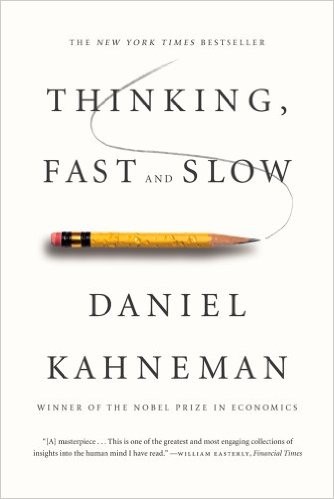
Thinking, Fast and Slow
Daniel Kahneman
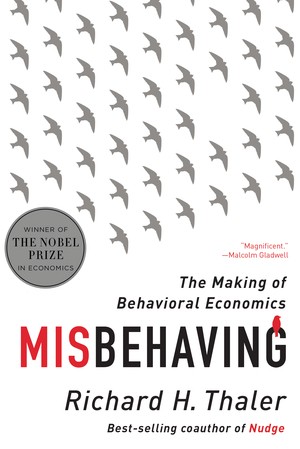
Misbehaving: The Making of Behavioral Economics
Richard H. Thaler
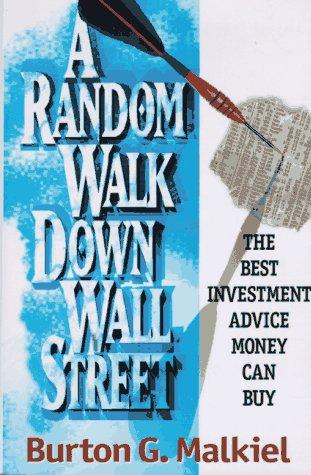
A Random Walk Down Wall Street
Burton G. Malkiel
