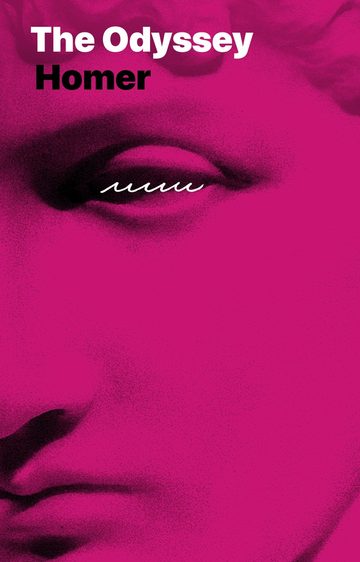
The Odyssey by Homer is a 1488 classics book about homecoming, the hero's journey, cunning and wit. The Odyssey is the archetypal homecoming story. Its Greek word nostos — the longing to return home — is the root of 'nostalgia' and sets the pattern for every journey-and-return tale since.
Summary
The Odyssey is Homer's epic poem of homecoming — the ten-year struggle of Odysseus, king of Ithaca, to return from the Trojan War to his wife Penelope and his son Telemachus. Composed in ancient Greek around the 8th century BCE and rooted in a long oral tradition of sung poetry, it is, with the Iliad, one of the two foundational works of Western literature and the archetype of the journey story.
The poem does not begin at the beginning. It opens in medias res, twenty years after Odysseus first left home: Ithaca is overrun by suitors devouring his estate and pressing Penelope to remarry, while the hero himself is held far away on the island of the nymph Calypso. The first four books — the Telemachy — follow his son Telemachus as he sets out to learn his father's fate. Only then does the story reach Odysseus, freed at last by the gods, shipwrecked among the seafaring Phaeacians, to whom he tells the tale of his wanderings.
Those wanderings are the poem's most famous stretch: the forgetful ease of the Lotus-Eaters; the blinding of the Cyclops Polyphemus, which earns Odysseus the lasting wrath of Poseidon; the witch Circe, who turns his men into swine; a descent into the land of the dead; the song of the Sirens; the twin monsters Scylla and Charybdis; and the fatal slaughter of the Sun-god's cattle, which costs him his entire crew. He alone survives.
The second half is a different kind of story — a homecoming and a reckoning. Disguised as a ragged beggar, Odysseus returns to Ithaca, is recognized only by his old dog and his childhood nurse, and with Telemachus and a few loyal servants turns the contest of the great bow into the destruction of the suitors. The poem closes not on the slaughter but on a reunion: Odysseus and the equally cunning Penelope, who must prove their identities to each other after twenty years apart.
Its enduring power lies less in monsters than in its subjects: the longing for home (nostos), the sacred code of hospitality (xenia), the triumph of cunning intelligence (metis) over brute force, and the questions of identity, loyalty, and endurance that make a nearly three-thousand-year-old poem still read like it was written about being human.
The story of the Odyssey, book by book
A quick map of the poem’s twenty-four books, in four movements.
The Telemachy — Ithaca without its king (Books 1–4)
Odysseus has been gone twenty years. His palace on Ithaca is overrun by suitors eating him out of house and home and pressing Penelope to declare him dead and remarry. Prompted by the goddess Athena, his son Telemachus — a baby when Odysseus sailed for Troy — sets out to Pylos and Sparta to ask his father’s old comrades whether he still lives. It is a coming-of-age prologue that shows us the home worth returning to before we ever meet the man returning to it.
Calypso and the Phaeacians (Books 5–8)
We finally reach Odysseus, held for seven years by the nymph Calypso, who offers him immortality if he will only stay. He refuses; he wants his mortal wife and his rocky island. Released at the gods’ command, he is shipwrecked and washes up among the Phaeacians, a hospitable seafaring people whose king promises to carry him home — and asks him first to tell his tale.
The wanderings — Odysseus’s own tale (Books 9–12)
The poem’s greatest hits, narrated by Odysseus himself: the drugged ease of the Lotus-Eaters; the Cyclops Polyphemus, blinded by a sharpened stake and the trick of the name “Nobody,” which earns Odysseus the undying wrath of Poseidon; the bag of winds; the witch Circe, who turns his men to swine; the voyage to the land of the dead to consult the prophet Tiresias; the Sirens, whose song he hears lashed to the mast; the monsters Scylla and Charybdis; and the cattle of the Sun, whose slaughter by his starving crew dooms every last one of them. Odysseus alone survives to wash up on Calypso’s shore — where the flashback began.
The homecoming and the reckoning (Books 13–24)
Carried home at last, Odysseus returns in disguise as a ragged beggar. He is recognized only by his ancient dog Argos, who dies content at the sight of his master, and by his old nurse, who knows him by a scar. Reunited in secret with Telemachus, he endures the suitors’ insults, then springs the trap: Penelope’s contest of the great bow, which only Odysseus can string. The reckoning is swift and total. But the poem’s final note is not the slaughter — it is the reunion, Penelope testing her husband with the secret of their marriage bed, and two cunning people, twenty years apart, at last certain of each other.
The ideas that keep it alive
Nostos — homecoming. The Greek word for the return home gives us “nostalgia.” The whole poem aches toward Ithaca, and asks what home even means after twenty years away.
Xenia — hospitality. The sacred bond between host and guest is the poem’s moral yardstick. Nearly every episode tests it: honored by the Phaeacians, monstrously broken by the man-eating Cyclops, and abused by the suitors — whose deaths it ultimately justifies.
Metis — cunning. Odysseus wins by wits, not strength. Homer’s very first word for him is polytropos, “of many turns”: the man who lies, disguises, and out-thinks his way home.
Identity. Names are withheld, disguises worn, recognitions delayed. To come home is to be known again, and the poem’s most moving moments are all acts of recognition.
Which translation should you read?
Any good modern translation will serve you well. Robert Fagles (1996) is the popular favorite for dramatic, readable verse. Emily Wilson’s 2017 translation — the first into English by a woman — is prized for its clarity and momentum and makes an excellent first Odyssey. Fitzgerald reads as lyrical poetry; Lattimore stays closest to the Greek line. You can’t go badly wrong: pick the voice you enjoy and let the story carry you.
Talk to The Odyssey like its author wrote you back.
Get the ideas that fit your life — not generic summaries.
- Chat with the book
- Audiobook-style main ideas
- Adapts to your life and goals
- Helps you take action
Key takeaways
- 1.
The Odyssey is the archetypal homecoming story. Its Greek word nostos — the longing to return home — is the root of 'nostalgia' and sets the pattern for every journey-and-return tale since.
- 2.
Odysseus is defined not by strength but by metis, cunning intelligence. Homer's first word for him is polytropos, 'the man of many turns' — it is trickery, not muscle, that gets him home.
- 3.
Hospitality (xenia) is the poem's moral measuring stick. Every host is a test: the Phaeacians honor the code, the Cyclops shatters it by eating his guests, and the suitors damn themselves by abusing Odysseus's.
- 4.
The famous adventures — Cyclops, Circe, the Sirens, Scylla and Charybdis — are told as a flashback, in Odysseus's own voice, to the Phaeacians. They are a story within the story.
- 5.
Survival is not triumph. Odysseus reaches Ithaca having lost every man he set out with; the poem is as much about the cost of the journey as its completion.
- 6.
Penelope is Odysseus's equal in cunning, not his prize. Her trick of the loom — weaving a shroud by day and unpicking it by night — holds off the suitors for years, and she out-tests him at the very end.
- 7.
The gods are active characters. Athena engineers Odysseus's return out of admiration for his wits, while Poseidon prolongs his suffering to avenge the blinded Cyclops.
- 8.
Identity and disguise drive the second half. Odysseus withholds his name — famously calling himself 'Nobody' to the Cyclops — and comes home in rags, so that recognition, by his dog, his nurse, his son, and his wife, becomes the emotional heart of the poem.
Discussion questions
Use these on your own, with a book club, or as chat starters in Superbook. Book club version, ready to copy or print →
- 1.
Homer opens with Odysseus already twenty years gone and begins the poem with his son, not the hero. Why start a homecoming story so far from home, and with the boy who barely remembers his father?
- 2.
Odysseus survives by cunning — lies, disguises, false names. Do his deceptions make him more admirable or less? Where is the line between clever and untrustworthy?
- 3.
Blinding Polyphemus is a brilliant escape, but Odysseus can't resist shouting his real name as he sails away, which brings Poseidon's curse down on him. What does that moment reveal about him?
- 4.
Every stop tests the ancient code of hospitality. What is the modern equivalent of xenia, and do we still hold hosts and guests to any comparable standard?
- 5.
Odysseus arrives home alone, having lost every man he set out with. Is he a hero, a failed leader, or both? How much of the loss is his fault?
- 6.
Penelope waits twenty years but is never passive — she schemes, tests, and delays. Is she the poem's other great strategist? How has the way readers see her changed over time?
- 7.
Odysseus chooses mortal Penelope and home over immortality with Calypso. Would you make the same choice? What is the poem saying about what makes a life worth living?
- 8.
Even after Odysseus reveals himself, the reunion is delayed — Penelope tests him with the secret of their marriage bed. Why does Homer make the two of them prove themselves to each other?
- 9.
The slaughter of the suitors is total and merciless. Is it justice, or is it excessive? Does the poem want us to be comfortable with it?
- 10.
In the underworld, the dead Achilles says he'd rather be a landless servant among the living than king of all the dead. How does the Odyssey's view of glory differ from the Iliad's?
- 11.
Which of Odysseus's trials — the Lotus-Eaters' forgetting, the Sirens' song, Circe's island — is most tempting to you, and what does that say about what might keep you from getting home?
- 12.
Three thousand years on, the Odyssey is still the template for the journey story. Which modern books or films most clearly inherit its shape, and what do they keep or discard?
Themes
Frequently asked questions
-
What is the Odyssey about?
The Odyssey is Homer's epic poem about Odysseus's ten-year struggle to sail home to Ithaca after the Trojan War, facing monsters, gods, and temptations, while his wife Penelope and son Telemachus hold off suitors at home. At its heart it is a story about homecoming, cunning, and endurance.
-
Who wrote the Odyssey, and when?
It is attributed to Homer and was composed in ancient Greek around the 8th century BCE, emerging from a long oral tradition of sung poetry before it was written down. Whether a single poet named Homer wrote it — the 'Homeric Question' — has never been settled.
-
Do I need to read the Iliad before the Odyssey?
No. The Odyssey stands entirely on its own and is set after the Trojan War the Iliad describes. Reading the Iliad first adds context — it's the war Odysseus is returning from — but the Odyssey assumes no knowledge of it and is often the easier of the two to start with.
-
What is the best translation of the Odyssey?
It depends what you want. Robert Fagles (1996) is prized for readable, dramatic verse; Robert Fitzgerald's is lyrical; Richmond Lattimore's stays closest to the Greek. Emily Wilson's 2017 translation — the first into English by a woman — is celebrated for its clarity and pace and makes an excellent first read.
-
What are the main monsters and episodes in the Odyssey?
The best known are the Cyclops Polyphemus, the witch Circe who turns men into pigs, the descent to the underworld, the Sirens and their song, the sea-monsters Scylla and Charybdis, the nymph Calypso, and the cattle of the Sun. Most are told as a flashback, in Odysseus's own voice.
-
Is the Odyssey worth reading today?
Yes. Beyond its place at the root of Western literature, it's a genuinely gripping adventure and the original template for the journey story. Its themes — longing for home, the pull of temptation, loyalty, and getting by on your wits — remain immediate, and modern translations read quickly.