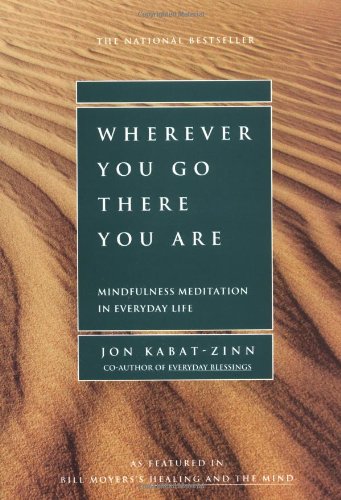
Mindfulness for Beginners by Jon Kabat-Zinn is a 2012 health book about mindfulness, meditation, awareness. Mindfulness is paying deliberate, non-judgmental attention to the present moment — to what is actually happening in the mind and body right now, not to thoughts about it.
Summary
Mindfulness for Beginners is Jon Kabat-Zinn's entry-level introduction to mindfulness meditation. Kabat-Zinn, who founded the Mindfulness-Based Stress Reduction program at the University of Massachusetts in 1979 and has done more than almost anyone to bring meditative practice into mainstream medicine, wrote the book as an accessible companion for people who are curious about mindfulness but have no prior experience or have tried and struggled.
The book's central argument is that mindfulness — paying deliberate, non-judgmental attention to present-moment experience — is not a technique to be added to an already busy life but a fundamental reorientation of how one relates to experience itself. Kabat-Zinn distinguishes between the mode of doing, which is how most people operate most of the time, and the mode of being, which involves inhabiting experience directly without the constant commentary of evaluation and planning. He frames mindfulness not as relaxation or stress relief, though those may follow, but as clarity about what is actually happening in the mind and body.
The practical guidance is straightforward. Kabat-Zinn walks through basic sitting meditation, body scan practice, and mindful breathing. The book is short and does not attempt to teach everything at once. Instead it tries to convey the spirit of the practice — the quality of attention being cultivated — rather than offering a curriculum of techniques. He draws on decades of clinical experience to address common objections: the mind won't stop, there's no time, it's religious, it's too simple.
What the book does well is communicate the attitudinal foundations of mindfulness — non-striving, beginner's mind, acceptance, letting go — in plain language without losing their substance. What it doesn't do is provide a structured eight-week course or address more complex applications to anxiety, depression, or pain in depth. Those who are ready to go deeper will need MBSR itself or more comprehensive books. But as a first orientation to what mindfulness actually is and is not, it is clear and trustworthy.
Talk to Mindfulness for Beginners like its author wrote you back.
Get the ideas that fit your life — not generic summaries.
- Chat with the book
- Audiobook-style main ideas
- Adapts to your life and goals
- Helps you take action
Key takeaways
- 1.
Mindfulness is paying deliberate, non-judgmental attention to the present moment — to what is actually happening in the mind and body right now, not to thoughts about it.
- 2.
The mode of being, in which experience is inhabited directly, is different from the mode of doing, which involves constant evaluation, planning, and reaction. Most people rarely operate in the first mode.
- 3.
Beginner's mind means approaching each moment with openness and curiosity rather than assuming you already know what you're encountering. Experts often lose this quality.
- 4.
Mindfulness is not relaxation, stress relief, or emptying the mind. It is the cultivation of awareness. Relaxation may follow as a byproduct, but it is not the goal.
- 5.
Formal practice — sitting meditation, body scan, mindful walking — trains the quality of attention that can then be applied informally throughout daily life.
- 6.
Acceptance in mindfulness does not mean passive resignation. It means clearly seeing what is present before deciding what to do, rather than reacting automatically to avoid it.
- 7.
The breath is used as an anchor for attention not because it is special but because it is always present. When the mind wanders, returning to the breath is the practice — not a failure.
Discussion questions
Use these on your own, with a book club, or as chat starters in Superbook.
- 1.
Kabat-Zinn draws a sharp distinction between the mode of doing and the mode of being. Which mode do you spend most of your day in, and what would it take to shift the balance?
- 2.
Beginner's mind requires treating the familiar as if you were encountering it for the first time. Where in your life have you most lost this quality?
- 3.
The book frames mindfulness as a relationship to experience rather than a technique. Does that reframing change whether you'd be willing to try it?
- 4.
Kabat-Zinn says the mind wandering is not the obstacle — it is the practice. How does that change how you would evaluate whether a meditation session went 'well'?
- 5.
Acceptance is described as clearly seeing what is present, not endorsing it. Where in your life do you confuse acceptance with resignation?
- 6.
Many people report difficulty meditating because they feel they're doing it wrong. What does that reaction itself reveal about how they're relating to the practice?
- 7.
Kabat-Zinn describes patients who used mindfulness to manage chronic pain and severe anxiety. What are the limits of this kind of intervention, and where would it not be sufficient?
- 8.
How has the commercialization of mindfulness — apps, workplace wellness programs, ten-minute guided sessions — changed what the word means and whether it retains its substance?
- 9.
Non-striving is one of the core attitudes Kabat-Zinn lists. Is it genuinely possible to practice something without wanting to improve at it? What would that even look like?
- 10.
Which aspect of mindfulness practice — non-judgment, patience, trust, letting go, acceptance — feels most foreign to how you currently operate?
- 11.
Kabat-Zinn founded MBSR in a hospital context, treating pain and stress. Does that clinical origin make the practice more credible to you, or is its cultural and spiritual history more relevant?
Themes
Frequently asked questions
-
Is Mindfulness for Beginners actually for beginners?
Yes. It is deliberately short and non-technical. Kabat-Zinn explains core concepts without assuming prior practice and without getting deep into Buddhist philosophy. If you've never meditated or tried and abandoned it, this is a reasonable starting point.
-
How long does it take to read Mindfulness for Beginners?
Most readers finish it in two to three hours. It was originally published as a book-and-CD set, so it's designed to be read slowly alongside practice rather than consumed quickly.
-
What is the difference between mindfulness and meditation?
Kabat-Zinn treats meditation as the formal practice and mindfulness as the quality of attention it cultivates. Mindfulness can be applied informally in any moment; meditation is the dedicated practice that trains it.
-
Is mindfulness secular or religious?
Kabat-Zinn's MBSR framework deliberately strips out religious and Buddhist framing to make mindfulness accessible in clinical settings. The practices are drawn from Buddhist traditions but are presented without doctrinal content. Whether that stripping is appropriate is a debate in the field.
-
What should I read after Mindfulness for Beginners?
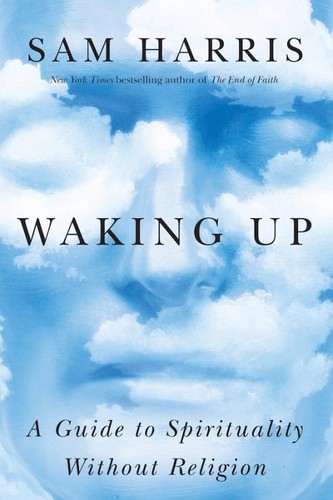
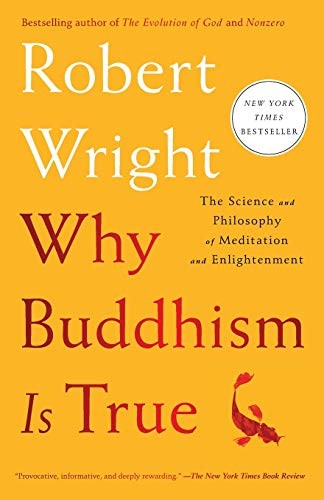
Full Catastrophe Living by Kabat-Zinn himself provides the complete MBSR framework in depth. Why Buddhism Is True by Robert Wright is a rigorous look at the science behind what mindfulness achieves. Waking Up by Sam Harris offers a more secular philosophical treatment.