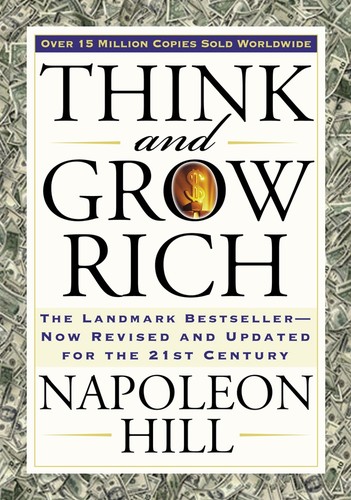
Think and Grow Rich by Napoleon Hill is a 1937 self-help book about success mindset, goal setting, persistence. A definite, written goal with a specific deadline and a clear plan creates focus that diffuse wishing cannot. Hill calls this 'definiteness of purpose.'
Summary
Think and Grow Rich, published in 1937, is Napoleon Hill's synthesis of interviews conducted over twenty years with hundreds of successful Americans, including Andrew Carnegie, Henry Ford, and Thomas Edison. The book presents thirteen principles Hill claims are common to people who accumulate wealth: desire, faith, autosuggestion, specialized knowledge, imagination, organized planning, decision, persistence, the master mind, the mystery of sex transmutation, the subconscious mind, the brain, and the sixth sense. Hill argues that wealth and success begin not with action but with a definite, intensely held thought.
The core claim is that a burning, specific desire — written down, reviewed twice daily, visualized as already achieved — sets in motion forces both psychological and, Hill implies, metaphysical that attract the resources and people needed to fulfill it. The auto-suggestion chapter instructs readers to read their goal statement aloud with emotion each morning and evening. The Master Mind chapter argues that a small group of people united around a common purpose develops collective intelligence beyond what any member possesses individually.
Reading Think and Grow Rich today requires calibration. It was written during the Depression, its examples are exclusively American men of the early 20th century, and some of its language is dated. The metaphysical claims — about vibrations, the ether, and invisible forces — have no empirical basis. But stripped of the cosmology, the behavioral observations are real: clear goals reduce cognitive noise, written commitments increase follow-through, persistent effort tends to outlast opposition, and social networks matter enormously for achieving difficult things.
The book's influence is disproportionate to its analytical rigor. It has sold over 100 million copies and shaped an entire genre of success literature. For historians of the genre or anyone wanting to understand where modern personal development came from, it remains essential. For practical guidance, it is best read as a historical document with a few durable ideas embedded in considerable mysticism.
Talk to Think and Grow Rich like its author wrote you back.
Get the ideas that fit your life — not generic summaries.
- Chat with the book
- Audiobook-style main ideas
- Adapts to your life and goals
- Helps you take action
Key takeaways
- 1.
A definite, written goal with a specific deadline and a clear plan creates focus that diffuse wishing cannot. Hill calls this 'definiteness of purpose.'
- 2.
Persistence in the face of setbacks distinguishes people who eventually succeed from those who stop before reaching the breakthrough point.
- 3.
The Master Mind principle: a small group of aligned, committed people develops collective intelligence and social capital beyond what any individual could generate alone.
- 4.
Autosuggestion — repeatedly stating a clear goal with emotion — works as a mechanism for directing conscious attention and reinforcing commitment, whatever one thinks of the metaphysics.
- 5.
Specialized knowledge combined with imagination creates more economic opportunity than general education alone. Hill distinguishes 'book learning' from applied expertise.
- 6.
Decision and the avoidance of procrastination appear consistently among the successful people Hill profiled. Most major opportunities require quick, committed responses.
- 7.
Fear — of poverty, criticism, ill health, lost love, age, and death — is the primary destroyer of ambition. Naming these fears explicitly is the first step to acting despite them.
- 8.
The people Hill studied generally converted failures into data rather than evidence of permanent incapacity. They expected a certain number of failures as part of the process.
Discussion questions
Use these on your own, with a book club, or as chat starters in Superbook. Book club version, ready to copy or print →
- 1.
Hill argues that a burning desire is the starting point of all achievement. Do you have a goal that genuinely qualifies as burning, or something closer to a vague preference?
- 2.
The Master Mind concept assumes you can build a group of people aligned around your goals. Who in your life currently functions as part of your Master Mind, even informally?
- 3.
Hill's metaphysical claims — vibrations, ether, thought transmission — are scientifically unsupported. Which ideas in the book do you find credible when separated from the cosmology?
- 4.
The book was written in 1937, drawing on interviews with wealthy American men. How does that context shape what Hill counted as success, and what does it leave out?
- 5.
Hill says the majority of people who fail do so within sight of success — they quit just before the breakthrough. Have you experienced something that matches that description?
- 6.
Autosuggestion — reading your goal statement aloud with emotion daily — sounds strange. Have you tried anything like it? What was your experience?
- 7.
Hill identifies six basic fears, with fear of poverty at the top of the list. Which of his six fears has the most influence on your own decisions right now?
- 8.
The book was a product of the Depression era. How does economic context shape what kind of success literature gets written and read?
- 9.
Hill's examples are almost exclusively about accumulating money. Are his principles transferable to goals that aren't financial? What would need to change?
- 10.
How much of Hill's framework maps onto what modern psychology would call goal-setting, implementation intentions, or social capital? What is left over?
- 11.
The book has been used to justify 'manifesting' philosophies. How do you distinguish the psychologically defensible parts of the book from the parts that are simply wishful thinking?
- 12.
Think and Grow Rich has sold over 100 million copies. What does its continued popularity tell us about what people are looking for that more analytical personal finance books don't provide?
Themes
Frequently asked questions
-
Is Think and Grow Rich still worth reading in 2026?
As a historical document and influence text, yes. As a practical guide, selectively. The behavioral observations about goal clarity, persistence, and social networks hold up. The metaphysical claims about thought vibrations do not. Readers should approach it as they would any 90-year-old text: extract what's durable, contextualize the rest.
-
What is the main idea of Think and Grow Rich?
That wealth begins with a clear, burning desire held as a dominant thought and reinforced daily, combined with a specific plan, persistent action, and a supporting group of people. Hill argues these factors are more important than technical knowledge or initial resources.
-
Does Think and Grow Rich actually work?
The parts that correspond to evidence-based psychology — written goals, implementation intentions, social accountability, persistence through setbacks — have empirical support. The metaphysical elements do not. People who report success from the book typically describe the goal-setting and persistence practices, not the vibration concepts.
-
How long does it take to read Think and Grow Rich?
Around five to six hours. The writing is from 1937 and reads slowly by modern standards. Many readers find the repetition and dated language frustrating, but the core chapters — desire, persistence, decision, the master mind — can be read and applied quickly.
-
Who should read Think and Grow Rich?
Anyone who wants to understand the origins of modern success literature or is curious about the common threads Hill found among high achievers of the early 20th century. It is also useful for readers who respond better to aspirational framing than analytical frameworks, though they should read critically.
Similar books
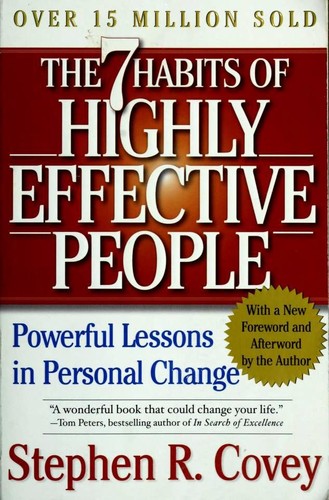
The 7 Habits of Highly Effective People
Stephen R. Covey

Mindset: The New Psychology of Success
Carol S. Dweck
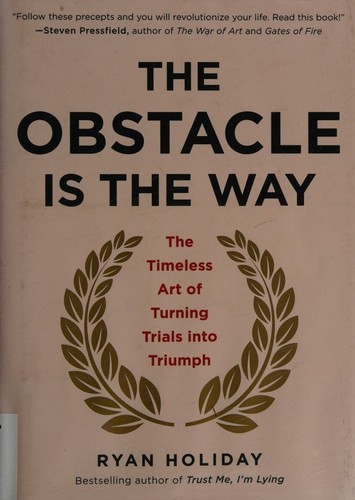
The Obstacle Is the Way
Ryan Holiday
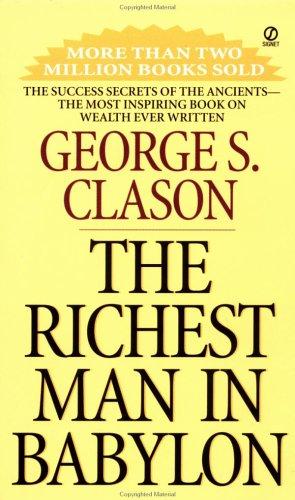
The Richest Man in Babylon
George S. Clason
