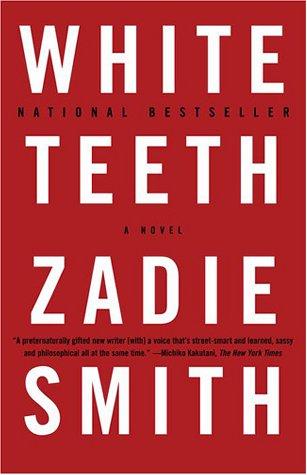
White Teeth by Zadie Smith is a 2000 literary fiction book about immigration and identity, multiculturalism and its limits, history and its refusal to stay past. The half-life of history is the novel's central argument: trauma and origin don't fade away, they resurface in the next generation and the one after that, often in transformed and unrecognizable forms.
Summary
White Teeth begins with two men — Archie Jones, a Englishman of no particular distinction, and Samad Iqbal, a Bangladeshi immigrant and his oldest friend — who met during the last days of the Second World War. The novel then spreads across their families, their children, and their overlapping social worlds in North London over the following decades, arriving at a climax set in 1999 at a biotech company's product launch. It is, among other things, a novel about what it means to be British when you are not from Britain, what it means to be Muslim in secular society, what it means to escape history when history keeps following you.
Smith published White Teeth when she was twenty-four, and the novel has the energy of someone writing faster than they can contain. It is genuinely funny, often brilliantly so — the social comedy of the Iqbal family, of Archie's second wife's Jehovah's Witness family, of the twins Magid and Millat taking almost perfectly opposite paths from the same starting point. The humor is not gentle: Smith is satirizing the comfortable liberal assumptions of multicultural London with real sharpness, and the comedy is the vehicle for something more serious.
The novel's thesis is that historical trauma has a half-life. Samad can't stop returning to his ancestor who fought against the British in 1857; Archie's wartime experience haunts the present; the children and grandchildren of immigrants keep getting pulled back into origins they never experienced. History, White Teeth argues, doesn't stay in the past; it surfaces, mutates, and keeps generating consequences. This is a more interesting argument than the one the novel is usually praised for (multiculturalism is messy but workable), and it's the one that gives the book its real weight.
At 450 pages, this is a long first novel that occasionally shows the seams — Smith's ambition outruns her control in the final third, and the climax is more satirically broad than the personal chapters that precede it. But the vitality of the prose is extraordinary for a debut, and the major characters — Samad in particular — are among the most fully inhabited in British fiction of its era. Comparable to Rushdie's Midnight's Children in scope but warmer in register; different from anything Rooney or Ferrante does but in clear conversation with the same tradition.
Talk to White Teeth like its author wrote you back.
Get the ideas that fit your life — not generic summaries.
- Chat with the book
- Audiobook-style main ideas
- Adapts to your life and goals
- Helps you take action
Key takeaways
- 1.
The half-life of history is the novel's central argument: trauma and origin don't fade away, they resurface in the next generation and the one after that, often in transformed and unrecognizable forms.
- 2.
Samad's decision to send one twin back to Bangladesh to be raised Muslim and keep one in London produces the novel's central irony: the twin meant to preserve tradition becomes secular and Westernized; the twin kept in London becomes a radical Islamist.
- 3.
Smith's multicultural London is not a utopia — it is a site of constant negotiation, misunderstanding, and comedy, and the novel refuses to endorse the comfortable version of 'we're all really the same.'
- 4.
Archie's wartime past, introduced early and revisited late, connects the novel's personal present to the twentieth century's violence in a way that complicates the multicultural theme with something older and darker.
- 5.
The novel is formally comic in the tradition of Dickens and Rushdie — plot coincidences, satirical exaggeration, social panorama — which means it is built for pleasure but also prone to the weaknesses of that tradition.
- 6.
Clara's Jamaican family background adds a Caribbean dimension to the novel's multicultural portrait that is often discussed less than the Iqbal thread but is essential to the novel's full picture.
- 7.
The FutureMouse subplot — genetic engineering, the ethics of determinism, what it means to escape your nature — is Smith's way of literalizing the novel's historical-determinism theme, with mixed results.
- 8.
The Chalfens, the progressive liberal family, are the novel's sharpest satirical target: their tolerant multiculturalism is depicted as its own kind of colonialism, a project of improvement visited on others.
Discussion questions
Use these on your own, with a book club, or as chat starters in Superbook. Book club version, ready to copy or print →
- 1.
Samad sends Magid back to Bangladesh to be raised Muslim and give him 'roots.' The result is the opposite of what he intended. Does the novel suggest that you can engineer your children's identity? What's the argument?
- 2.
The Chalfens believe they are helping Irie and Millat. Are they? What is Smith saying about a certain kind of liberal do-gooderism that presents itself as rescue?
- 3.
White Teeth was published in 2000 and is set against the backdrop of British multiculturalism in the 1970s–1990s. Reading it now, does the novel feel prescient, dated, or both? Which of its predictions about British society seem to have come true?
- 4.
Archie is perhaps the least racially or culturally marked character in the novel — he is a kind of blank white Englishman. Is that a choice Smith is making about a certain kind of Englishness? What does Archie represent?
- 5.
Samad is often described as the novel's most fully inhabited character. What makes him work as a character in a way that some of the other figures don't quite match?
- 6.
The novel ends with a lot of plot resolution compressed into a chaotic climax. Did the ending work for you, or did the satirical broadness feel like it undercut the emotional investment of the earlier sections?
- 7.
History in the novel refuses to stay in the past — the 1857 mutiny keeps surfacing in Samad's consciousness, Archie's wartime moment returns, the twins can't escape their origins. Is this a realistic psychological claim or is Smith using it as a structural device?
- 8.
Compare Irie's experience as a second-generation immigrant to the experience of Millat's. What does the novel suggest about the different ways men and women negotiate between cultures?
- 9.
White Teeth is often placed in conversation with Salman Rushdie's Midnight's Children. If you've read both, what does Smith do with similar themes that Rushdie doesn't, and vice versa?
- 10.
Smith has said she is sometimes embarrassed by the novel's youthful exuberance. Does reading it now, more than two decades later, make you see the seams more or less? Is there something the youthfulness gets right that more controlled fiction misses?
- 11.
The novel's comedy is often its best feature and also a source of frustration — it keeps diffusing emotional tension. Is that a flaw or a feature? What would White Teeth be without the jokes?
- 12.
By the end, does anyone in the novel manage to escape their history? Does the novel think escape is possible, or is the point that it isn't?
Themes
Frequently asked questions
-
Is White Teeth worth reading in 2026?
Yes, though it reads somewhat differently than it did in 2000. The multicultural optimism it both celebrates and satirizes has dated in specific ways, which makes it a more interesting historical document than it was at publication. The prose is still exceptional and Samad remains one of the great characters in recent British fiction.
-
Is White Teeth a long book?
Around 450 pages. It reads faster than it looks because the prose is energetic and the comedy keeps it moving, but the final third requires more patience than the first half. Budget a week of steady reading.
-
Is White Teeth autobiographical?
Not directly, though the North London multicultural setting and Irie's biracial experience draw on Smith's own background. She has been consistent about the novel being fiction rather than memoir.
-
How does White Teeth compare to Zadie Smith's other novels?
It is the most exuberant and the most formally ambitious. On Beauty (2005) is quieter and more controlled. NW is more formally experimental and significantly darker. Most readers love White Teeth most, though Smith has distanced herself slightly from its youthful excesses.
-
Who shouldn't read White Teeth?
Readers who find comic multi-plot novels exhausting, or who want sustained focus on a few characters. The cast is very large, the tonal range is wide, and the novel's energy can feel overwhelming in the final third. Also readers who need their satire gentle — Smith's targets include liberal progressivism, and she hits it hard.
Similar books
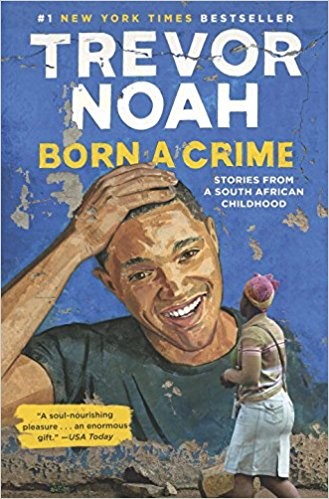
Born a Crime: Stories from a South African Childhood
Trevor Noah
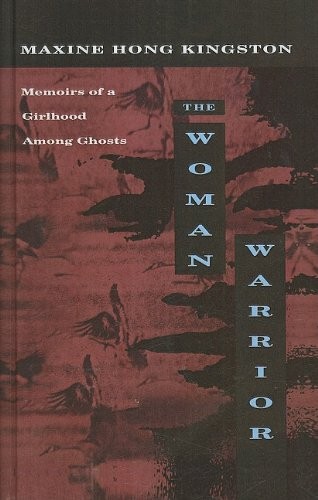
The Woman Warrior: Memoirs of a Girlhood Among Ghosts
Maxine Hong Kingston

Angela's Ashes
Frank McCourt
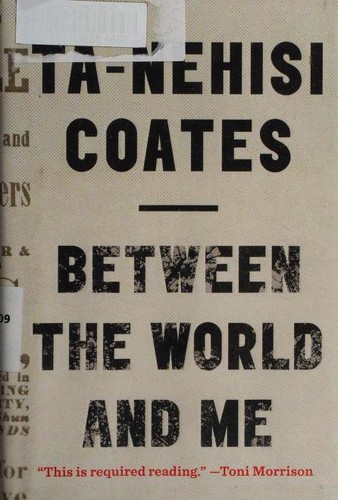
Between the World and Me
Ta-Nehisi Coates
