Science · Similar reads
Books like Zero: The Biography of a Dangerous Idea
The best books like Zero: The Biography of a Dangerous Idea are A Brief History of Time, A Universe from Nothing, and The Information: A History, a Theory, a Flood. Zero: The Biography of a Dangerous Idea by Charles Seife is about mathematics, history of ideas, infinity. If that's what drew you in, here are 12 books that share its DNA — each summarized on Superbook, and ready to chat with in the app.
- A Brief History of Time
01
Stephen Hawking · Science
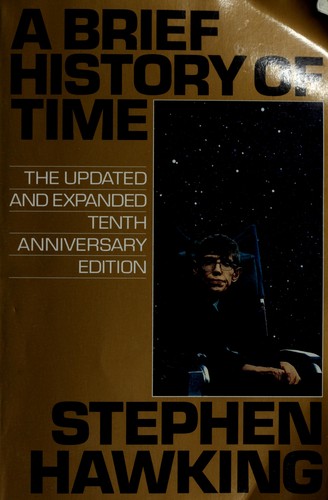
A Brief History of Time is Stephen Hawking's attempt to explain the biggest questions in physics — where the universe came from, how it behaves, and where it might be going — to readers with no scientific training.
A kindred science read.
Read the summary → - A Universe from Nothing
02
Lawrence M. Krauss · Science
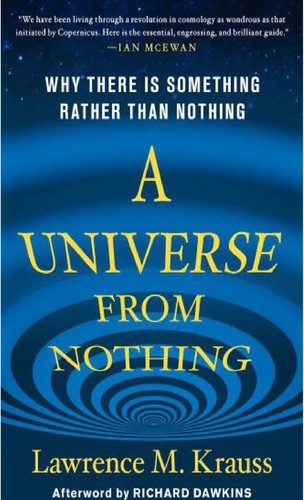
A Universe from Nothing is Lawrence Krauss's argument that modern physics has resolved, or at least reframed, the ancient philosophical question of why there is something rather than nothing.
A kindred science read.
Read the summary → - The Information: A History, a Theory, a Flood
03
The Information: A History, a Theory, a Flood
James Gleick · Science
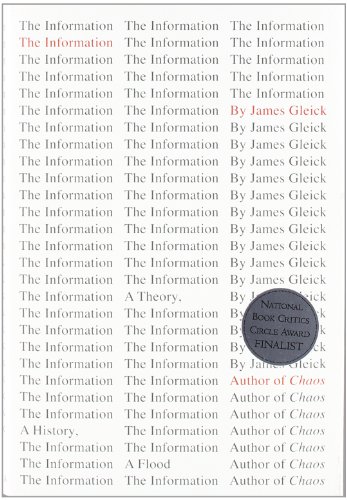
The Information traces the history of information — as a concept, a technology, and a way of understanding the universe — from the talking drums of West Africa through the telegraph, the printing press, the telephone, and into the digital age.
A kindred science read.
Read the summary →
- Fermat's Enigma
04
Simon Singh · Science
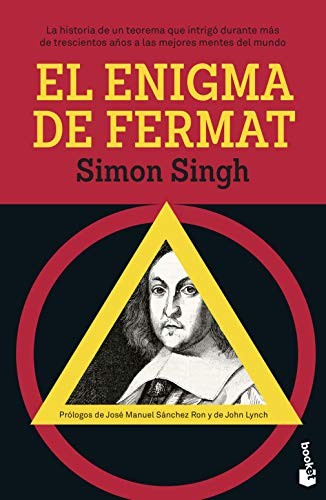
In 1637, Pierre de Fermat scrawled a note in the margin of a mathematics book claiming to have found a proof that no three positive integers can satisfy the equation a^n + b^n = c^n for any integer value of n greater than 2 — but that the margin was too narrow to contain it.
Both dig into mathematics.
Read the summary → - Our Mathematical Universe
05
Max Tegmark · Science
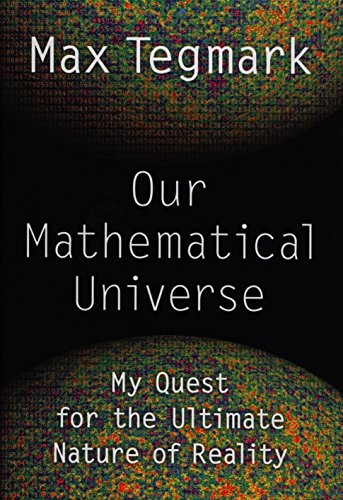
Our Mathematical Universe is Max Tegmark's argument for what he calls the Mathematical Universe Hypothesis: the bold claim that the universe is not merely described by mathematics but is a mathematical structure.
Shares mathematics and physics with Zero: The Biography of a Dangerous Idea.
Read the summary → - Chaos: Making a New Science
06
James Gleick · Science
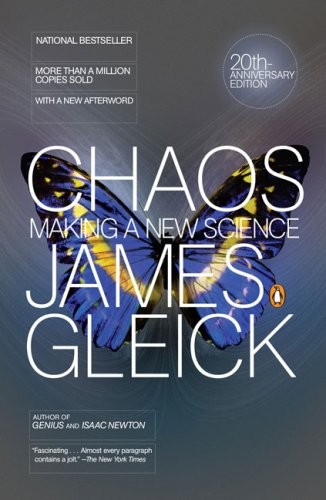
Chaos: Making a New Science, published in 1987, tells the story of how a loose network of scientists working across meteorology, mathematics, biology, and physics in the 1960s and 1970s developed chaos theory — the study of systems that are deterministic but unpredictable because tiny differences in initial conditions produce wildly different outcomes.
Both dig into mathematics.
Read the summary → - Deep Learning
07
Ian Goodfellow, Yoshua Bengio, and Aaron Courville · Science
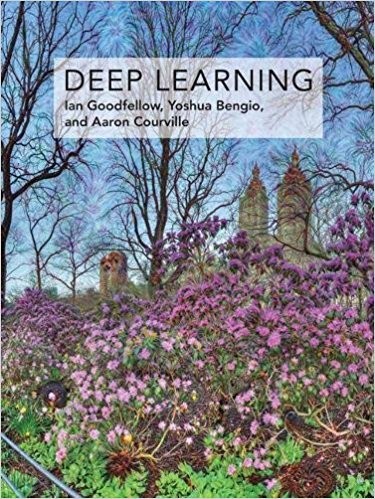
Deep Learning by Ian Goodfellow, Yoshua Bengio, and Aaron Courville is the standard graduate-level textbook on the mathematical and computational foundations of deep neural networks.
Both dig into mathematics.
Read the summary → - How Not to Be Wrong: The Power of Mathematical Thinking
08
How Not to Be Wrong: The Power of Mathematical Thinking
Jordan Ellenberg · Science
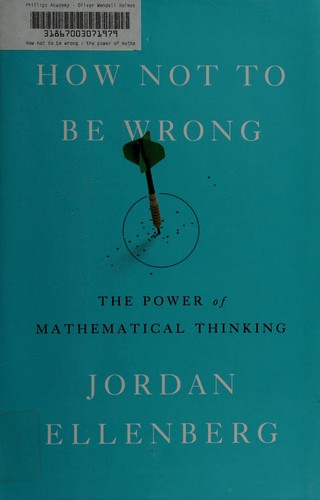
Jordan Ellenberg is a research mathematician who writes as if mathematics is something you would want to think about over dinner.
Both dig into mathematics.
Read the summary → - Is God a Mathematician?
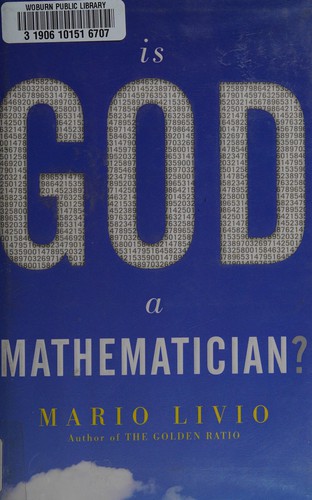
09
Mario Livio · Science
Mario Livio is an astrophysicist who has spent decades studying galaxies and supernovae, and who has been persistently haunted by a question that comes up whenever mathematics meets physics: why does abstract math, invented centuries before anyone knew it would be needed, keep turning out to perfectly describe physical reality?
Both dig into mathematics.
Read the summary → - Mathematics: Its Content, Methods and Meaning
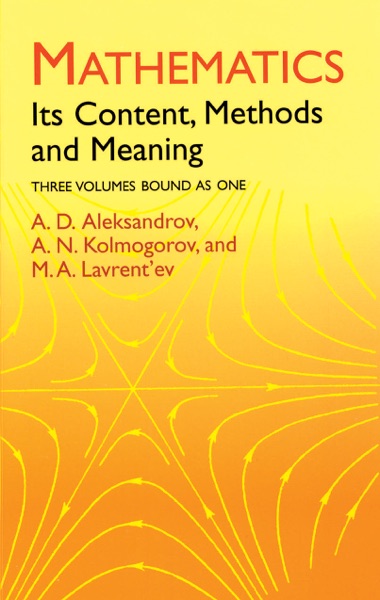
10
Mathematics: Its Content, Methods and Meaning
Aleksandrov, Kolmogorov & Lavrent'ev · Science
Mathematics: Its Content, Methods and Meaning is a three-volume survey of mathematics compiled by a group of eminent Soviet mathematicians, originally published in Russian in 1956 and translated into English by the American Mathematical Society in 1963.
Both dig into mathematics.
Read the summary → - Quantum Theory Cannot Hurt You
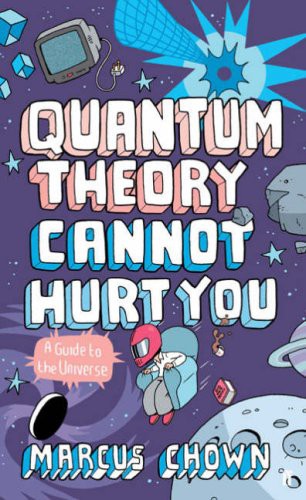
11
Quantum Theory Cannot Hurt You
Marcus Chown · Science
Marcus Chown, a former radio astronomer and longtime science writer, takes two of the most counterintuitive theories in physics — quantum mechanics and special relativity — and presents them in a single short book aimed squarely at readers who find both intimidating.
Both dig into physics.
Read the summary → - Seven Brief Lessons on Physics
12
Seven Brief Lessons on Physics
Carlo Rovelli · Science
Carlo Rovelli, a theoretical physicist best known for his work on loop quantum gravity, wrote this book originally as a series of essays for an Italian Sunday newspaper.
Both dig into physics.
Read the summary →
Books like Zero: The Biography of a Dangerous Idea: quick answers
What are the best books like Zero: The Biography of a Dangerous Idea?
The best books like Zero: The Biography of a Dangerous Idea by Charles Seife are A Brief History of Time by Stephen Hawking, A Universe from Nothing by Lawrence M. Krauss, The Information: A History, a Theory, a Flood by James Gleick, Fermat's Enigma by Simon Singh, Our Mathematical Universe by Max Tegmark, plus 7 more below. Each was chosen for themes it shares with Zero: The Biography of a Dangerous Idea, such as mathematics, history of ideas, infinity.
What should I read after Zero: The Biography of a Dangerous Idea?
A natural next read after Zero: The Biography of a Dangerous Idea is A Brief History of Time by Stephen Hawking. A kindred science read. Other strong choices are A Universe from Nothing by Lawrence M. Krauss, The Information: A History, a Theory, a Flood by James Gleick, Fermat's Enigma by Simon Singh.
What books are similar to Zero: The Biography of a Dangerous Idea by Charles Seife?
Zero: The Biography of a Dangerous Idea centers on mathematics, history of ideas, infinity. Books with a similar feel include A Brief History of Time by Stephen Hawking, A Universe from Nothing by Lawrence M. Krauss, The Information: A History, a Theory, a Flood by James Gleick, Fermat's Enigma by Simon Singh, Our Mathematical Universe by Max Tegmark, Chaos: Making a New Science by James Gleick — all free to read and chat with on Superbook.
