Book comparison
Thinking, Fast and Slow vs Predictably Irrational
Read Thinking, Fast and Slow if you want the definitive account and will put in the hours, and Predictably Irrational if you want the same territory in a quarter of the time.
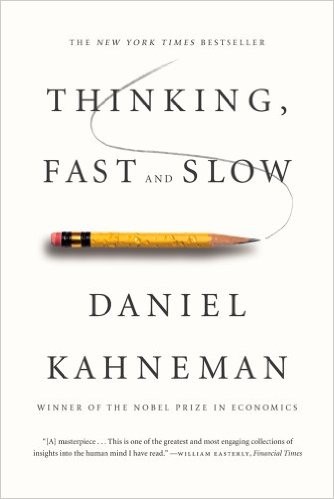
Thinking, Fast and Slow
Daniel Kahneman
2011 · 8h 45m
Thinking, Fast and Slow is Daniel Kahneman's account of the two cognitive systems that govern human thought.
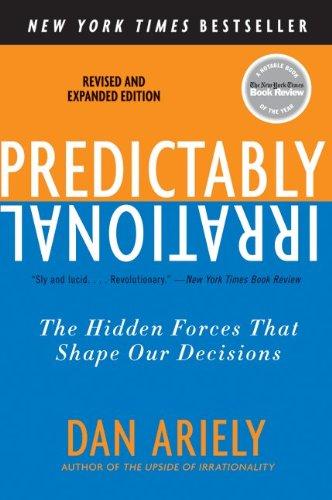
Predictably Irrational
Dan Ariely
2008 · 5h 15m
Predictably Irrational is Dan Ariely's examination of how humans make decisions that are consistently, systematically irrational — not random or arbitrary, but irrational in ways that follow patterns.
Where they agree
Both popularised behavioural economics for a general audience, and both rest on the same claim: people depart from rational choice in ways that are systematic and predictable rather than random. They overlap directly on anchoring, framing, and how the presentation of a choice changes the choice. Ariely was working in the field Kahneman and Tversky founded, and says so.
Where they differ
Kahneman is the primary researcher summarising a career, and the book is organised around one architecture, a fast automatic system and a slow effortful one, from which everything else hangs. It is long, dense and genuinely demanding. Ariely writes a sequence of self-contained experiments, each a clever demonstration, readable in any order and finished in a few evenings. Kahneman gives you a theory; Ariely gives you a collection.
Which to read first
Predictably Irrational, if you have read neither. It is the gentler entry and will tell you quickly whether the subject holds you. Read both knowing this literature took heavy damage in the replication crisis: Kahneman publicly withdrew his confidence in the priming chapter of his own book, and one of Ariely’s best-known studies on dishonesty was retracted in 2021 after independent analysts showed its data had been fabricated.
Read Thinking, Fast and Slow if
You want the foundational account from the person who built the field, and you are willing to read slowly.
Read the summary →Read Predictably Irrational if
You want the ideas as a set of memorable experiments you can get through in a week.
Read the summary →Common questions
Should I read Thinking, Fast and Slow or Predictably Irrational?
Read Thinking, Fast and Slow if you want the definitive account and will put in the hours, and Predictably Irrational if you want the same territory in a quarter of the time.
What is the difference between Thinking, Fast and Slow and Predictably Irrational?
Kahneman is the primary researcher summarising a career, and the book is organised around one architecture, a fast automatic system and a slow effortful one, from which everything else hangs. It is long, dense and genuinely demanding. Ariely writes a sequence of self-contained experiments, each a clever demonstration, readable in any order and finished in a few evenings. Kahneman gives you a theory; Ariely gives you a collection.
Which should I read first, Thinking, Fast and Slow or Predictably Irrational?
Predictably Irrational, if you have read neither. It is the gentler entry and will tell you quickly whether the subject holds you. Read both knowing this literature took heavy damage in the replication crisis: Kahneman publicly withdrew his confidence in the priming chapter of his own book, and one of Ariely’s best-known studies on dishonesty was retracted in 2021 after independent analysts showed its data had been fabricated.
More like these: books like Thinking, Fast and Slow, books like Predictably Irrational, or every comparison.
