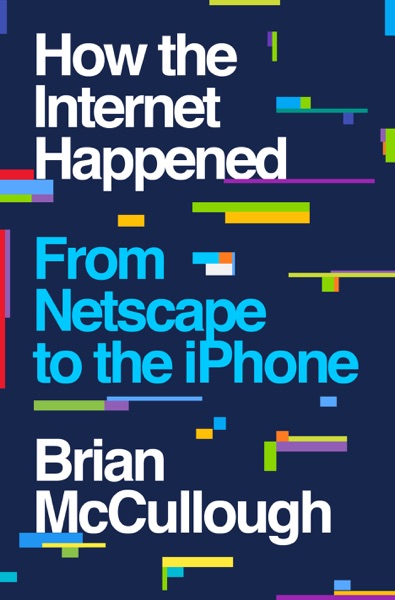
How the Internet Happened by Brian McCullough is a 2018 history book about technology history, innovation, entrepreneurship. The commercial internet was shaped by a handful of specific product decisions — most notably Mosaic and Netscape — that brought the web to non-technical users and created the consumer internet we know.
Summary
How the Internet Happened covers the commercial history of the internet from the release of Mosaic in 1993 to the launch of the iPhone in 2007 — the window in which the web went from academic experiment to the defining infrastructure of modern life. Brian McCullough, who also hosts the Techmeme Ride Home podcast, writes from the perspective of a journalist who was paying attention during this period, and the book benefits from contemporaneous texture as well as retrospective analysis.
The narrative moves chronologically through the major episodes: the browser wars between Netscape and Microsoft, the dot-com boom and its extraordinary valuations, the implosion of 2000 to 2001, and the second wave of companies — Google, Amazon, Apple, Facebook, YouTube — that emerged from the wreckage and came to dominate the era that followed. McCullough is particularly good on the first wave, capturing the genuine excitement and genuine delusion that coexisted in equal measure during the late 1990s.
What the book does well is explain the decisions that shaped outcomes — why Netscape fumbled its advantage, why AOL's subscriber base proved to be a trap rather than a moat, why Google's late entry into search actually helped it. The case studies are accessible without being oversimplified, and McCullough is willing to attribute outcomes to both structural forces and individual decisions rather than settling for a single explanation.
The book covers a lot of ground in a relatively small space, which means individual episodes receive less depth than dedicated accounts like Hatching Twitter or No Filter. Readers already steeped in internet history will find the overview valuable for synthesis but may want more granular detail on specific companies. For readers who lived through this period without fully understanding it, or who came of age after it, How the Internet Happened is an efficient and honest entry point to one of the most consequential periods in modern economic history.
Talk to How the Internet Happened like its author wrote you back.
Get the ideas that fit your life — not generic summaries.
- Chat with the book
- Audiobook-style main ideas
- Adapts to your life and goals
- Helps you take action
Key takeaways
- 1.
The commercial internet was shaped by a handful of specific product decisions — most notably Mosaic and Netscape — that brought the web to non-technical users and created the consumer internet we know.
- 2.
The dot-com bubble was not simply irrational exuberance. Many participants understood the fundamentals were stretched but believed they could exit before the crash. Some were right; most were not.
- 3.
AOL's dominance in the late 1990s looked like a permanent moat but was actually a symptom of a transition period. As broadband replaced dial-up, the moat evaporated almost completely.
- 4.
Google succeeded in search partly because it arrived late and could learn from earlier failures. Being second with a better answer often beats being first with a worse one.
- 5.
The shift from the first internet wave to the second was not a clean break. Amazon and Google were founded during the boom but survived and thrived by having actual business models.
- 6.
Platform thinking — making infrastructure that others build on rather than building end products — turned out to be more durable than the application layer above it.
- 7.
The iPhone did not invent mobile internet but it redefined it. The app economy that followed was a second inflection point as significant as the original browser.
- 8.
Trust and simplicity proved more valuable than features. Google's single text box beat portal-style competitors that offered more and asked users to navigate more.
Discussion questions
Use these on your own, with a book club, or as chat starters in Superbook. Book club version, ready to copy or print →
- 1.
McCullough argues the period from 1993 to 2007 was the most consequential in modern economic history. Do you agree with that framing? What would you put in competition with it?
- 2.
The dot-com crash destroyed enormous paper wealth but much of the infrastructure — fiber, data centers, servers — was bought out of bankruptcy and became the cheap foundation for the next wave. What does that suggest about how to think about booms and busts?
- 3.
Netscape had first-mover advantage and a dominant market position and still lost. What does that imply about the value of being first in technology markets?
- 4.
AOL's subscriber base looked like an asset but turned into a liability as technology shifted. Can you think of current companies whose apparent moats might be the same kind of trap?
- 5.
Google's founders were initially reluctant to build an advertising business. How did the AdWords model change the economics of the internet, and was that change net positive or net negative?
- 6.
The book describes a culture of extreme optimism during the late 1990s that was contagious even to people who privately had doubts. How do social dynamics shape financial behavior in ways that individual analysis doesn't account for?
- 7.
Amazon survived the dot-com crash partly because Bezos kept investing in infrastructure when others were cutting. What does that suggest about the relationship between crisis and long-term position?
- 8.
The transition from desktop to mobile rewrote the competitive landscape almost completely. Which industries today feel stable but might face a similar platform shift?
- 9.
McCullough covers a period before social media dominated. What does his account suggest about what was lost, as well as gained, when the social layer was added on top of the early web?
- 10.
The early internet was genuinely decentralized — competing browsers, search engines, portals, email providers. The web that emerged from 2007 onward is far more concentrated. Was that inevitable?
- 11.
Several founders in the book failed spectacularly and then succeeded in later ventures. What patterns do you notice in how they used failure, if they did?
- 12.
McCullough stops at 2007 and the iPhone. If you were writing the next chapter, what would be the defining story of the 2007–2020 period?
Themes
Frequently asked questions
-
Is How the Internet Happened worth reading?
Yes, especially for readers who want a single-volume account of how the commercial web developed between 1993 and 2007. It is well-paced and honest about what worked and what did not. Readers wanting more depth on specific companies may want to supplement with dedicated biographies.
-
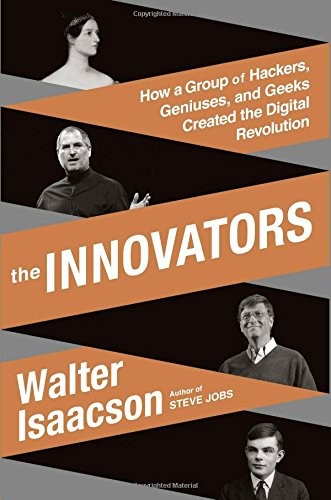
How does this book compare to The Innovators by Walter Isaacson?
The Innovators covers a much longer arc of computing history going back to Ada Lovelace. How the Internet Happened focuses specifically on the commercial internet era from Mosaic to the iPhone. McCullough is more granular on business strategy and less focused on the cultural biography of individual innovators.
-
Do I need a technical background to read How the Internet Happened?
No. McCullough writes for a general audience and explains technical concepts clearly when they matter. The book is primarily a business and cultural history, not a technical one.
-
What is the main argument of How the Internet Happened?
There isn't a single strong thesis so much as a careful narrative: the commercial internet was shaped by specific product, business, and competitive decisions made by identifiable people, and understanding those decisions explains the architecture of the web that followed.
-
Who should read How the Internet Happened?
Anyone curious about how the modern technology industry developed — founders, investors, journalists, or general readers interested in economic history. It is particularly useful for people who grew up after the dot-com era and want to understand the decisions that shaped the platforms they use today.
Similar books
The Innovators: How a Group of Hackers, Geniuses, and Geeks Created the Digital Revolution
Walter Isaacson
Super Pumped: The Battle for Uber
Mike Isaac

No Filter: The Inside Story of Instagram
Sarah Frier
Chaos: Making a New Science
James Gleick
