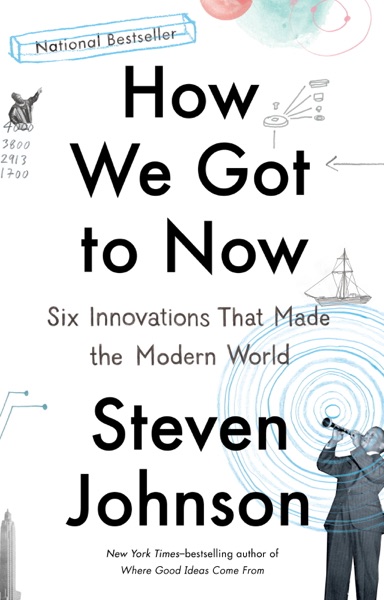
How We Got to Now by Steven Johnson is a 2014 history book about innovation, interconnectedness, technology history. The 'hummingbird effect': innovations cause changes in remote, apparently unrelated domains in ways that are impossible to predict at the point of invention.
Summary
How We Got to Now traces six innovations — glass, cold, sound, clean, time, and light — and follows each one through unexpected chains of consequence into the present. Steven Johnson's argument is that the most important effects of a new technology are often the ones nobody predicted. The invention of glass didn't just give people windows; it created spectacles, which extended working lives, which changed the demographics of craft and scholarship. The mirror made self-portraiture possible. The telescope opened the universe.
Johnson calls these chains "hummingbird effects" — when a change in one niche creates unpredicted adaptations in a distant and apparently unrelated one. The term comes from flowers and the birds that evolved alongside them: a floral innovation changed the shape of a beak thousands of miles away. His six chapters document similar ripple effects across history. The refrigeration story moves from ice-cutting operations in New England through the transformation of American diet, migration patterns, and the death of seasonal food. The clean water chapter connects the bacteriological revolution of the nineteenth century to the infrastructure behind modern cities.
The book is explicitly popular history rather than academic analysis. Johnson writes about Lowell Thompson, Frederic Tudor, Clara Rockmore, and other obscure figures whose innovations changed the world without their names being remembered. He's interested in credit and how it's distributed, how multiple inventors often arrive at the same solution near simultaneously (what he calls the "adjacent possible"), and why some innovations get adopted immediately while others wait decades for the surrounding infrastructure to catch up.
The companion BBC documentary series gave the book unusual visual richness, and Johnson writes with the pacing and concrete detail of someone who has thought carefully about what makes historical explanation compelling. The book doesn't offer a theory of innovation so much as a sustained argument that all change is entangled — that the history of one idea cannot be told without following it into the systems it reshapes and the systems that reshape it.
Talk to How We Got to Now like its author wrote you back.
Get the ideas that fit your life — not generic summaries.
- Chat with the book
- Audiobook-style main ideas
- Adapts to your life and goals
- Helps you take action
Key takeaways
- 1.
The 'hummingbird effect': innovations cause changes in remote, apparently unrelated domains in ways that are impossible to predict at the point of invention.
- 2.
The 'adjacent possible' describes the set of innovations that are achievable at any given moment given existing materials, knowledge, and infrastructure. Progress happens at its edge.
- 3.
Glass didn't just create windows — it led to spectacles, then telescopes and microscopes, then modern astronomy, bacteriology, and chemistry. One material unlocked multiple sciences.
- 4.
Artificial refrigeration ended the dominance of seasonal and local food, transformed American cuisine, enabled new patterns of migration, and shaped urban infrastructure.
- 5.
Clean water and sewage infrastructure in the nineteenth century prevented more deaths than all medical treatments before the antibiotic era combined.
- 6.
Multiple inventors often develop the same technology near simultaneously, suggesting that inventions are pulled into existence by the state of existing knowledge rather than created by individual genius.
- 7.
The spread of standardized time zones — required by railroad schedules — reorganized human life and created the modern conception of synchronized global time.
- 8.
Credit for innovation is routinely misallocated: the people whose contributions mattered most are often not the ones who got rich or famous from them.
Discussion questions
Use these on your own, with a book club, or as chat starters in Superbook. Book club version, ready to copy or print →
- 1.
Johnson's 'hummingbird effect' suggests we can't predict the most important consequences of any innovation. What current technology do you think will have its biggest impacts in an unrelated domain?
- 2.
The adjacent possible explains why the same inventions emerge in multiple places simultaneously. Does knowing that change how you think about individual genius in history?
- 3.
Which of the six innovation histories — glass, cold, sound, clean, time, light — did you find most surprising, and why?
- 4.
Johnson writes about obscure innovators who changed the world without getting credit. Who in your own field contributes quietly but doesn't get recognized?
- 5.
The clean water chapter argues that sanitation infrastructure saved more lives than medicine. How does that change your sense of what kinds of public investment matter most?
- 6.
Refrigeration ended seasonal, local food cultures. What else have we lost through innovations that seemed purely beneficial when they were introduced?
- 7.
Johnson is optimistic about the pattern of human innovation. Do you share that optimism, and what evidence would challenge it?
- 8.
The book covers only six innovations. Which one do you think he should have included instead, and what hummingbird effects would you trace from it?
- 9.
Johnson mostly credits anonymous networks rather than lone geniuses. Is there an innovation you know well where this account feels wrong — where one person really did matter decisively?
- 10.
The book was also a BBC documentary series. Does knowing that change how you read it — does the popular format limit the argument in any way?
- 11.
The modern standard of time created by railroads is now invisible. What other invisible infrastructure shapes your daily life in ways you rarely acknowledge?
- 12.
Johnson's approach is resolutely positive — there's no chapter on innovations that made things worse. What would a darker version of this book look like?
Themes
Frequently asked questions
-
What is How We Got to Now about?
It traces six innovations — glass, cold, sound, clean water, time, and light — through unexpected chains of historical consequence. The argument is that the most important effects of any new technology are usually the ones nobody predicted, and that progress is fundamentally entangled across domains.
-
Is How We Got to Now worth reading?
Yes, especially if you enjoy popular history that makes you see familiar things differently. The hummingbird effect framing is genuinely useful, and the individual stories (especially refrigeration and clean water) are compulsively readable. It doesn't go very deep on any single topic, but that's the trade-off for the breadth.
-
How does this compare to Steven Johnson's other books?
It sits close to Where Good Ideas Come From in theme and tone — both explore how innovations emerge and spread. How We Got to Now is more narrative and historical; Where Good Ideas Come From is more theoretical about the conditions that enable creativity.
-
Is there a documentary version?
Yes. Johnson hosted a six-part BBC/PBS series of the same name released in 2014, covering the same six innovations. The book and documentary were developed together and complement each other well.
-
Who should read this book?
Curious generalists, students of history and technology, and anyone interested in how systems shape human life over time. It's ideal for readers who want their nonfiction to tell good stories while making an argument — not just one or the other.
Similar books

The Information: A History, a Theory, a Flood
James Gleick
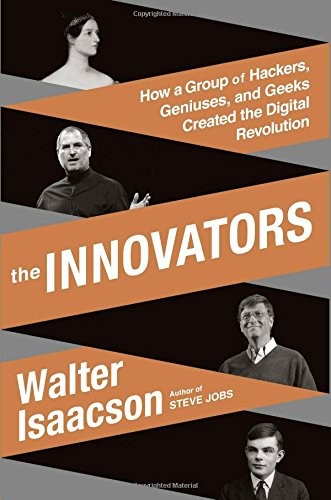
The Innovators: How a Group of Hackers, Geniuses, and Geeks Created the Digital Revolution
Walter Isaacson
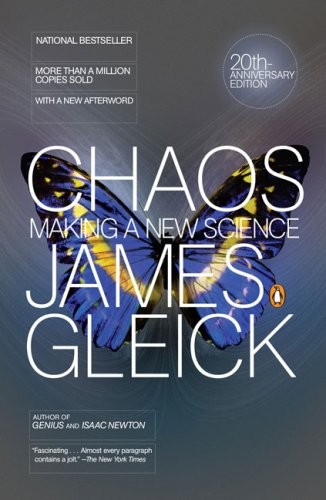
Chaos: Making a New Science
James Gleick
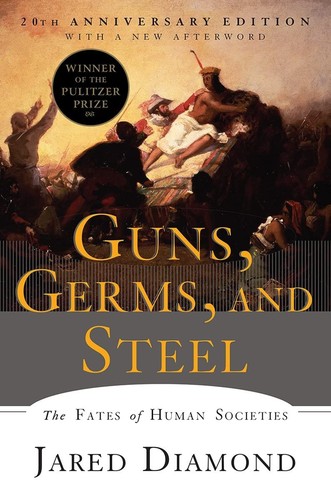
Guns, Germs, and Steel
Jared Diamond
