Rest: Why You Get More Done When You Work Less by Alex Soojung-Kim Pang is a 2016 science book about rest, creativity, productivity. The world's most productive creative minds typically worked four to five hours of deep, focused work per day — not twelve. The rest of their time was structured rest, not idleness.
Summary
Rest makes a case that most of what we think of as productive work is actually counterproductive when pushed past certain thresholds, and that deliberate, well-structured rest is not the opposite of work but a necessary component of it. Pang draws on neuroscience, cognitive science, and biographical research to argue that the world's most productive thinkers and creators — Darwin, Dickens, Einstein, Churchill — worked in shorter, more focused bursts than is commonly assumed and protected their rest with unusual discipline.
The scientific core of the book rests on research into the default mode network, the brain system that activates during apparent idleness. Far from going offline when conscious attention wanders, the default mode network is active during rest, processing recent experiences, generating creative connections, and consolidating learning. Naps, walks, sleep, and deliberate disengagement are not wasted time — they are when much of the actual cognitive work happens, below the surface of awareness.
Pang structures the book around different forms of rest: sleep, naps, walks, hobbies, and sabbaticals. Each chapter surveys research and biographical examples. The material on sleep is the most compelling: chronic sleep deprivation produces measurable declines in creativity, decision quality, and learning that people routinely fail to notice because judgment is one of the first things impaired. The chapter on "deep play" — absorbing hobbies that provide cognitive restoration — argues that serious leisure and serious work reinforce rather than compete with each other.
The book's weakness is length. Some chapters are more thoroughly argued than others, and the biographical examples, while well-chosen, occasionally strain under the weight Pang places on them. But the core argument is sound and the practical implication is clear: if you want to produce more and better work over a career, the question of how you rest deserves as much deliberate attention as the question of how you work.
Talk to Rest: Why You Get More Done When You Work Less like its author wrote you back.
Get the ideas that fit your life — not generic summaries.
- Chat with the book
- Audiobook-style main ideas
- Adapts to your life and goals
- Helps you take action
Key takeaways
- 1.
The world's most productive creative minds typically worked four to five hours of deep, focused work per day — not twelve. The rest of their time was structured rest, not idleness.
- 2.
The brain's default mode network is active during apparent rest. Walks, naps, and sleep are when consolidation, pattern recognition, and creative connection often happen.
- 3.
Sleep deprivation erodes performance more severely than people realize, and one of the first casualties is the judgment needed to notice the decline.
- 4.
Deliberate napping — 10 to 20 minutes in early afternoon — restores alertness and cognitive performance with effects that last several hours.
- 5.
Walking, particularly in nature, reliably enhances creative thinking. Many prolific writers and scientists built daily walks into their routine as intentional cognitive work.
- 6.
Deep play — absorbing hobbies pursued seriously but separately from work — restores the psychological resources depleted by demanding cognitive labor.
- 7.
Taking sabbaticals or extended breaks from focused work is associated with major creative breakthroughs in scientists, writers, and inventors.
- 8.
Deliberate rest is not laziness. It requires choosing not to work, which runs against cultural pressure and feels harder than it sounds for high achievers.
Discussion questions
Use these on your own, with a book club, or as chat starters in Superbook. Book club version, ready to copy or print →
- 1.
Pang argues elite creative workers typically did four to five hours of serious work a day. How does that compare to what your workday actually looks like?
- 2.
When do your best ideas tend to arrive — in front of a screen, or during a walk, a shower, or just before sleep? What does that suggest about your working habits?
- 3.
What does rest actually look like in your life right now? Is it genuinely restorative, or is it passive consumption that leaves you as depleted as before?
- 4.
Have you ever noticed your judgment deteriorating late in a workday or after a string of short nights? What did you do about it?
- 5.
Pang describes 'deep play' as an absorbing hobby that requires genuine skill and attention. Do you have one? If not, what's in the way?
- 6.
Think of the most productive period of your life. How did you structure your time, and how much deliberate rest did it include?
- 7.
The biographical examples in the book span Darwin, Dickens, and others who had control over their schedules in a way most people don't. What parts of the framework are actually transferable to your situation?
- 8.
Do you nap? If not, what prevents you — culture, logistics, or the belief that napping is unproductive?
- 9.
Where in your work environment is rest implicitly discouraged or associated with weakness? What would it take to change that?
- 10.
What would a sabbatical look like for you? What would you need in place to make it possible in the next five years?
- 11.
Pang argues that vacations spent fully disconnected produce better returns than vacations where you stay partly connected. Does your experience match that?
- 12.
Which form of rest described in the book — sleep, naps, walks, hobbies, sabbaticals — is most underused in your life right now?
Themes
Frequently asked questions
-
Is Rest worth reading?
Yes, if you're skeptical of rest or feel chronically guilty about not working. Pang builds a thorough evidence-based case that deliberate rest and high output are not in tension. It's more comprehensive than most sleep or wellness books because it covers the full range of rest modalities rather than focusing on one.
-
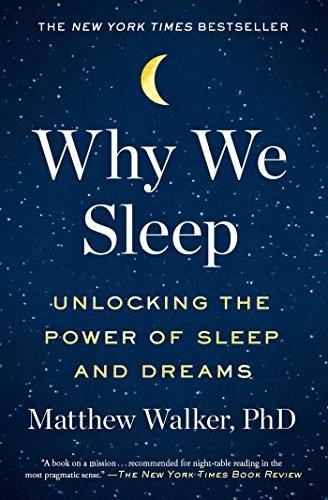
How is Rest different from Why We Sleep by Matthew Walker?
Why We Sleep focuses almost entirely on sleep science. Rest is broader: it covers naps, walks, hobbies, and sabbaticals in addition to sleep, and frames all of them through the lens of creative and cognitive productivity. The books are complementary rather than redundant.
-
Who should read Rest?
Knowledge workers, researchers, writers, and anyone who pushes through fatigue on the assumption that more hours equals more output. It's particularly useful for high achievers who pride themselves on working long hours but have noticed the returns diminishing.
-
What's the most actionable idea in Rest?
The daily walk. It's free, takes no equipment, and the research on its effects on creative thinking is consistent. Pang's most compelling biographical examples consistently build walks into their working day as a deliberate cognitive practice, not just exercise.
-
Does Pang recommend working less in total, or differently?
Primarily differently. The argument isn't that you should do fewer hours of total activity, but that concentrating serious mental work into shorter, higher-quality blocks and using the remaining time for genuine rest produces better results than spreading moderate effort over long days.