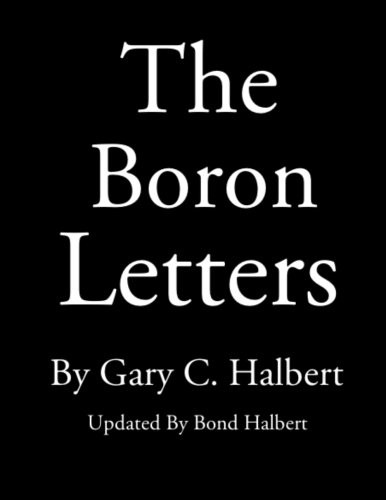
The Boron Letters by Gary Halbert is a 2013 business book about copywriting, direct marketing, sales. The 'starving crowd' principle: the most important factor in any marketing effort is identifying an audience that actively wants what you have, not creating desire in people who don't want it.
Summary
The Boron Letters is a collection of letters written by Gary Halbert to his son Bond from Boron Federal Prison Camp in California, where Halbert was serving time for mail fraud in the early 1980s. The letters were written as a practical education in direct response marketing and copywriting, and they circulated informally among direct marketers for years before being formally published. The book is simultaneously a father's instruction to his son and a working manual for one of the most influential copywriters of the twentieth century.
Halbert's approach to marketing is rooted in a single conviction: all persuasion depends on understanding what the reader or buyer actually wants, and most marketing fails because the person writing it is thinking about themselves rather than the audience. His famous "starving crowd" metaphor makes this concrete — before any other marketing decision, identify a group of people who desperately want what you have, and sell to them rather than trying to create demand where none exists.
The practical instruction ranges from fundamentals (how to write a headline that compels a response, how to structure an offer, how to handle the specific mechanics of a direct mail package) to broader business and life principles. Halbert interweaves marketing craft with frank advice about money, habits, health, and the realities of making a living outside institutional employment. The letters are written to Bond specifically, which gives them a directness and intimacy that most marketing books avoid.
The book is not without limitations. Halbert's advice is rooted in direct mail and offline marketing, and the tactical specifics require translation to digital contexts. Some of the personal advice reads as idiosyncratic rather than universal. But the core principles — understand the audience, reduce friction, make the benefit immediately clear, always test — have proven durable across every channel. The Boron Letters remains required reading in serious copywriting circles, and its format as letters makes it more readable than most marketing manuals.
Talk to The Boron Letters like its author wrote you back.
Get the ideas that fit your life — not generic summaries.
- Chat with the book
- Audiobook-style main ideas
- Adapts to your life and goals
- Helps you take action
Key takeaways
- 1.
The 'starving crowd' principle: the most important factor in any marketing effort is identifying an audience that actively wants what you have, not creating desire in people who don't want it.
- 2.
Headlines are the most important element of any piece of copy. The sole purpose of the headline is to get the reader to read the next sentence.
- 3.
Effective copy is a conversation on paper. The writer's job is to anticipate the reader's objections and address them in sequence before the reader can articulate them.
- 4.
Testing is not optional — it is the mechanism by which you find out what actually works rather than what you think should work. Halbert was obsessive about tracking response rates.
- 5.
Most marketing materials contain too many ideas. Every element that does not advance the core selling argument is friction that reduces response.
- 6.
Understanding what motivates people at a primal level — safety, belonging, social status, health, money, love — is more useful than understanding their stated preferences.
- 7.
The offer structure matters as much as the copy. A weak offer with strong copy will underperform a strong offer with adequate copy.
- 8.
Writing is a physical practice as much as an intellectual one. Halbert recommended daily walking and recommended copying out great sales letters by hand as a way of internalizing their rhythm and structure.
Discussion questions
Use these on your own, with a book club, or as chat starters in Superbook. Book club version, ready to copy or print →
- 1.
Halbert's starving crowd principle says audience selection matters more than execution. In your experience — whether in business, writing, or any persuasive effort — has the quality of the audience or the quality of the execution been the bigger factor?
- 2.
The letters were written from prison, during a period of significant constraint. Does the context change how you read the advice? Does adversity produce better or worse thinking about fundamentals?
- 3.
Halbert is openly writing to his son — the tone is intimate and sometimes raw. What does the letter format reveal that a conventional business book would not?
- 4.
His core claim is that most people writing marketing copy are thinking about themselves rather than their audience. Where do you see that failure in marketing you encounter regularly?
- 5.
Halbert emphasizes testing and response rates as the only reliable way to know what works. How do you apply that empirical discipline to contexts where direct response metrics are not available?
- 6.
The book was written in the 1980s and rooted in direct mail. Which of Halbert's principles translate most directly to digital marketing, and which require significant translation?
- 7.
He recommends copying out great sales letters by hand as a learning technique. What is the most effective deliberate practice technique you have used for developing a skill?
- 8.
Halbert's life was not a simple success story — he served time in prison and experienced significant financial reversals. How does that biography affect how you evaluate his business advice?
- 9.
The book mixes marketing craft with personal life advice in the same letter format. Do you find the personal content illuminating or distracting from the professional instruction?
- 10.
Halbert describes a single-minded focus on response — on whether the copy produces action. Are there cases where a focus on pure response leads marketing in a direction that is harmful or manipulative?
- 11.
He argues that health and physical vitality are prerequisites for good intellectual work. How has your physical state affected your cognitive output in your own experience?
- 12.
What is one specific element of Halbert's copywriting framework that you could apply to something you are currently trying to communicate?
Themes
Frequently asked questions
-
Is The Boron Letters worth reading if I am not in direct marketing?
Yes, for anyone who needs to persuade anyone in writing — which is most people doing business or creative work. The principles about audience focus, headline structure, and reducing friction translate well beyond direct mail. The tactical details require translation, but the underlying thinking is sound.
-
Is The Boron Letters appropriate given that Halbert was convicted of fraud?
The fraud conviction is part of the historical record and worth knowing. Readers should apply the same critical filter they would to any business advice: evaluate the principles on their merits rather than treating the source as either completely authoritative or completely discredited. The marketing principles in the book are largely sound; the context is complicated.
-
How does The Boron Letters compare to Ogilvy on Advertising?
Ogilvy on Advertising is broader and more polished — it covers the full scope of advertising from brand building to media strategy. The Boron Letters is narrower, focused specifically on direct response copy, and is more intimate in tone. Ogilvy is a better introduction to advertising; Halbert is a better introduction to direct response.
-
What is the 'starving crowd' principle?
Halbert's metaphor for the importance of audience selection. If you set up a hamburger stand and can only make one choice, choose the location with the most hungry people, not the best burger recipe. Most businesses spend too much effort on product and too little on finding the right audience.
-
How long is The Boron Letters?
The original letters run to around 150 pages in most editions, making it one of the shorter books on this list. It can be read in a day. Later editions sometimes include annotations by Bond Halbert that add context and update the original advice for digital channels.
Similar books
Influence: The Psychology of Persuasion
Robert B. Cialdini
This Is Marketing: You Can't Be Seen Until You Learn to See
Seth Godin

All Marketers Are Liars
Seth Godin
Pre-Suasion: A Revolutionary Way to Influence and Persuade
Robert B. Cialdini
