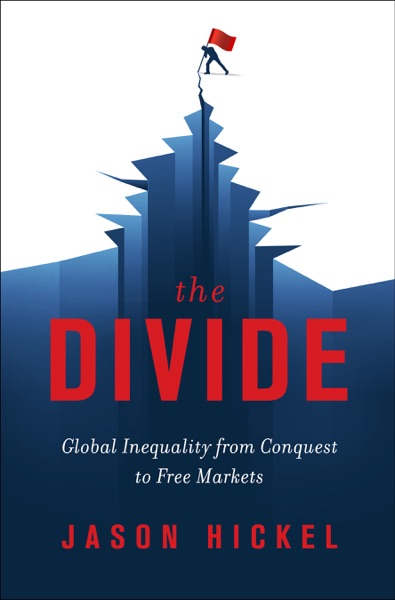
The Divide by Jason Hickel is a 2017 economics book about global inequality, development, colonialism. The global divide between rich and poor countries was not a natural starting point that development is trying to close — it was actively created through colonialism and continues to be maintained through debt, trade rules, and financial flows.
Summary
The Divide is Jason Hickel's argument that global poverty is not a natural condition that development has failed to fully remedy, but a product of policies — colonial extraction, debt regimes, trade rules, and structural adjustment — that wealthy countries have imposed on poor ones. Hickel, an economic anthropologist, mounts a systematic challenge to the dominant narrative of development economics, which holds that the world is getting steadily better and that the existing global economic architecture, despite its imperfections, is generally delivering progress.
His case proceeds in two parts. The first reconstructs how the divide between rich and poor countries was created. Colonialism did not merely slow development in what is now called the Global South; it actively dismantled existing industries, extracted wealth, and installed governance structures designed to serve metropolitan interests. The debt crisis of the 1980s continued this dynamic: loans came with structural adjustment conditions requiring privatization, deregulation, and austerity that often made poor countries poorer. Trade rules negotiated through the WTO and bilateral agreements systematically favor rich-country exports and restrict poor-country options.
The second part challenges how poverty and progress are measured. Hickel is skeptical of the optimistic poverty statistics widely cited by figures like Steven Pinker and Bill Gates. He argues the $1.90-a-day poverty line is set artificially low, that the measures used to calculate progress obscure as much as they reveal, and that rapid growth in countries like China and India has been accompanied by rising inequality within those countries. The story of global progress, he argues, requires more careful interpretation than the standard narrative admits.
The book is polemical and written from a clear political position, which is both a strength and a limit. Hickel is a persuasive advocate for a particular view of the global economy. Readers who already accept the development economics consensus will find his claims provocative and sometimes overstated. Readers unfamiliar with the debate will get a well-documented introduction to the critical tradition in development thought. The empirical claims are well-sourced even where they are contested.
Talk to The Divide like its author wrote you back.
Get the ideas that fit your life — not generic summaries.
- Chat with the book
- Audiobook-style main ideas
- Adapts to your life and goals
- Helps you take action
Key takeaways
- 1.
The global divide between rich and poor countries was not a natural starting point that development is trying to close — it was actively created through colonialism and continues to be maintained through debt, trade rules, and financial flows.
- 2.
More wealth leaves poor countries through debt repayment, profit repatriation, and illicit financial flows than enters through aid — the net flow of money is from poor countries to rich ones, not the reverse.
- 3.
The $1.90-a-day poverty line used in official statistics is set below the level at which people can meet basic nutritional needs in many countries. Using more realistic lines, poverty reduction in recent decades looks significantly less dramatic.
- 4.
Structural adjustment programs imposed by the IMF and World Bank in the 1980s and 1990s required cuts to public services and social spending that worsened living conditions in many countries that received them.
- 5.
Trade rules negotiated under WTO frameworks systematically favor rich-country agricultural subsidies and industrial policies while preventing poor countries from using the same tools that rich countries used during their own development.
- 6.
China and India account for most of the statistical reduction in extreme poverty since 1990 — and both countries achieved growth through policies (industrial policy, capital controls, selective liberalization) that explicitly violated Washington Consensus orthodoxy.
- 7.
Aid is a relatively small part of the financial relationship between rich and poor countries. Structural changes to debt, trade, and tax rules would do more to address poverty than increasing aid budgets.
- 8.
The story of development progress that figures like Steven Pinker tell is not factually false, but it is selective — it emphasizes metrics that show improvement and downplays those that show persistent or worsening conditions.
Discussion questions
Use these on your own, with a book club, or as chat starters in Superbook. Book club version, ready to copy or print →
- 1.
Hickel argues that the divide between rich and poor countries was created by colonialism and sustained by current economic arrangements. Do you find that framing persuasive? What evidence would change your view?
- 2.
The book challenges the optimistic poverty statistics cited by Pinker and Gates. How do you evaluate competing empirical claims when the underlying data can be measured in multiple ways?
- 3.
If more money flows from poor countries to rich ones than the reverse, what does that imply about the relationship between aid and global justice?
- 4.
Hickel argues structural adjustment programs worsened conditions in countries that received them. How do you evaluate that claim given that many of those programs were presented as necessary medicine?
- 5.
China and India grew rapidly by violating Washington Consensus orthodoxy. What does that tell us about the conditions under which liberal economic policy prescriptions are effective?
- 6.
The book proposes changes to debt, trade, and tax rules as more important than aid. How politically realistic are those changes, and who would need to support them?
- 7.
Hickel writes from a clear political perspective. Does that strengthen or weaken his argument? How should readers calibrate for explicit advocacy?
- 8.
How does the history Hickel presents in the first half of the book change how you think about international development assistance?
- 9.
The book challenges the idea that the existing global economic order is generally producing progress. What evidence from your own experience or observation bears on that question?
- 10.
If Hickel's analysis is correct, what follows for the obligations of people in wealthy countries?
- 11.
What aspects of Hickel's argument do you find most compelling, and which seem most overstated or underdeveloped?
- 12.
How do you think about the relationship between domestic inequality within countries and global inequality between countries?
Themes
Frequently asked questions
-
Is The Divide too polemical to be reliable?
Hickel is a committed advocate for a specific view, and readers should engage critically rather than accepting all claims at face value. That said, the empirical claims are well-sourced and the historical account is largely consistent with the academic development economics literature, even among scholars who reach different policy conclusions.
-
How long is The Divide?
Around 330 pages, taking roughly six to seven hours to read. The writing is accessible and the argument is cumulative, so the book rewards reading straight through rather than dipping in.
-
How does this book relate to the optimism of books like Factfulness or Enlightenment Now?
It's a direct challenge to that optimism. Hickel argues that the progress narrative relies on metrics chosen to show improvement and ignores structural conditions that continue to harm poor countries. Reading both sides gives you the full debate.
-
Who should read The Divide?
Anyone interested in global inequality, international development, or the history of colonialism's economic effects. It's also useful for anyone who has encountered the standard optimistic narrative about global poverty reduction and wants to understand the critique.
-
What's the most actionable idea in the book?
Hickel's point that reforming debt and trade rules would do more than increasing aid. He's skeptical of charity-based responses to global poverty and argues for structural changes to the international economic system. Whether you agree or not, it redirects attention from symptomatic relief to systemic causes.
Similar books
Why Nations Fail: The Origins of Power, Prosperity, and Poverty
Daron Acemoglu and James A. Robinson
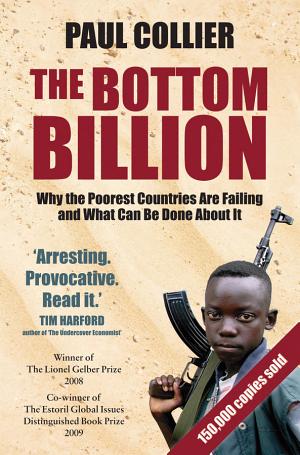
The Bottom Billion: Why the Poorest Countries Are Failing and What Can Be Done About It
Paul Collier
Sapiens: A Brief History of Humankind
Yuval Noah Harari
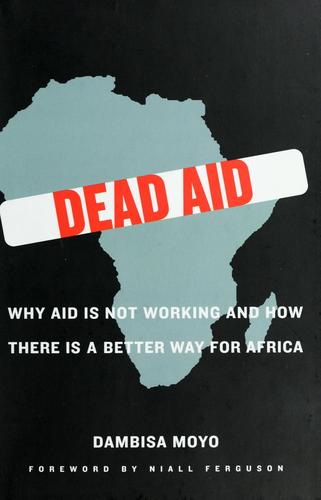
Dead Aid: Why Aid Is Not Working and How There Is a Better Way for Africa
Dambisa Moyo
