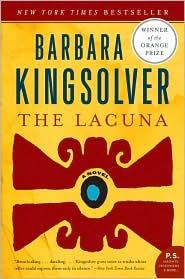
The Lacuna by Barbara Kingsolver is a 2009 literary fiction book about art and censorship, historical amnesia, identity and self-invention. The archive structure — journals, newspaper clippings, legal transcripts — is not decorative. It makes the novel's argument about narrative power visible at the level of form.
Summary
The Lacuna follows Harrison William Shepherd, a half-Mexican, half-American man who in the 1930s works as a cook in the household of Diego Rivera and Frida Kahlo in Mexico City, and eventually becomes secretary to Leon Trotsky during his Mexican exile. After Trotsky's assassination in 1940, Shepherd returns to the United States, where he becomes a bestselling historical novelist — and where, in the Red Scare of the late 1940s, he is destroyed by exactly the forces he had spent his career trying to document in fiction.
Kingsolver's novel is structured as an archive: journals, newspaper clippings, letters, transcripts of testimony, a secretary's retrospective annotations. The "lacuna" is both the underwater cave Shepherd discovers as a boy (a passage that closes as the tide rises) and the gaps in the historical record — the things that don't make it into newspaper accounts, the versions of people that public narrative erases. The Rivera-Kahlo household is rendered with color and warmth; Trotsky's household is rendered with intellectual rigidity and fear. Both prepare Shepherd for what America will do to him.
What makes the novel unusual is its formal argument about storytelling itself. Kingsolver is interested in how public narrative — especially the mid-century American newspaper — constructs a version of a person that the actual person is powerless to contest. The juxtaposition of Shepherd's private journals and the newspaper coverage of his HUAC proceedings is the book's best formal trick: we see exactly how a life is simplified into an accusation.
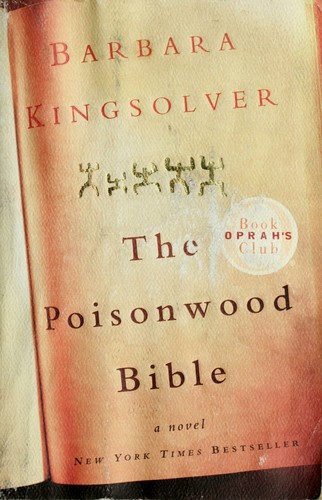
The Lacuna is less purely accessible than The Poisonwood Bible and won the Orange Prize rather than Oprah's endorsement — it is a harder, cooler book. Readers who loved the family drama of Poisonwood may find this more cerebral and emotionally remote. But readers interested in the McCarthyite period, in how art gets weaponized by ideology, or in the relationship between private truth and public story will find this one of Kingsolver's most ambitious works.
Talk to The Lacuna like its author wrote you back.
Get the ideas that fit your life — not generic summaries.
- Chat with the book
- Audiobook-style main ideas
- Adapts to your life and goals
- Helps you take action
Key takeaways
- 1.
The archive structure — journals, newspaper clippings, legal transcripts — is not decorative. It makes the novel's argument about narrative power visible at the level of form.
- 2.
The 'lacuna' is simultaneously a physical space (the underwater cave), a narrative gap, and a metaphor for what public history omits. Kingsolver develops all three without forcing them to collapse into one.
- 3.
The Rivera-Kahlo sections are the novel's warmest. Kingsolver uses them to show what creative freedom looks like before the Red Scare systematically destroys that freedom in the American sections.
- 4.
Trotsky in the novel is not a simple hero — his certainty and his bureaucratic habits are drawn as limitation, and his household operates with a fear that Shepherd absorbs.
- 5.
The HUAC hearings are rendered as a machine for destroying complex people by reducing them to single accusable labels. Kingsolver researched the period in detail.
- 6.
Mrs. Brown, Shepherd's secretary-turned-archivist, becomes the novel's most important voice in its final section — she is the one who insists that the full record be preserved.
- 7.
The novel treats mid-century American anticommunism as a moral catastrophe equivalent in its structure of accusation and silencing to the Stalinist purges it claimed to oppose.
- 8.
Shepherd's bisexuality is present but not explained or dramatized — it is simply part of who he is, which in the novel's period makes him additionally vulnerable to accusation.
Discussion questions
Use these on your own, with a book club, or as chat starters in Superbook. Book club version, ready to copy or print →
- 1.
The archive structure includes editorial annotations from Mrs. Brown. How does her presence as an archival voice change the way you read Shepherd's journals?
- 2.
Kingsolver's Rivera and Kahlo are obviously drawn from biography. Did you find the fictional rendering of historical figures plausible, or did it create a dissonance you couldn't fully resolve?
- 3.
Trotsky in the novel is drawn with ambivalence — intellectually formidable, humanly rigid. Does Kingsolver's Trotsky feel like a considered portrait or a convenience?
- 4.
The lacuna image recurs throughout: underwater passages, gaps in the archive, the things public narrative erases. Does the symbol do enough work, or does it eventually feel overloaded?
- 5.
Shepherd's novels become bestsellers in part because Americans want historical fiction that redeems the Aztec past. What is Kingsolver saying about the relationship between popular fiction and national self-image?
- 6.
The Red Scare sections feel more contemporary than the 1940s Mexican sections. Is that because Kingsolver wrote the 2009 book partly as a response to post-9/11 political culture?
- 7.
Mrs. Brown's loyalty to Shepherd extends to preserving an archive he never authorized. Is her act one of love, or a kind of appropriation of his story?
- 8.
Compare the treatment of McCarthyism here to how you've encountered it in other fiction or history. Does Kingsolver add to your understanding of it, or primarily dramatize what you already knew?
- 9.
The novel's structure suggests that what gets recorded determines what is remembered. Is Kingsolver optimistic about archives, or does the lacuna ultimately swallow everything?
- 10.
The Lacuna is a less commercially successful book than The Poisonwood Bible. Does the more cerebral register feel like Kingsolver taking a risk, or a missed calibration?
- 11.
What does the novel say about the cost of being a public figure — whether a novelist, a revolutionary, or an artist — in a culture that needs enemies?
Themes
Frequently asked questions
-
Is The Lacuna as good as The Poisonwood Bible?
It is a different kind of novel — cooler, more formally interested, less emotionally direct. Some readers prefer it for exactly those reasons. If Poisonwood's political thesis felt too visible, The Lacuna's structural argument about narrative and archive may land better. If you loved Poisonwood's family drama, this may disappoint.
-
Do I need to know about Frida Kahlo and Diego Rivera to enjoy The Lacuna?
Basic familiarity helps, but the novel provides enough context that prior knowledge isn't required. Knowing that Rivera was a committed Communist and Kahlo a major painter enriches the reading. Knowing the details of Trotsky's Mexican exile and assassination is less commonly held knowledge and worth a quick background read.
-
What is the lacuna in the title?
Multiple things: the underwater cave Shepherd discovers as a boy, the gaps in historical records, and the spaces public narrative leaves unfilled. Kingsolver uses all three meanings and the resonance between them is the novel's primary formal conceit.
-
Is The Lacuna difficult to read?
The archive structure — journals, clippings, transcripts — requires some patience to orient. The novel is not stylistically difficult, but it is structurally layered, and the emotional investment builds slowly. The Mexican sections are warmer and more accessible than the American sections.
-
Who shouldn't read The Lacuna?
Readers wanting the narrative momentum and emotional directness of The Poisonwood Bible. The Lacuna is more interested in its formal argument about history and narrative than in character-driven plot. If metafictional concerns about how stories get constructed leave you cold, this may not be the right book.