Psychology · Similar reads
Books like Judgment Under Uncertainty: Heuristics and Biases
The best books like Judgment Under Uncertainty: Heuristics and Biases are Thinking, Fast and Slow, Noise: A Flaw in Human Judgment, and Predictably Irrational. Judgment Under Uncertainty: Heuristics and Biases by Daniel Kahneman, Paul Slovic, and Amos Tversky is about judgment, cognitive bias, heuristics. If that's what drew you in, here are 12 books that share its DNA — each summarized on Superbook, and ready to chat with in the app.
- Thinking, Fast and Slow
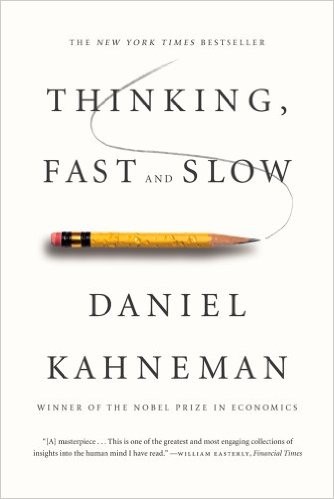
01
Daniel Kahneman · Psychology
Thinking, Fast and Slow is Daniel Kahneman's account of the two cognitive systems that govern human thought.
Shares judgment and cognitive bias with Judgment Under Uncertainty: Heuristics and Biases.
Read the summary → - Noise: A Flaw in Human Judgment
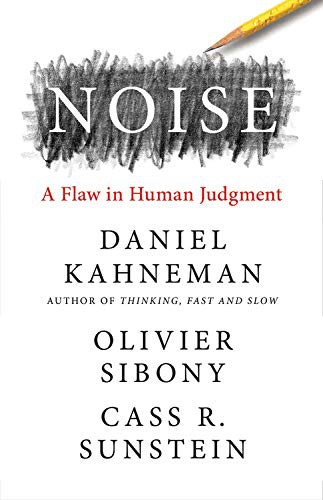
02
Noise: A Flaw in Human Judgment
Daniel Kahneman, Olivier Sibony, and Cass R. Sunstein · Psychology
Bias gets most of the attention in discussions of judgment error.
Shares judgment and cognitive bias with Judgment Under Uncertainty: Heuristics and Biases.
Read the summary → - Predictably Irrational
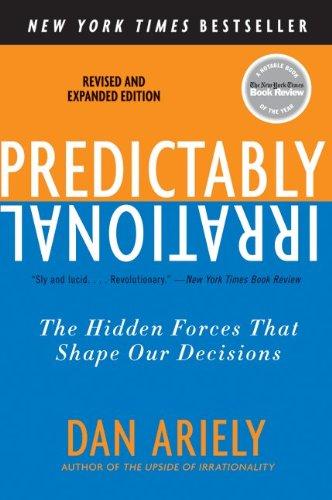
03
Dan Ariely · Psychology
Predictably Irrational is Dan Ariely's examination of how humans make decisions that are consistently, systematically irrational — not random or arbitrary, but irrational in ways that follow patterns.
Shares cognitive bias and decision-making with Judgment Under Uncertainty: Heuristics and Biases.
Read the summary →
- Thinking in Bets: Making Smarter Decisions When You Don't Have All the Facts
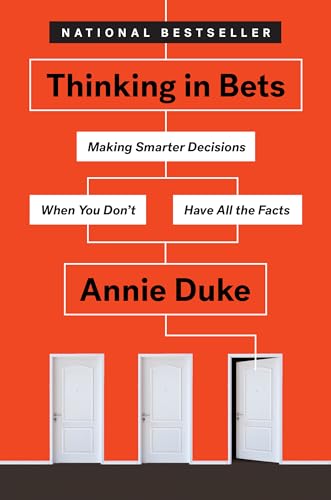
04
Thinking in Bets: Making Smarter Decisions When You Don't Have All the Facts
Annie Duke · Psychology
Thinking in Bets is Annie Duke's argument that most decisions in life share a fundamental feature with poker hands: you're choosing under uncertainty, with incomplete information, and luck will affect the outcome regardless of how well you reasoned.
Shares cognitive bias and decision-making with Judgment Under Uncertainty: Heuristics and Biases.
Read the summary → - Fooled by Randomness
05
Nassim Nicholas Taleb · Psychology
Fooled by Randomness is Nassim Nicholas Taleb's argument that humans are wired to misread luck as skill, noise as signal, and random outcomes as the product of ability or effort.
Shares cognitive bias and decision-making with Judgment Under Uncertainty: Heuristics and Biases.
Read the summary → - Irrationality
06
Stuart Sutherland · Psychology
Irrationality is Stuart Sutherland's rigorous and often mordant survey of the ways human beings consistently fail to reason well.
Shares judgment and cognitive bias with Judgment Under Uncertainty: Heuristics and Biases.
Read the summary → - The Undoing Project
07
Michael Lewis · Psychology
Michael Lewis came to this subject sideways.
Shares judgment and cognitive bias with Judgment Under Uncertainty: Heuristics and Biases.
Read the summary → - Mind Over Money
08
Claudia Hammond · Psychology
Mind Over Money is Claudia Hammond's survey of the research on how people actually think about, feel about, and make decisions with money — which turns out to be considerably less rational than economic theory assumes.
Shares cognitive bias and decision-making with Judgment Under Uncertainty: Heuristics and Biases.
Read the summary → - Misbehaving: The Making of Behavioral Economics
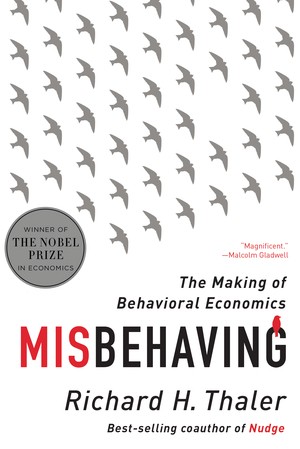
09
Misbehaving: The Making of Behavioral Economics
Richard H. Thaler · Psychology
Richard Thaler is one of the founders of behavioral economics, the field that took the anomalies in standard economic theory seriously rather than dismissing them as noise.
Shares cognitive bias and decision-making with Judgment Under Uncertainty: Heuristics and Biases.
Read the summary → - The Art of Thinking Clearly
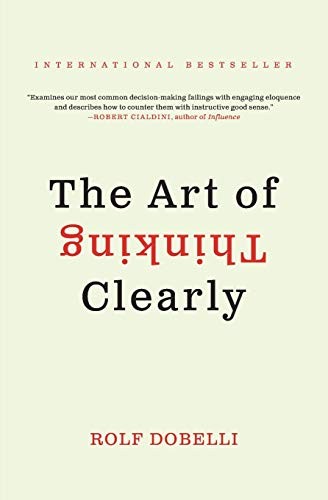
10
Rolf Dobelli · Psychology
Rolf Dobelli is a Swiss entrepreneur and novelist who wrote a series of short newspaper columns on cognitive biases, later collected and expanded into this book.
Shares cognitive bias and decision-making with Judgment Under Uncertainty: Heuristics and Biases.
Read the summary → - The Intelligence Trap: Why Smart People Make Dumb Mistakes
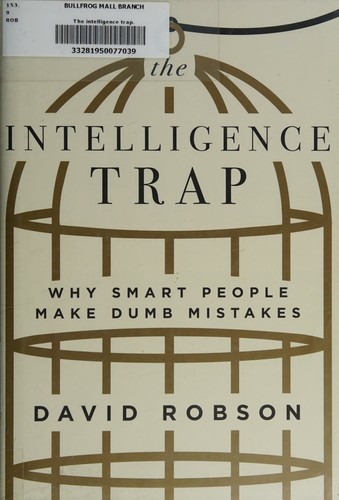
11
The Intelligence Trap: Why Smart People Make Dumb Mistakes
David Robson · Psychology
The Intelligence Trap is science journalist David Robson's investigation into a paradox: high intelligence and education do not protect against bad reasoning, and can actively make it worse.
Shares cognitive bias and decision-making with Judgment Under Uncertainty: Heuristics and Biases.
Read the summary → - The Optimism Bias: A Tour of the Irrationally Positive Brain
12
The Optimism Bias: A Tour of the Irrationally Positive Brain
Tali Sharot · Psychology
Tali Sharot is a neuroscientist at University College London, and The Optimism Bias is her account of a finding that surprised researchers: most humans systematically overestimate the likelihood of good things happening to them and underestimate the likelihood of bad ones.
Shares cognitive bias and decision-making with Judgment Under Uncertainty: Heuristics and Biases.
Read the summary →
Books like Judgment Under Uncertainty: Heuristics and Biases: quick answers
What are the best books like Judgment Under Uncertainty: Heuristics and Biases?
The best books like Judgment Under Uncertainty: Heuristics and Biases by Daniel Kahneman, Paul Slovic, and Amos Tversky are Thinking, Fast and Slow by Daniel Kahneman, Noise: A Flaw in Human Judgment by Daniel Kahneman, Olivier Sibony, and Cass R. Sunstein, Predictably Irrational by Dan Ariely, Thinking in Bets: Making Smarter Decisions When You Don't Have All the Facts by Annie Duke, Fooled by Randomness by Nassim Nicholas Taleb, plus 7 more below. Each was chosen for themes it shares with Judgment Under Uncertainty: Heuristics and Biases, such as judgment, cognitive bias, heuristics.
What should I read after Judgment Under Uncertainty: Heuristics and Biases?
A natural next read after Judgment Under Uncertainty: Heuristics and Biases is Thinking, Fast and Slow by Daniel Kahneman. Shares judgment and cognitive bias with Judgment Under Uncertainty: Heuristics and Biases. Other strong choices are Noise: A Flaw in Human Judgment by Daniel Kahneman, Olivier Sibony, and Cass R. Sunstein, Predictably Irrational by Dan Ariely, Thinking in Bets: Making Smarter Decisions When You Don't Have All the Facts by Annie Duke.
What books are similar to Judgment Under Uncertainty: Heuristics and Biases by Daniel Kahneman, Paul Slovic, and Amos Tversky?
Judgment Under Uncertainty: Heuristics and Biases centers on judgment, cognitive bias, heuristics. Books with a similar feel include Thinking, Fast and Slow by Daniel Kahneman, Noise: A Flaw in Human Judgment by Daniel Kahneman, Olivier Sibony, and Cass R. Sunstein, Predictably Irrational by Dan Ariely, Thinking in Bets: Making Smarter Decisions When You Don't Have All the Facts by Annie Duke, Fooled by Randomness by Nassim Nicholas Taleb, Irrationality by Stuart Sutherland — all free to read and chat with on Superbook.
