Psychology · Similar reads
Books like The Psychopath Test
The best books like The Psychopath Test are The Lucifer Effect: Understanding How Good People Turn Evil, Subliminal: How Your Unconscious Mind Rules Your Behavior, and Mistakes Were Made (But Not by Me). The Psychopath Test by Jon Ronson is about psychopathy, psychiatry, diagnosis. If that's what drew you in, here are 12 books that share its DNA — each summarized on Superbook, and ready to chat with in the app.
- The Lucifer Effect: Understanding How Good People Turn Evil
01
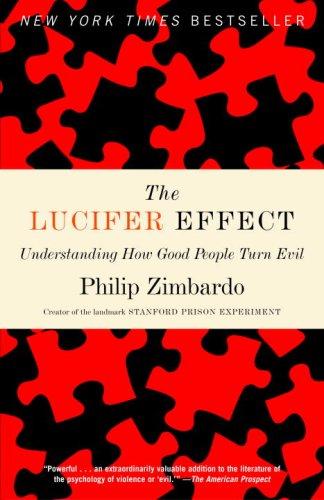
The Lucifer Effect: Understanding How Good People Turn Evil
Philip Zimbardo · Psychology
Philip Zimbardo designed the Stanford Prison Experiment in 1971, then watched it spin out of control within days.
Both dig into power.
Read the summary → - Subliminal: How Your Unconscious Mind Rules Your Behavior
02
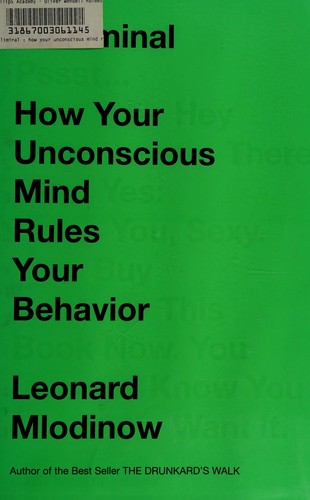
Subliminal: How Your Unconscious Mind Rules Your Behavior
Leonard Mlodinow · Psychology
Leonard Mlodinow is a theoretical physicist who writes accessible science for general audiences.
A kindred psychology read.
Read the summary → - Mistakes Were Made (But Not by Me)
03
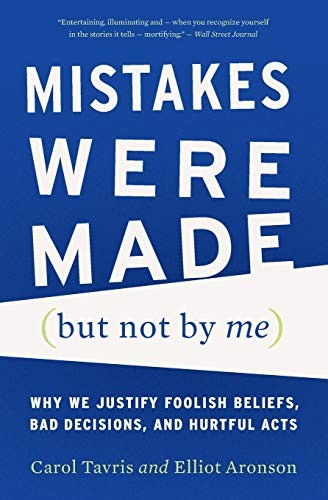
Mistakes Were Made (But Not by Me)
Carol Tavris and Elliot Aronson · Psychology
Carol Tavris and Elliot Aronson wrote this book about the mechanisms by which people protect their sense of themselves as competent, moral, and well-intentioned after they have done something that contradicts that self-image.
A kindred psychology read.
Read the summary →
- The Elephant in the Brain: Hidden Motives in Everyday Life
04
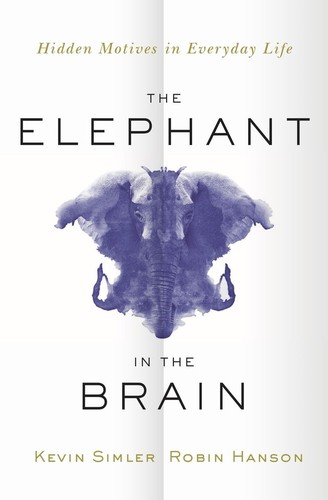
The Elephant in the Brain: Hidden Motives in Everyday Life
Kevin Simler and Robin Hanson · Psychology
Kevin Simler and Robin Hanson argue that human behavior is much more self-interested and much less high-minded than the explanations people give for it.
A kindred psychology read.
Read the summary → - Anatomy of an Epidemic
05
Robert Whitaker · Health
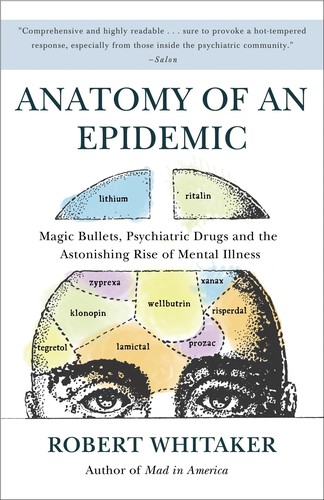
Anatomy of an Epidemic is Robert Whitaker's investigation into a paradox: as the use of psychiatric medication in the United States has increased dramatically over the past half-century, the number of people on disability due to mental illness has risen in parallel.
Shares psychiatry and mental illness with The Psychopath Test.
Read the summary → - Brain Energy
06
Christopher M. Palmer · Health
Brain Energy is Christopher Palmer's argument that mental illness is fundamentally a metabolic disorder — specifically, a disorder of mitochondrial function and brain energy regulation.
Shares psychiatry and mental illness with The Psychopath Test.
Read the summary → - Good Reasons for Bad Feelings: Insights from the Frontier of Evolutionary Psychiatry

07
Good Reasons for Bad Feelings: Insights from the Frontier of Evolutionary Psychiatry
Randolph M. Nesse · Psychology
Randolph Nesse spent forty years as a psychiatrist and evolutionary biologist asking a question most of his colleagues found strange: why did natural selection leave us so vulnerable to anxiety, depression, and other forms of suffering?
Both dig into psychiatry.
Read the summary → - The Fear Factor: How One Emotion Connects Altruists, Psychopaths, and Everyone In-Between
08
The Fear Factor: How One Emotion Connects Altruists, Psychopaths, and Everyone In-Between
Abigail Marsh · Psychology
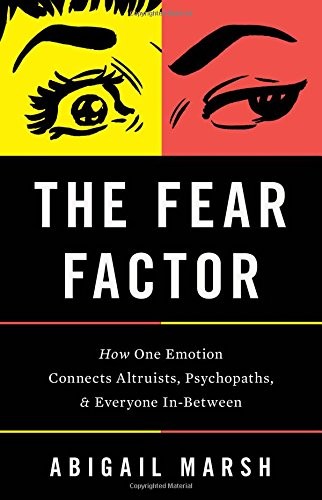
Abigail Marsh is a Georgetown neuroscientist who studies why some people are extraordinarily altruistic and others are not.
Both dig into psychopathy.
Read the summary → - The Laws of Human Nature
09
Robert Greene · Psychology
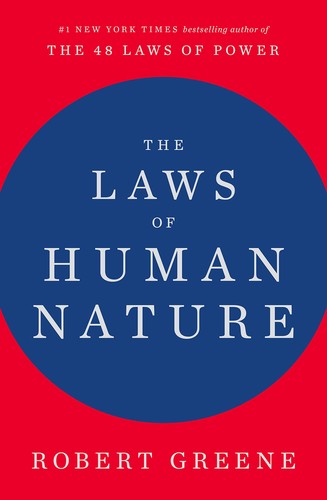
Robert Greene is a writer whose career has been built on synthesizing historical biography and social observation into frameworks for understanding power, strategy, and human behavior.
Both dig into power.
Read the summary → - The Myth of Mental Illness: Foundations of a Theory of Personal Conduct
10
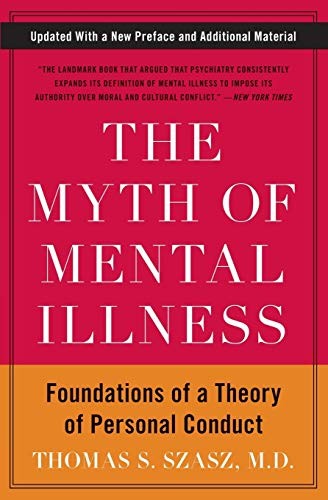
The Myth of Mental Illness: Foundations of a Theory of Personal Conduct
Thomas Szasz · Psychology
Thomas Szasz's thesis, first published in 1961, is that mental illness is a category error.
Both dig into psychiatry.
Read the summary → - A Beautiful Mind
11
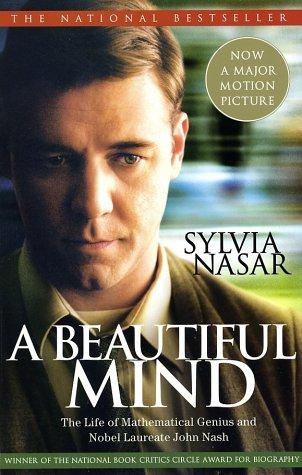
Sylvia Nasar · Biography
Sylvia Nasar's biography of the mathematician John Nash — Nobel laureate, game theory pioneer, and paranoid schizophrenic — is one of the finest accounts of genius and mental illness in biographical literature.
Both dig into mental illness.
Read the summary → - A People's History of the United States
12
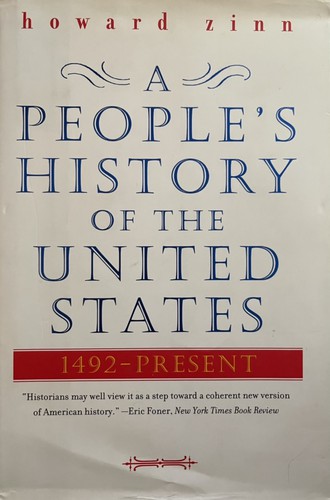
A People's History of the United States
Howard Zinn · History
Howard Zinn's A People's History of the United States, first published in 1980, retells American history from the perspective of those who rarely appear in conventional textbooks: Native Americans, enslaved people, industrial workers, women, immigrants, and dissidents of various kinds.
Both dig into power.
Read the summary →
Books like The Psychopath Test: quick answers
What are the best books like The Psychopath Test?
The best books like The Psychopath Test by Jon Ronson are The Lucifer Effect: Understanding How Good People Turn Evil by Philip Zimbardo, Subliminal: How Your Unconscious Mind Rules Your Behavior by Leonard Mlodinow, Mistakes Were Made (But Not by Me) by Carol Tavris and Elliot Aronson, The Elephant in the Brain: Hidden Motives in Everyday Life by Kevin Simler and Robin Hanson, Anatomy of an Epidemic by Robert Whitaker, plus 7 more below. Each was chosen for themes it shares with The Psychopath Test, such as psychopathy, psychiatry, diagnosis.
What should I read after The Psychopath Test?
A natural next read after The Psychopath Test is The Lucifer Effect: Understanding How Good People Turn Evil by Philip Zimbardo. Both dig into power. Other strong choices are Subliminal: How Your Unconscious Mind Rules Your Behavior by Leonard Mlodinow, Mistakes Were Made (But Not by Me) by Carol Tavris and Elliot Aronson, The Elephant in the Brain: Hidden Motives in Everyday Life by Kevin Simler and Robin Hanson.
What books are similar to The Psychopath Test by Jon Ronson?
The Psychopath Test centers on psychopathy, psychiatry, diagnosis. Books with a similar feel include The Lucifer Effect: Understanding How Good People Turn Evil by Philip Zimbardo, Subliminal: How Your Unconscious Mind Rules Your Behavior by Leonard Mlodinow, Mistakes Were Made (But Not by Me) by Carol Tavris and Elliot Aronson, The Elephant in the Brain: Hidden Motives in Everyday Life by Kevin Simler and Robin Hanson, Anatomy of an Epidemic by Robert Whitaker, Brain Energy by Christopher M. Palmer — all free to read and chat with on Superbook.
