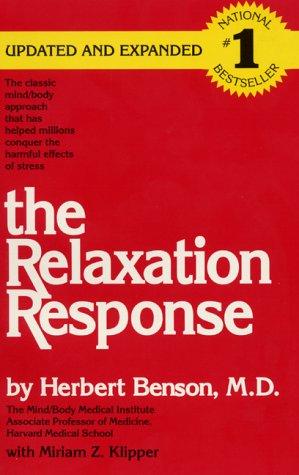
The Relaxation Response by Herbert Benson is a 1975 health book about stress reduction, meditation, mind-body medicine. The relaxation response is the body's built-in physiological counterpart to the fight-or-flight response, characterized by lower blood pressure, slower breathing, and reduced metabolic rate.
Summary
In 1975, Harvard cardiologist Herbert Benson published a compact, research-backed argument that the body carries a built-in counterforce to stress — one that medicine had largely ignored. He called it the relaxation response: a physiological state, measurable in blood pressure, heart rate, and oxygen consumption, that is the mirror image of the fight-or-flight response. Where stress accelerates the body, the relaxation response quiets it. Benson's claim was that any person could elicit this state deliberately, in minutes, without drugs.
The book is part science and part instruction manual. Benson draws on his research at Harvard Medical School, where he and his colleagues studied transcendental meditators and found that meditation produced consistent, reproducible physiological changes. Blood pressure fell. Breathing slowed. The metabolic rate dropped. He then stripped out the religious and commercial packaging of TM and reduced the technique to four elements: a quiet environment, a mental device (a single word or phrase repeated silently), a passive attitude toward intruding thoughts, and a comfortable position. The simplicity is the point.
The practical half of the book walks through how to elicit the response: sit quietly, close your eyes, relax your muscles progressively, breathe naturally, and with each exhalation silently repeat a word of your choosing — "one" is the example Benson gives. When other thoughts come, acknowledge them and return to the word. Do this for ten to twenty minutes, once or twice a day. Benson reviews evidence that regular practice reduces hypertension, anxiety, and some forms of chronic pain, and he discusses the mechanism by which hypothalamic activity shifts when the response is elicited.
What Benson doesn't do is oversell. The relaxation response is a tool, not a cure. He acknowledges that it works best as a complement to conventional medicine, not a replacement. The book is deliberately plain: no mysticism, no guru, no expensive program. Fifty years later, the core finding has held up across thousands of subsequent studies. It remains one of the cleaner examples in medicine of a behavioral intervention with a measurable, replicable physiological effect.
Talk to The Relaxation Response like its author wrote you back.
Get the ideas that fit your life — not generic summaries.
- Chat with the book
- Audiobook-style main ideas
- Adapts to your life and goals
- Helps you take action
Key takeaways
- 1.
The relaxation response is the body's built-in physiological counterpart to the fight-or-flight response, characterized by lower blood pressure, slower breathing, and reduced metabolic rate.
- 2.
Any repetitive mental focus — a word, sound, phrase, or prayer — can elicit the response. The religious or cultural packaging is optional; the mechanism is physiological.
- 3.
Regular practice, ten to twenty minutes once or twice a day, produces measurable reductions in hypertension in many patients, often reducing the need for medication.
- 4.
A passive attitude is the critical ingredient. When distracting thoughts arise, the instruction is to notice them and return to the focus word without frustration or effort.
- 5.
Benson found that the four essential elements — a quiet environment, a mental device, a passive attitude, and a comfortable posture — were common to effective relaxation techniques across cultures and centuries.
- 6.
Chronic stress activates the sympathetic nervous system in ways that damage cardiovascular and immune function over time. The relaxation response counters this by activating the parasympathetic system.
- 7.
The technique requires no special equipment, no teacher, and no fee. Accessibility was central to Benson's goal of making a medically useful intervention available to everyone.
- 8.
The book anticipated by decades what is now called mind-body medicine, providing an early scientific framework for how mental practices produce physical effects.
Discussion questions
Use these on your own, with a book club, or as chat starters in Superbook. Book club version, ready to copy or print →
- 1.
Benson stripped TM down to four secular elements. Did that demystification make the practice more or less appealing to you personally?
- 2.
The book was published in 1975, when stress medicine was still marginal. How has the status of mind-body interventions shifted in your professional or personal experience since then?
- 3.
Benson's technique asks for a passive attitude toward intruding thoughts. What's the difference between passivity and inattention, and why might that distinction matter?
- 4.
The recommended practice is ten to twenty minutes once or twice daily. What actually prevents people from doing something that simple consistently?
- 5.
Benson argues that equivalent techniques appear across Buddhist, Hindu, Christian, and Jewish traditions. What does that convergence suggest about the human stress response?
- 6.
How does chronic, low-grade modern stress differ from the acute stress the fight-or-flight response evolved to handle, and why might that difference matter clinically?
- 7.
Benson presents the relaxation response as a complement to, not a replacement for, conventional medicine. Where do you see that boundary getting crossed in how people actually use meditation today?
- 8.
Which part of Benson's four elements — quiet environment, mental device, passive attitude, comfortable position — would you find hardest to maintain?
- 9.
The book was written for a general audience rather than clinicians. What's gained and lost by that choice?
- 10.
Many people report they can't meditate because their mind won't quiet down. How does Benson's instruction actually address that objection?
- 11.
If the physiological effect is the same regardless of the word used, what does that say about the role of meaning or belief in the technique's effectiveness?
- 12.
Benson's research focused heavily on blood pressure. What other conditions do you think would be most amenable to this kind of intervention?
Themes
Frequently asked questions
-
Is The Relaxation Response still relevant today?
Yes. The core finding — that a simple meditation-like practice produces measurable physiological changes including lower blood pressure — has been replicated many times since 1975. The science has only strengthened. The book is short enough to read in an afternoon and provides a practical technique most readers can start the same day.
-
How long does it take to read The Relaxation Response?
About three to four hours. At roughly 230 pages it's one of the shorter classic health books. The first half lays out the science; the second half is the instruction. Many readers find they can start the practice after reading only the second half.
-
What is the actual technique Benson recommends?
Sit quietly, close your eyes, progressively relax your muscles, breathe naturally, and silently repeat a word of your choosing with each exhalation. When other thoughts arise, return to the word without judgment. Do this for ten to twenty minutes, once or twice daily. That's it.
-
Who should read The Relaxation Response?
Anyone managing hypertension, anxiety, or chronic stress who wants a science-backed, low-cost behavioral tool. Also useful for clinicians looking for evidence-based rationale to recommend meditation to patients. Those already deep into mindfulness practice will find the science sections more interesting than the technique itself.
-
How does this compare to modern mindfulness books?
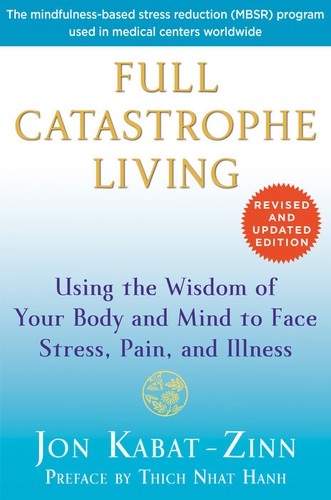
Benson's approach is narrower and more clinical than most modern mindfulness books. He is less interested in attention training or insight than in a specific physiological effect. If you want the medical mechanism explained clearly and a simple repeatable technique, this is the better book. For broader psychological applications of mindfulness, Full Catastrophe Living covers more ground.