Economics · Similar reads
Books like The Second Machine Age
The best books like The Second Machine Age are The Innovators: How a Group of Hackers, Geniuses, and Geeks Created the Digital Revolution, The Singularity Is Near, and Weapons of Math Destruction. The Second Machine Age by Erik Brynjolfsson and Andrew McAfee is about automation, artificial intelligence, economics. If that's what drew you in, here are 12 books that share its DNA — each summarized on Superbook, and ready to chat with in the app.
- The Innovators: How a Group of Hackers, Geniuses, and Geeks Created the Digital Revolution
01
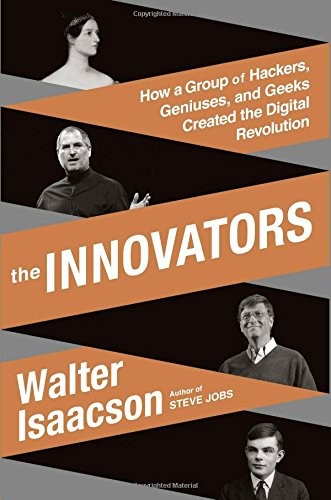
The Innovators: How a Group of Hackers, Geniuses, and Geeks Created the Digital Revolution
Walter Isaacson · Science
The Innovators is Walter Isaacson's history of the digital revolution, tracing the development of computers and the internet from Ada Lovelace's conceptualization of programming in the 1840s through the emergence of the modern internet, personal computer, and smartphone.
A kindred economics read.
Read the summary → - The Singularity Is Near
02
Ray Kurzweil · Science
The Singularity Is Near is Ray Kurzweil's forecast that the exponential growth of information technology — computing power, storage, bandwidth, and the reverse-engineering of the human brain — will produce a technological singularity around 2045: a point at which artificial intelligence surpasses human intelligence in all relevant domains, beyond which we cannot reliably predict what happens.
Both dig into artificial intelligence.
Read the summary → - Weapons of Math Destruction
03
Cathy O'Neil · Science
Weapons of Math Destruction is mathematician and data scientist Cathy O'Neil's investigation of how algorithms — statistical models used to make decisions about people's lives — can perpetuate and amplify inequality rather than reduce it.
Shares inequality and technology with The Second Machine Age.
Read the summary →
- Life 3.0: Being Human in the Age of Artificial Intelligence
04
Life 3.0: Being Human in the Age of Artificial Intelligence
Max Tegmark · Science
Life 3.0 is Max Tegmark's accessible survey of the questions raised by the prospect of human-level and superhuman artificial intelligence: What are the plausible paths to AGI?
Both dig into artificial intelligence.
Read the summary → - Chaos: Making a New Science
05
James Gleick · Science
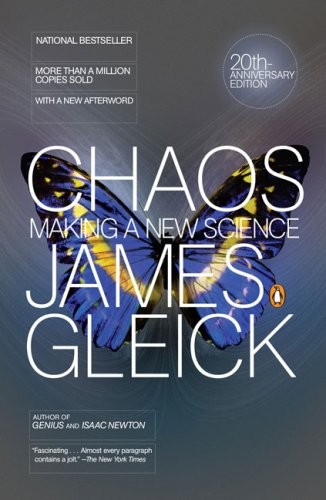
Chaos: Making a New Science, published in 1987, tells the story of how a loose network of scientists working across meteorology, mathematics, biology, and physics in the 1960s and 1970s developed chaos theory — the study of systems that are deterministic but unpredictable because tiny differences in initial conditions produce wildly different outcomes.
A kindred economics read.
Read the summary → - Power and Prediction: The Disruptive Economics of Artificial Intelligence
06
Power and Prediction: The Disruptive Economics of Artificial Intelligence
Ajay Agrawal, Joshua Gans, and Avi Goldfarb · Business
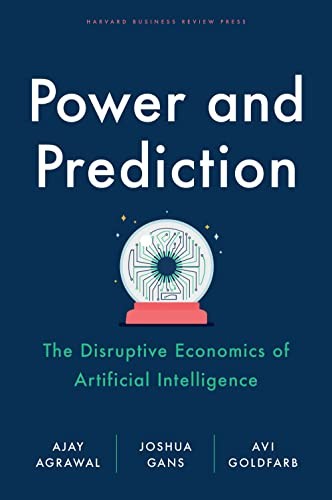
Power and Prediction is the second book from Ajay Agrawal, Joshua Gans, and Avi Goldfarb — the economists behind Prediction Machines — and it takes a more pointed look at what cheap AI-driven prediction actually disrupts.
Shares artificial intelligence and economics with The Second Machine Age.
Read the summary → - The Master Algorithm
07
Pedro Domingos · Science
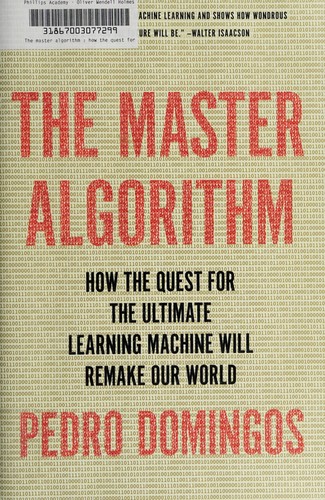
The Master Algorithm is Pedro Domingos's survey of machine learning — the field of computer science that creates algorithms capable of learning from data — organized around a central speculative thesis: that there exists, or may be found, a single master algorithm from which all learning can be derived.
Shares artificial intelligence and technology with The Second Machine Age.
Read the summary → - Poverty, by America
08
Matthew Desmond · Economics
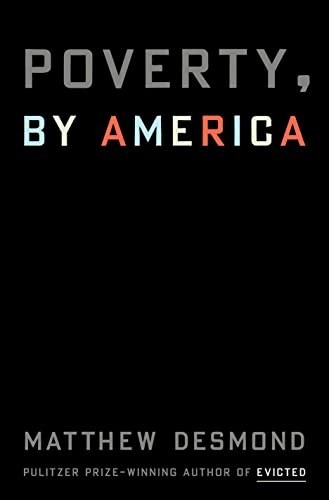
Poverty, by America is Matthew Desmond's follow-up to Evicted, and it makes a more explicit and polemical argument: poverty in the United States is not a natural condition or a problem of insufficient resources.
Both dig into inequality.
Read the summary → - The Internet of Money
09
Andreas Antonopoulos · Economics
The Internet of Money is a collection of talks Andreas Antonopoulos gave between 2013 and 2016, edited and compiled into a book that makes the case for Bitcoin not as a financial instrument or a speculation but as a fundamental architectural shift in how money works.
Both dig into technology.
Read the summary → - The Rise and Fall of American Growth
10
The Rise and Fall of American Growth
Robert J. Gordon · Economics
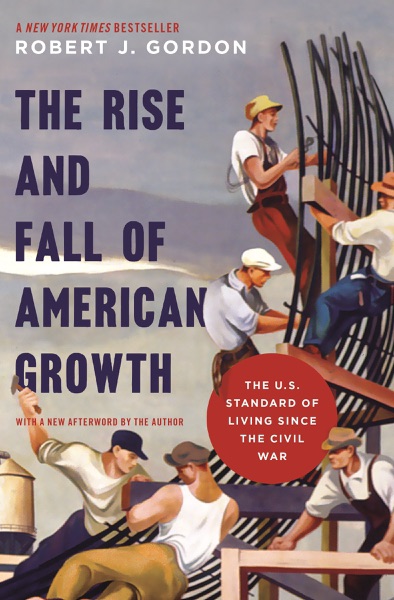
Robert Gordon's argument is one of the most carefully constructed and most contested in recent economics: that the period from 1870 to 1970 was a singular century of transformative invention, and that we have been living with the deceleration ever since.
Both dig into inequality.
Read the summary → - Why Nations Fail: The Origins of Power, Prosperity, and Poverty
11
Why Nations Fail: The Origins of Power, Prosperity, and Poverty
Daron Acemoglu and James A. Robinson · Economics
Daron Acemoglu and James Robinson argue that the fundamental difference between rich and poor countries is not geography, culture, or bad luck.
Both dig into inequality.
Read the summary → - 2001: A Space Odyssey
12
Arthur C. Clarke · Science fiction
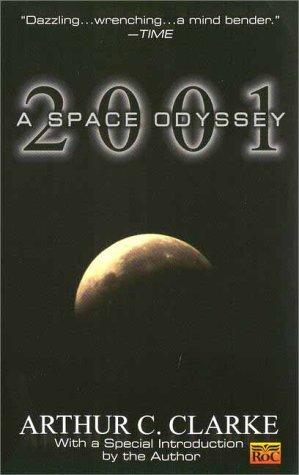
2001: A Space Odyssey begins with prehistoric man-apes encountering a featureless black monolith that somehow catalyzes their cognitive leap from prey to hunter.
Both dig into artificial intelligence.
Read the summary →
Books like The Second Machine Age: quick answers
What are the best books like The Second Machine Age?
The best books like The Second Machine Age by Erik Brynjolfsson and Andrew McAfee are The Innovators: How a Group of Hackers, Geniuses, and Geeks Created the Digital Revolution by Walter Isaacson, The Singularity Is Near by Ray Kurzweil, Weapons of Math Destruction by Cathy O'Neil, Life 3.0: Being Human in the Age of Artificial Intelligence by Max Tegmark, Chaos: Making a New Science by James Gleick, plus 7 more below. Each was chosen for themes it shares with The Second Machine Age, such as automation, artificial intelligence, economics.
What should I read after The Second Machine Age?
A natural next read after The Second Machine Age is The Innovators: How a Group of Hackers, Geniuses, and Geeks Created the Digital Revolution by Walter Isaacson. A kindred economics read. Other strong choices are The Singularity Is Near by Ray Kurzweil, Weapons of Math Destruction by Cathy O'Neil, Life 3.0: Being Human in the Age of Artificial Intelligence by Max Tegmark.
What books are similar to The Second Machine Age by Erik Brynjolfsson and Andrew McAfee?
The Second Machine Age centers on automation, artificial intelligence, economics. Books with a similar feel include The Innovators: How a Group of Hackers, Geniuses, and Geeks Created the Digital Revolution by Walter Isaacson, The Singularity Is Near by Ray Kurzweil, Weapons of Math Destruction by Cathy O'Neil, Life 3.0: Being Human in the Age of Artificial Intelligence by Max Tegmark, Chaos: Making a New Science by James Gleick, Power and Prediction: The Disruptive Economics of Artificial Intelligence by Ajay Agrawal, Joshua Gans, and Avi Goldfarb — all free to read and chat with on Superbook.
