The Wealth and Poverty of Nations by David S. Landes is a 1998 history book about economic development, culture and institutions, industrialization. Culture — particularly attitudes toward work, time, knowledge, and women's participation in the economy — explains long-run differences in national prosperity more than geography or natural resources alone.
Summary
The Wealth and Poverty of Nations is David Landes's 1998 attempt to answer one of economic history's central questions: why are some nations rich and others poor? Landes, a Harvard economic historian, argues that geography, climate, and natural resources provide important context but that culture — particularly the work ethic, attitude toward knowledge, and institutional arrangements that foster or impede economic initiative — is the primary explanation for long-run differences in prosperity.
The book covers an enormous historical sweep, from the rise of European technology in the medieval period through the Industrial Revolution, the divergence of colonial and colonized worlds, and the economic trajectories of Latin America, East Asia, and Africa in the twentieth century. Landes is particularly interested in the question of why the Industrial Revolution happened first in Britain rather than China, India, or the Islamic world — regions that were technologically and economically competitive with Europe in the medieval period. His answer is cultural: Europe, particularly Protestant northwestern Europe, developed a set of attitudes toward work, time, knowledge, and women's participation in the economy that were unusually conducive to sustained technological development.
The cultural argument has been controversial. Critics, including many of Landes's fellow economic historians, argue that he overstates the role of cultural values and understates the role of institutions, geography, coerced labor, and colonial extraction. Acemoglu and Robinson's Why Nations Fail, published in 2012, is partly a response to Landes, offering an institutional account where Landes offers a cultural one. The debate between the two frameworks remains unresolved in economic history.
The Wealth and Poverty of Nations is best read as a learned and opinionated argument rather than a definitive account. Landes writes beautifully and his historical range is impressive. His enthusiasm for the Protestant work ethic and his relative skepticism about the structural explanations for postcolonial poverty have drawn criticism for understating the effects of historical injustice. But the book's virtue is that it takes cultural and attitudinal factors seriously in a discipline that has often treated them as residuals. Readers who engage critically rather than looking for confirmation will find it genuinely generative.
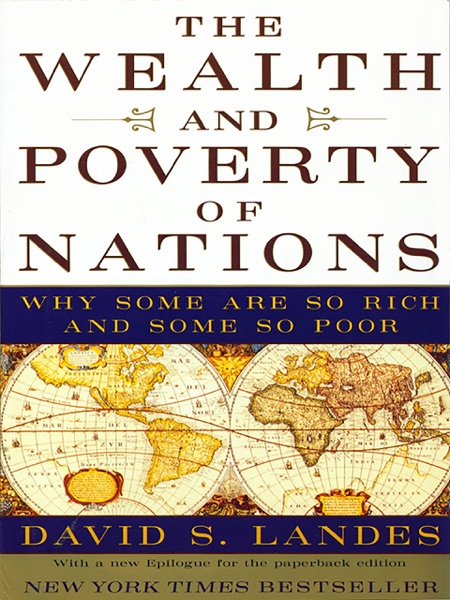
Talk to The Wealth and Poverty of Nations like its author wrote you back.
Get the ideas that fit your life — not generic summaries.
- Chat with the book
- Audiobook-style main ideas
- Adapts to your life and goals
- Helps you take action
Key takeaways
- 1.
Culture — particularly attitudes toward work, time, knowledge, and women's participation in the economy — explains long-run differences in national prosperity more than geography or natural resources alone.
- 2.
The Industrial Revolution happened in Britain rather than China or the Islamic world partly because European intellectual culture had developed a distinctive openness to empirical inquiry and technological experimentation.
- 3.
Protestant cultures in northwestern Europe developed a set of attitudes toward time, work discipline, and rational organization that proved unusually compatible with industrialization.
- 4.
Geography and climate matter, but primarily through their effects on institutions, disease burden, and agricultural productivity rather than as deterministic constraints on development.
- 5.
Colonial extraction and the slave trade imposed severe costs on the colonized world. Landes acknowledges this but argues it does not fully explain the divergence, which had cultural antecedents before European expansion.
- 6.
East Asia's economic rise in the twentieth century was enabled partly by cultural attitudes toward education, work, and the long-term — attitudes that Landes identifies as functionally similar to the Protestant ethic in their economic effects.
- 7.
Natural resources can be a curse rather than a blessing. Resource-rich countries often develop institutions that distribute resource rents rather than building the administrative, educational, and commercial capacity that creates durable prosperity.
- 8.
The gap between the richest and poorest nations has grown rather than narrowed over the past two centuries. The question of why requires an explanation that addresses both the drivers of growth and the persistence of poverty.
Discussion questions
Use these on your own, with a book club, or as chat starters in Superbook. Book club version, ready to copy or print →
- 1.
Landes argues that culture is the primary explanation for long-run prosperity differences. How do you evaluate that claim against structural explanations — institutions, geography, colonial history?
- 2.
His treatment of the Protestant work ethic draws on Weber. Do you find the cultural-attitudinal explanation persuasive, or does it risk circular reasoning (successful cultures are retrospectively identified as having the right values)?
- 3.
The Wealth and Poverty of Nations came under criticism for underweighting colonial extraction and slavery. Does Landes's account give those factors adequate weight?
- 4.
Acemoglu and Robinson argue in Why Nations Fail that institutions rather than culture explain development. After reading Landes, which account seems more compelling to you, and why?
- 5.
Landes is particularly interested in the question of why China, which had significant technological advantages over Europe in the medieval period, did not industrialize first. What does his answer imply about technological determinism?
- 6.
The book's treatment of East Asia's rise attributes it partly to cultural attitudes similar to the Protestant ethic. Is that framing fair, or does it impose a Western explanatory framework on non-Western development?
- 7.
Landes's argument implies that cultural change is necessary for development in persistently poor countries. Is that a practical policy prescription, and what would it mean to pursue it?
- 8.
The resource curse — the observation that natural resource abundance often correlates with worse governance and slower development — is one of Landes's consistent themes. Why would this be?
- 9.
The book was published in 1998. Which of Landes's analyses have held up in the intervening decades, and which have been challenged by subsequent economic history?
- 10.
Landes writes with evident enthusiasm for European and particularly British economic achievement. Does that affect how you weight his analysis of non-European development trajectories?
- 11.
What does the Wealth and Poverty of Nations suggest about the role of international development aid? Would Landes's framework support or undermine conventional development economics?
- 12.
Which of the historical episodes Landes covers — the Industrial Revolution, the divergence of Latin America, the East Asian miracle, the persistence of African poverty — do you find his analysis most and least persuasive?
Themes
Frequently asked questions
-
What is The Wealth and Poverty of Nations about?
It's an economic history of why some nations are rich and others poor, covering roughly five centuries. Landes argues that cultural factors — particularly attitudes toward work, knowledge, and women — explain long-run prosperity differences more than geography, natural resources, or luck. It's one of the major statements of the cultural explanation for development.
-
How does this book compare to Guns, Germs, and Steel?
Both address the same basic question — why did some parts of the world get rich and others didn't — but reach different answers. Diamond emphasizes geography and environmental factors; Landes emphasizes culture. They are best read together. The debate between environmental and cultural explanations remains unresolved in economic history.
-
Is the book controversial?
Yes. Landes's emphasis on cultural explanations, his relatively skeptical treatment of colonial extraction as a primary cause of poverty, and his admiration for European economic achievement have generated significant criticism from historians who emphasize structural and political explanations. The book is worth reading as a serious argument, not as a consensus view.
-
How long is The Wealth and Poverty of Nations?
About 650 pages; most readers take twelve to fourteen hours. Landes writes engagingly but covers an enormous historical sweep. The book rewards readers who work through it in sections organized around regions or periods.
-
Who should read this book?
Readers interested in economic history, development economics, or the big-picture question of why the world is organized as it is. It's demanding in scope but not in technical economics — Landes writes for an educated general reader. It pairs well with Why Nations Fail and Guns, Germs, and Steel for a multi-perspective treatment of the same question.
Similar books

Guns, Germs, and Steel
Jared Diamond
Why Nations Fail: The Origins of Power, Prosperity, and Poverty
Daron Acemoglu and James A. Robinson
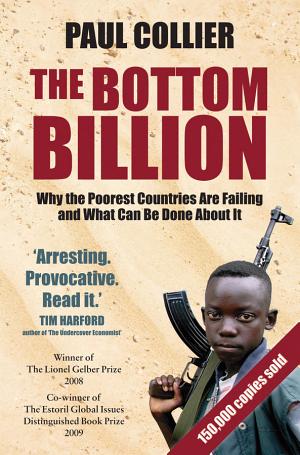
The Bottom Billion: Why the Poorest Countries Are Failing and What Can Be Done About It
Paul Collier

Sapiens: A Brief History of Humankind
Yuval Noah Harari
