Getting to Yes: Negotiating Agreement Without Giving In by Roger Fisher and William Ury is a 1981 business book about negotiation, conflict resolution, communication. Separate the people from the problem. Relationship damage and substantive disagreement are two different problems; conflating them makes both harder to solve.
Summary
Getting to Yes emerged from the Harvard Negotiation Project in the late 1970s and laid out a method its authors called principled negotiation. The central argument is that most people negotiate by staking out positions — demanding a number, a concession, a particular outcome — and then defending those positions under pressure. Fisher and Ury argue this is both inefficient and damaging to relationships. The alternative is to focus on interests rather than positions: what people actually need versus what they say they want. Two people arguing over an orange are both claiming the whole fruit, but one wants the juice and the other wants the rind. A positional negotiator splits the orange; a principled one asks why, and both leave with everything they need.
The book organizes its method into four elements. First, separate the people from the problem: treat the relationship as something to protect even as you negotiate hard on substance. Second, focus on interests, not positions. Third, invent options for mutual gain before committing to any of them — brainstorm without judgment before evaluating. Fourth, insist on using objective criteria: market rates, expert opinions, legal standards, or any external benchmark that neither side can dismiss as mere preference. These four elements work together. They shift the negotiation from a contest of wills to a joint problem-solving exercise.
Fisher and Ury also address what to do when the other side won't cooperate — when they use dirty tricks, make threats, or simply refuse to engage. Their answer is the BATNA: Best Alternative to a Negotiated Agreement. Knowing your BATNA clarifies when to walk away and prevents you from accepting a bad deal out of desperation. It also recalibrates how much pressure the other side can actually apply. A strong BATNA is leverage; a weak one is a reason to negotiate better terms elsewhere before sitting down.
The book is short and practical. It was written for business disputes, labor negotiations, and international conflict, but the framework applies to salary conversations, apartment leases, and any situation where two parties want different things. It has weaknesses: the model assumes a roughly level playing field and some degree of good faith from at least one side. In deeply asymmetric situations or with genuinely bad-faith actors, the advice strains. But for the vast majority of negotiations most people face, the four-part framework holds up as well in the 2020s as it did in 1981.
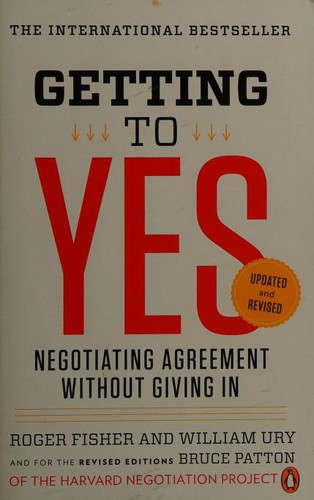
Talk to Getting to Yes: Negotiating Agreement Without Giving In like its author wrote you back.
Get the ideas that fit your life — not generic summaries.
- Chat with the book
- Audiobook-style main ideas
- Adapts to your life and goals
- Helps you take action
Key takeaways
- 1.
Separate the people from the problem. Relationship damage and substantive disagreement are two different problems; conflating them makes both harder to solve.
- 2.
Focus on interests, not positions. A position is what someone demands; an interest is why they demand it. Interests have more room for creative solutions.
- 3.
Invent options for mutual gain before evaluating any of them. Premature judgment kills ideas that might have worked with small modifications.
- 4.
Insist on objective criteria. Negotiating over who wants what more is a battle of wills; negotiating over what the market rate is, or what the contract says, gives both sides cover to move.
- 5.
Know your BATNA before you negotiate. Your Best Alternative to a Negotiated Agreement sets the floor below which no deal is worth taking.
- 6.
Positional bargaining wastes time, damages relationships, and often produces bad outcomes even for the side that 'wins.' A positional win can cost more than the value gained.
- 7.
Soft negotiators often lose to hard negotiators. The alternative to hard or soft is principled: tough on the problem, respectful of the person.
- 8.
When the other side uses dirty tricks — threats, deception, extreme anchors — name the tactic explicitly. Making it visible usually neutralizes it without escalating.
Discussion questions
Use these on your own, with a book club, or as chat starters in Superbook. Book club version, ready to copy or print →
- 1.
Fisher and Ury say most people negotiate positions rather than interests. Think of a recent disagreement — what was your stated position, and what was the underlying interest?
- 2.
What's a negotiation in your life where you've accepted a bad deal because you didn't know your BATNA? What would a stronger alternative have looked like?
- 3.
The book separates the people from the problem. Is there a relationship in your life where those two things have gotten tangled together in ways that make the problem harder to solve?
- 4.
Inventing options for mutual gain requires separating brainstorming from deciding. Where in your work or personal life do you collapse those two steps and end up with worse outcomes?
- 5.
Objective criteria give both sides cover to move without losing face. What external standards — market data, precedent, expert opinion — could you bring to a negotiation you're currently in?
- 6.
The BATNA concept suggests that power in a negotiation comes from your alternatives, not from the table itself. How much time do you spend improving your alternatives before negotiating?
- 7.
Fisher and Ury argue that a soft negotiator trying to preserve a relationship often damages it more by caving than a principled one would by holding firm. Do you recognize that pattern in yourself?
- 8.
Think of a negotiation where you won the position but damaged the relationship. Was the win worth it?
- 9.
The book was written partly for international diplomacy and labor disputes. Does the framework translate cleanly to the kinds of negotiations you actually face day to day?
- 10.
When someone uses a hardball tactic — a very low anchor, a threat, artificial urgency — what is your instinctive response? Does it help or hurt you?
- 11.
Getting to Yes assumes some degree of mutual rationality. What do you do when the other side isn't negotiating in good faith at all?
- 12.
The book distinguishes between a good negotiator and a pushover. Where does firmness tip into stubbornness for you, and how do you know when you've crossed that line?
Themes
Frequently asked questions
-
Is Getting to Yes still relevant?
Yes. The core insight — that negotiating interests rather than positions creates more value for both sides — hasn't dated. The examples feel slightly dated but the framework is as applicable to a 2025 salary negotiation or vendor contract as it was to the hostage crises and labor disputes the authors originally studied.
-
How long does it take to read Getting to Yes?
About three to three and a half hours. It's a short book — under 200 pages — and the writing is clear and direct. Most readers finish it in a single sitting or two evenings. The appendices on common objections are worth reading too.
-
What is the main idea of Getting to Yes?
That positional bargaining — staking out a demand and defending it — is a losing strategy for both sides. The alternative is principled negotiation: separate the people from the problem, focus on underlying interests, generate options creatively, and anchor agreements to objective standards rather than willpower.
-
What is a BATNA?
Best Alternative to a Negotiated Agreement. It's what you'll do if the current negotiation fails. A strong BATNA gives you real leverage because you can walk away without disaster; a weak one means almost any deal looks better than nothing. Fisher and Ury argue that improving your BATNA is often better preparation than improving your negotiating tactics.
-
How does Getting to Yes differ from Never Split the Difference?
Getting to Yes is a structured, rational framework built around shared problem-solving. Never Split the Difference draws on FBI hostage negotiation and leans on psychological tactics like calibrated questions and tactical empathy. They're complementary: Fisher and Ury assume some mutual good faith; Voss assumes the other side is trying to take advantage of you.
Similar books
Never Split the Difference
Chris Voss
Influence: The Psychology of Persuasion
Robert B. Cialdini
Crucial Conversations: Tools for Talking When Stakes Are High
Kerry Patterson, Joseph Grenny, Ron McMillan, and Al Switzler
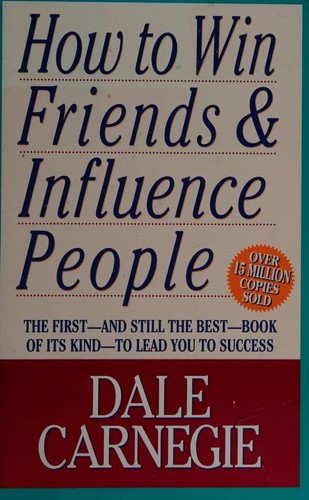
How to Win Friends and Influence People
Dale Carnegie
