
Topic · 8 books
The best books on death and mortality
Death is the one certainty every human shares, yet Western culture has spent the past century building elaborate systems to avoid confronting it directly. Books on death and dying span medicine, philosophy, memoir, and religious thought — together they form one of the most practically urgent and intellectually rich bodies of literature available. Reading widely in this field doesn't require morbidity; it tends, counterintuitively, to clarify what living well actually means.
-
01
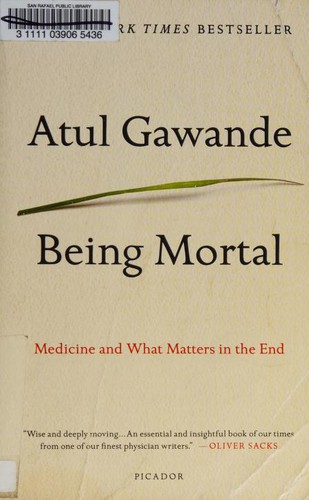
Being Mortal: Medicine and What Matters in the End
Atul Gawande
The book that forced a public conversation about how American medicine handles dying. Gawande argues — using patient cases and nursing home research — that the goal of medicine should be a good life to the very end, not maximum longevity at any cost. Its influence on end-of-life care policy has been measurable.
-
02
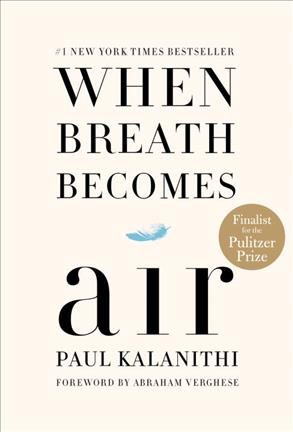
Paul Kalanithi
Kalanithi was a neurosurgeon finishing his residency when he was diagnosed with terminal lung cancer. Written as he was dying, this memoir asks what makes a life worth living with unusual authority — he had spent his career deciding, on behalf of others, which interventions prolonged meaningful existence and which merely prolonged dying.
-
03
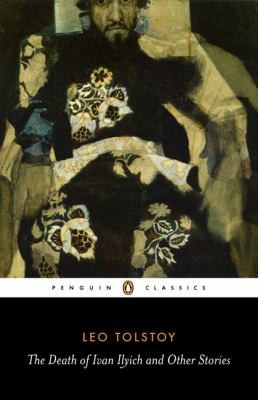
Leo Tolstoy
Tolstoy's 1886 novella remains one of the most psychologically precise accounts of dying: the denial, the isolation, the realization that one has lived for appearances rather than truth. It is short enough to read in an afternoon and dense enough to think about for years. Gawande cites it directly in Being Mortal.
-
Read these with Superbook
Chat with any book on this list — ask questions, get answers tuned to you.
-
04
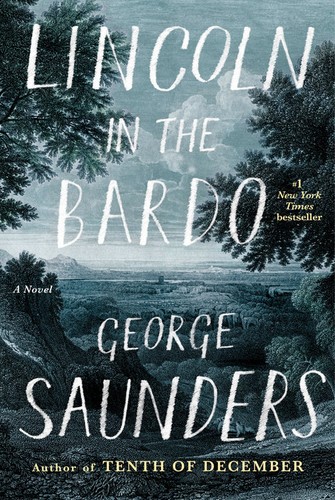
George Saunders
George Saunders uses the death of Abraham Lincoln's eleven-year-old son Willie as the organizing event for a novel about grief, attachment, and letting go. The bardo — the Tibetan Buddhist transitional state — becomes a formal device for exploring what holds souls to this life. Companion reading to the Tibetan Book of Living and Dying.
-
05
Joan Didion
Joan Didion's account of the year after her husband John Gregory Dunne died of a sudden heart attack at their dinner table. The title names the specific cognitive distortion grief produces: the irrational conviction that the dead will return if the right rituals are maintained. Honest about what mourning actually looks like rather than what it is supposed to.
-
06
C. S. Lewis
C.S. Lewis kept a journal in the weeks after his wife Joy died of cancer. Published under a pseudonym, it is not a theological consolation but a raw record of how grief nearly destroyed his faith, then reconstituted it differently. Pairs naturally with Didion — both are about the mind's attempt to narrate an absence.
-
07
Plato
Plato's account of Socrates' last hours before drinking hemlock. Socrates argues, calmly and with evident belief, that the philosopher has been practicing death all along — learning to separate the soul from bodily distraction. Whether or not the arguments convince, the equanimity on display has been a model for rational approaches to dying for 2,400 years.
-
08
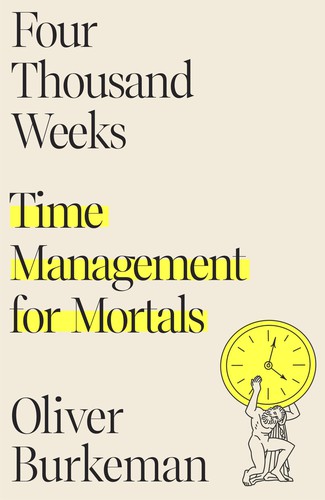
Four Thousand Weeks: Time Management for Mortals
Oliver Burkeman
Burkeman's central move is to treat mortality awareness not as morbid but as clarifying: if a human life is roughly four thousand weeks, the question of how to spend them sharpens considerably. Unlike most productivity books, it begins with the acceptance of finitude rather than treating time as a resource to be optimized. The philosophical debts to Heidegger and the Stoics are worn lightly.
More about this list
These eight books form a progression rather than a survey. They begin where most people first encounter mortality — in clinical medicine — and move outward through grief, existential philosophy, and the body itself.
Atur Gawande's Being Mortal establishes the problem: modern medicine has become expert at prolonging biological life while remaining awkward about the human dimensions of dying. Paul Kalanithi's When Breath Becomes Air turns the same medical system inside out, showing what it looks like from the patient-physician who can see both sides of the curtain simultaneously.
Tolstoy's novella and Lincoln in the Bardo approach the same territory through fiction — one with merciless psychological realism, one with exuberant formal invention — and demonstrate that narrative can reach places clinical argument cannot. Joan Didion and C.S. Lewis contribute the grief side: what remains after the death has already happened, and how the mind fails and reconstructs itself in the aftermath.
Socrates (via the Phaedo) and the Tibetan Buddhist tradition offer two very different frameworks for thinking about death philosophically — the Western rationalist and the contemplative Eastern — that reward comparison. Oliver Burkeman's Four Thousand Weeks arrives last in the reading order because it translates the existential weight of the earlier books into something actionable: a philosophy of time grounded in mortality awareness rather than productivity optimization.
The arc through this list is: diagnosis, witness, grief, philosophy, and finally a working relationship with finitude.
