Science · Similar reads
Books like The Code Book: The Science of Secrecy from Ancient Egypt to Quantum Cryptography
The best books like The Code Book: The Science of Secrecy from Ancient Egypt to Quantum Cryptography are A Brief History of Time, Algorithms to Live By: The Computer Science of Human Decisions, and Code: The Hidden Language of Computer Hardware and Software. The Code Book: The Science of Secrecy from Ancient Egypt to Quantum Cryptography by Simon Singh is about cryptography, history of science, mathematics. If that's what drew you in, here are 12 books that share its DNA — each summarized on Superbook, and ready to chat with in the app.
- A Brief History of Time
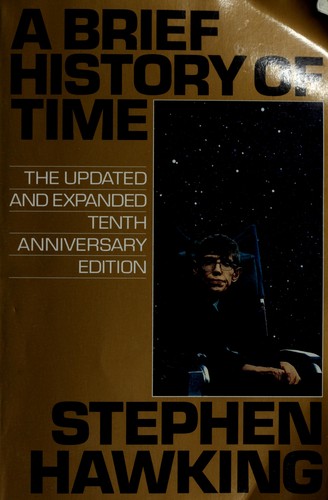
01
Stephen Hawking · Science
A Brief History of Time is Stephen Hawking's attempt to explain the biggest questions in physics — where the universe came from, how it behaves, and where it might be going — to readers with no scientific training.
A kindred science read.
Read the summary → - Algorithms to Live By: The Computer Science of Human Decisions
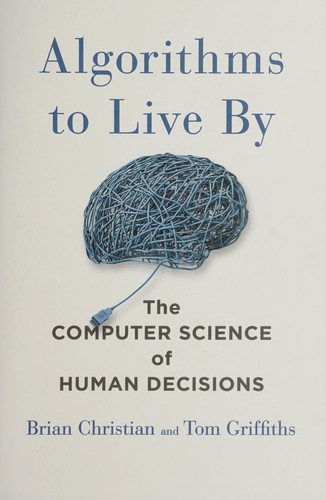
02
Algorithms to Live By: The Computer Science of Human Decisions
Brian Christian and Tom Griffiths · Psychology
Brian Christian is a writer and Tom Griffiths is a cognitive scientist, and together they argue that computer science has worked out rigorous solutions to many of the problems humans face every day — when to stop searching for a better option, how to manage your schedule, how to sort your memory — and that these solutions are both interesting and useful.
A kindred science read.
Read the summary → - Code: The Hidden Language of Computer Hardware and Software
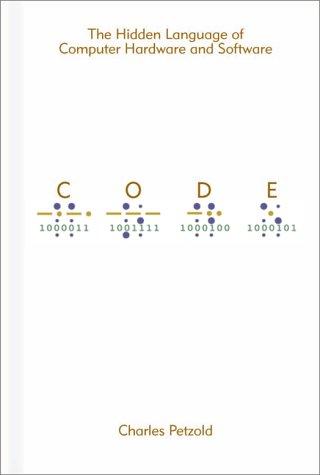
03
Code: The Hidden Language of Computer Hardware and Software
Charles Petzold · Science
Code is Charles Petzold's explanation of how computers work, built from first principles.
Both dig into technology.
Read the summary →
- Hackers: Heroes of the Computer Revolution
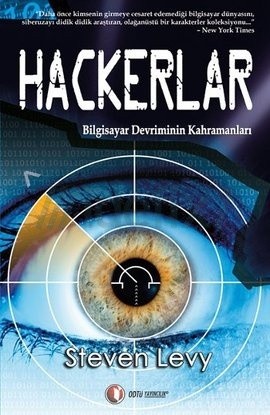
04
Hackers: Heroes of the Computer Revolution
Steven Levy · Science
Hackers: Heroes of the Computer Revolution is Steven Levy's account of the community of computer enthusiasts who drove the digital revolution from the late 1950s through the early 1980s — the original hackers of MIT's Tech Model Railroad Club and later AI lab, the hardware hackers of the Bay Area Homebrew Computer Club, and the software entrepreneurs who built the early PC industry.
A kindred science read.
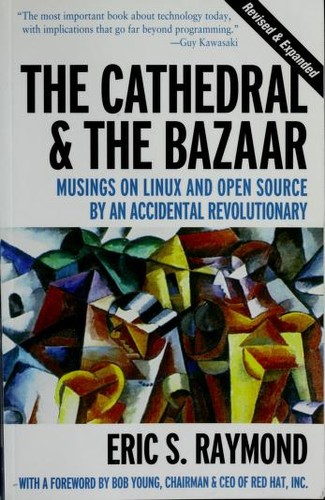
Read the summary → - The Cathedral and the Bazaar
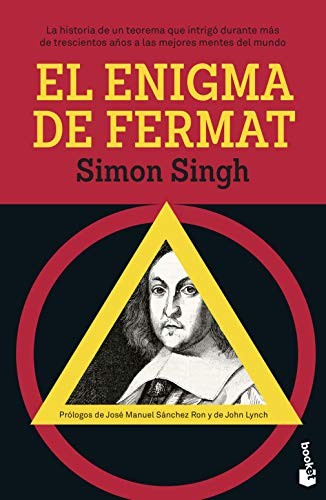
- Fermat's Enigma
06
Simon Singh · Science
In 1637, Pierre de Fermat scrawled a note in the margin of a mathematics book claiming to have found a proof that no three positive integers can satisfy the equation a^n + b^n = c^n for any integer value of n greater than 2 — but that the margin was too narrow to contain it.
Shares history of science and mathematics with The Code Book: The Science of Secrecy from Ancient Egypt to Quantum Cryptography.
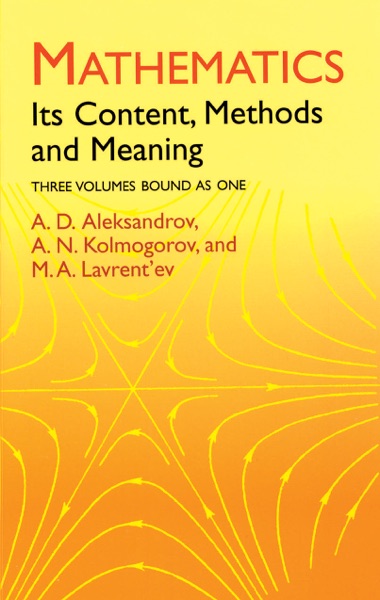
Read the summary → - Mathematics: Its Content, Methods and Meaning
07
Mathematics: Its Content, Methods and Meaning
Aleksandrov, Kolmogorov & Lavrent'ev · Science
Mathematics: Its Content, Methods and Meaning is a three-volume survey of mathematics compiled by a group of eminent Soviet mathematicians, originally published in Russian in 1956 and translated into English by the American Mathematical Society in 1963.
Shares history of science and mathematics with The Code Book: The Science of Secrecy from Ancient Egypt to Quantum Cryptography.
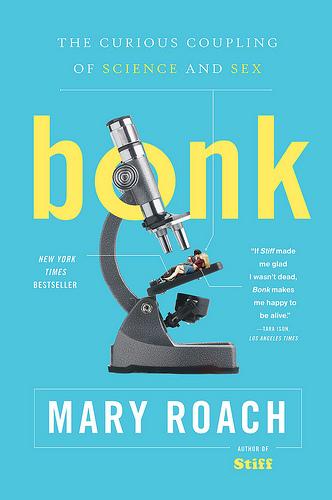
Read the summary → - Bonk: The Curious Coupling of Science and Sex
08
Bonk: The Curious Coupling of Science and Sex
Mary Roach · Science
Bonk is Mary Roach's investigation into the science of human sexuality — not the pop psychology of relationships, but the actual research: what scientists have done inside laboratory settings to understand how sex works, what they've discovered, and why the field has been so difficult to pursue given institutional and cultural resistance.
Both dig into history of science.
Read the summary → - Chaos: Making a New Science
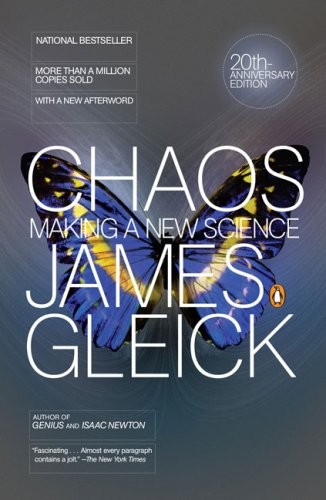
09
James Gleick · Science
Chaos: Making a New Science, published in 1987, tells the story of how a loose network of scientists working across meteorology, mathematics, biology, and physics in the 1960s and 1970s developed chaos theory — the study of systems that are deterministic but unpredictable because tiny differences in initial conditions produce wildly different outcomes.
Both dig into mathematics.
Read the summary → - Deep Learning
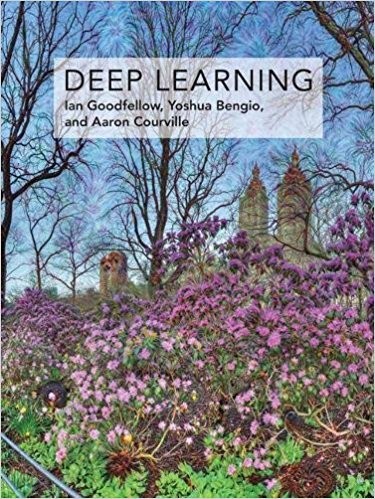
10
Ian Goodfellow, Yoshua Bengio, and Aaron Courville · Science
Deep Learning by Ian Goodfellow, Yoshua Bengio, and Aaron Courville is the standard graduate-level textbook on the mathematical and computational foundations of deep neural networks.
Both dig into mathematics.
Read the summary → - Gulp: Adventures on the Alimentary Canal
11
Gulp: Adventures on the Alimentary Canal
Mary Roach · Science
Gulp traces the alimentary canal from mouth to colon, using Mary Roach's standard method: firsthand visits to the researchers who work in each region, archival accounts of the stranger experiments in medical history, and a consistent willingness to ask the embarrassing questions that more decorous science writing leaves out.
Both dig into history of science.
Read the summary → - How Not to Be Wrong: The Power of Mathematical Thinking
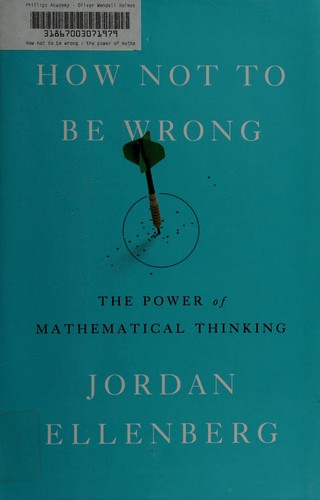
12
How Not to Be Wrong: The Power of Mathematical Thinking
Jordan Ellenberg · Science
Jordan Ellenberg is a research mathematician who writes as if mathematics is something you would want to think about over dinner.
Both dig into mathematics.
Read the summary →
Books like The Code Book: The Science of Secrecy from Ancient Egypt to Quantum Cryptography: quick answers
What are the best books like The Code Book: The Science of Secrecy from Ancient Egypt to Quantum Cryptography?
The best books like The Code Book: The Science of Secrecy from Ancient Egypt to Quantum Cryptography by Simon Singh are A Brief History of Time by Stephen Hawking, Algorithms to Live By: The Computer Science of Human Decisions by Brian Christian and Tom Griffiths, Code: The Hidden Language of Computer Hardware and Software by Charles Petzold, Hackers: Heroes of the Computer Revolution by Steven Levy, The Cathedral and the Bazaar by Eric S. Raymond, plus 7 more below. Each was chosen for themes it shares with The Code Book: The Science of Secrecy from Ancient Egypt to Quantum Cryptography, such as cryptography, history of science, mathematics.
What should I read after The Code Book: The Science of Secrecy from Ancient Egypt to Quantum Cryptography?
A natural next read after The Code Book: The Science of Secrecy from Ancient Egypt to Quantum Cryptography is A Brief History of Time by Stephen Hawking. A kindred science read. Other strong choices are Algorithms to Live By: The Computer Science of Human Decisions by Brian Christian and Tom Griffiths, Code: The Hidden Language of Computer Hardware and Software by Charles Petzold, Hackers: Heroes of the Computer Revolution by Steven Levy.
What books are similar to The Code Book: The Science of Secrecy from Ancient Egypt to Quantum Cryptography by Simon Singh?
The Code Book: The Science of Secrecy from Ancient Egypt to Quantum Cryptography centers on cryptography, history of science, mathematics. Books with a similar feel include A Brief History of Time by Stephen Hawking, Algorithms to Live By: The Computer Science of Human Decisions by Brian Christian and Tom Griffiths, Code: The Hidden Language of Computer Hardware and Software by Charles Petzold, Hackers: Heroes of the Computer Revolution by Steven Levy, The Cathedral and the Bazaar by Eric S. Raymond, Fermat's Enigma by Simon Singh — all free to read and chat with on Superbook.
