Science · Similar reads
Books like Mathematics: Its Content, Methods and Meaning
The best books like Mathematics: Its Content, Methods and Meaning are A Brief History of Time, Our Mathematical Universe, and Surely You're Joking, Mr. Feynman!. Mathematics: Its Content, Methods and Meaning by Aleksandrov, Kolmogorov & Lavrent'ev is about mathematics, logic, history of science. If that's what drew you in, here are 12 books that share its DNA — each summarized on Superbook, and ready to chat with in the app.
- A Brief History of Time
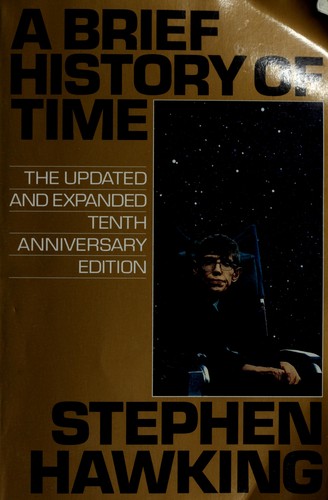
01
Stephen Hawking · Science
A Brief History of Time is Stephen Hawking's attempt to explain the biggest questions in physics — where the universe came from, how it behaves, and where it might be going — to readers with no scientific training.
A kindred science read.
Read the summary → - Our Mathematical Universe
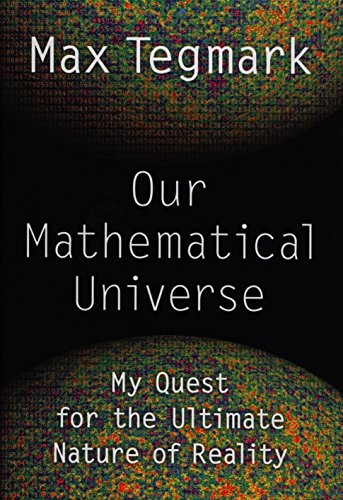
02
Max Tegmark · Science
Our Mathematical Universe is Max Tegmark's argument for what he calls the Mathematical Universe Hypothesis: the bold claim that the universe is not merely described by mathematics but is a mathematical structure.
Both dig into mathematics.
Read the summary → - Surely You're Joking, Mr. Feynman!
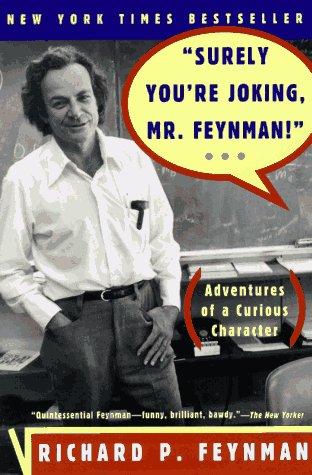
03
Surely You're Joking, Mr. Feynman!
Richard P. Feynman · Memoir
Surely You're Joking, Mr.
A kindred science read.
Read the summary →
- How Not to Be Wrong: The Power of Mathematical Thinking
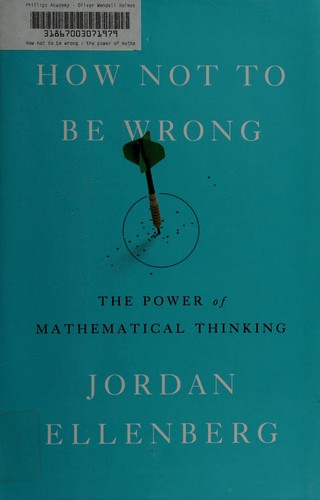
04
How Not to Be Wrong: The Power of Mathematical Thinking
Jordan Ellenberg · Science
Jordan Ellenberg is a research mathematician who writes as if mathematics is something you would want to think about over dinner.
Shares mathematics and logic with Mathematics: Its Content, Methods and Meaning.
Read the summary → - Fermat's Enigma
05
Simon Singh · Science
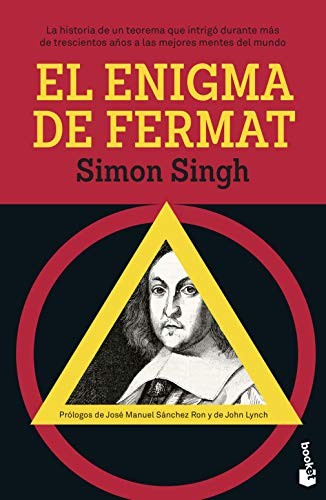
In 1637, Pierre de Fermat scrawled a note in the margin of a mathematics book claiming to have found a proof that no three positive integers can satisfy the equation a^n + b^n = c^n for any integer value of n greater than 2 — but that the margin was too narrow to contain it.
Shares mathematics and history of science with Mathematics: Its Content, Methods and Meaning.
Read the summary → - The Code Book: The Science of Secrecy from Ancient Egypt to Quantum Cryptography
06
The Code Book: The Science of Secrecy from Ancient Egypt to Quantum Cryptography
Simon Singh · Science
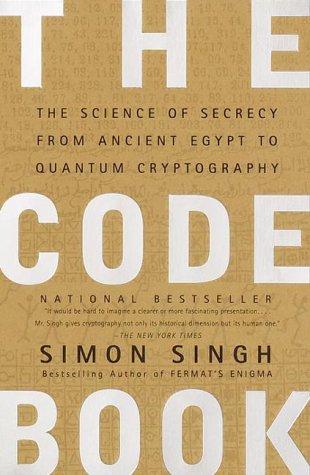
Simon Singh's The Code Book traces the history of cryptography from Caesar's cipher through the breaking of Enigma to the mathematics of public-key encryption and the looming possibility of quantum cryptography.
Shares mathematics and history of science with Mathematics: Its Content, Methods and Meaning.
Read the summary → - Bonk: The Curious Coupling of Science and Sex
07
Bonk: The Curious Coupling of Science and Sex
Mary Roach · Science
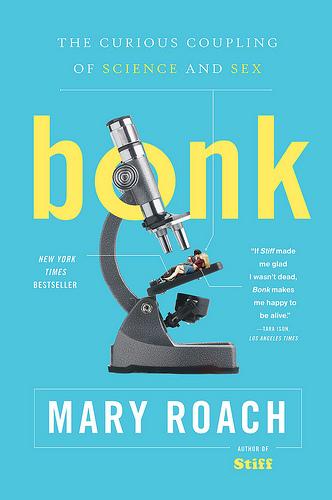
Bonk is Mary Roach's investigation into the science of human sexuality — not the pop psychology of relationships, but the actual research: what scientists have done inside laboratory settings to understand how sex works, what they've discovered, and why the field has been so difficult to pursue given institutional and cultural resistance.
Both dig into history of science.
Read the summary → - Chaos: Making a New Science
08
James Gleick · Science
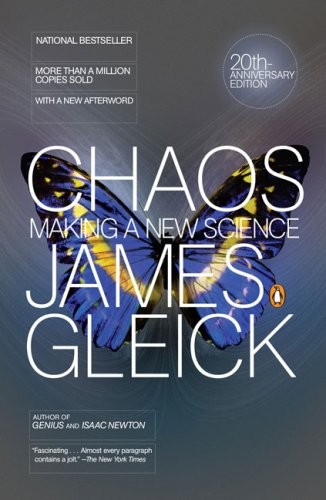
Chaos: Making a New Science, published in 1987, tells the story of how a loose network of scientists working across meteorology, mathematics, biology, and physics in the 1960s and 1970s developed chaos theory — the study of systems that are deterministic but unpredictable because tiny differences in initial conditions produce wildly different outcomes.
Both dig into mathematics.
Read the summary → - Deep Learning
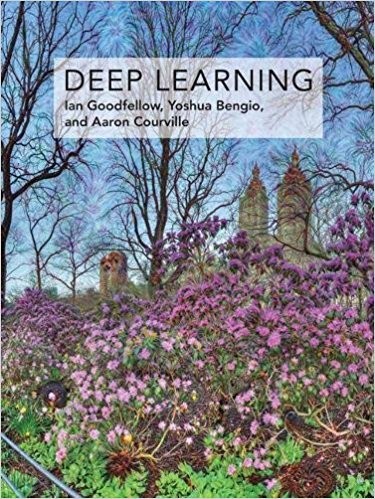
09
Ian Goodfellow, Yoshua Bengio, and Aaron Courville · Science
Deep Learning by Ian Goodfellow, Yoshua Bengio, and Aaron Courville is the standard graduate-level textbook on the mathematical and computational foundations of deep neural networks.
Both dig into mathematics.
Read the summary → - Gulp: Adventures on the Alimentary Canal
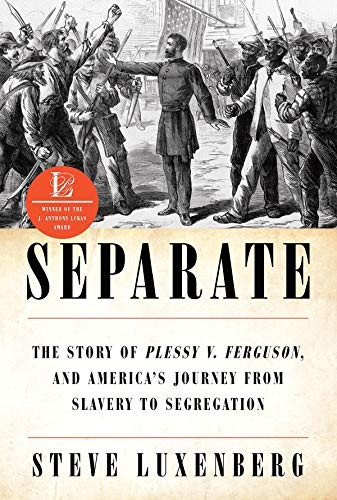
10
Gulp: Adventures on the Alimentary Canal
Mary Roach · Science
Gulp traces the alimentary canal from mouth to colon, using Mary Roach's standard method: firsthand visits to the researchers who work in each region, archival accounts of the stranger experiments in medical history, and a consistent willingness to ask the embarrassing questions that more decorous science writing leaves out.
Both dig into history of science.
Read the summary → - Is God a Mathematician?
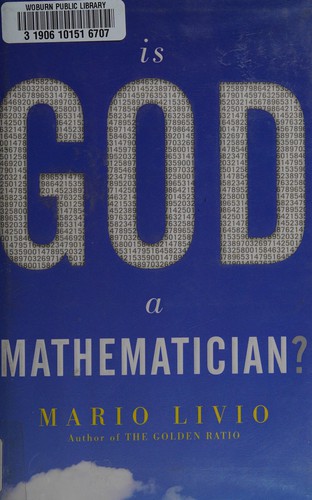
11
Mario Livio · Science
Mario Livio is an astrophysicist who has spent decades studying galaxies and supernovae, and who has been persistently haunted by a question that comes up whenever mathematics meets physics: why does abstract math, invented centuries before anyone knew it would be needed, keep turning out to perfectly describe physical reality?
Both dig into mathematics.
Read the summary → - Packing for Mars: The Curious Science of Life in the Void

12
Packing for Mars: The Curious Science of Life in the Void
Mary Roach · Science
Packing for Mars is Mary Roach's investigation into the unglamorous human problems of spaceflight: what happens to the body in zero gravity, how astronauts eat and sleep and go to the bathroom, what zero-g does to bones and muscles and the vestibular system, and how engineers have spent decades solving problems that are embarrassing to discuss but essential to solve.
Both dig into history of science.
Read the summary →
Books like Mathematics: Its Content, Methods and Meaning: quick answers
What are the best books like Mathematics: Its Content, Methods and Meaning?
The best books like Mathematics: Its Content, Methods and Meaning by Aleksandrov, Kolmogorov & Lavrent'ev are A Brief History of Time by Stephen Hawking, Our Mathematical Universe by Max Tegmark, Surely You're Joking, Mr. Feynman! by Richard P. Feynman, How Not to Be Wrong: The Power of Mathematical Thinking by Jordan Ellenberg, Fermat's Enigma by Simon Singh, plus 7 more below. Each was chosen for themes it shares with Mathematics: Its Content, Methods and Meaning, such as mathematics, logic, history of science.
What should I read after Mathematics: Its Content, Methods and Meaning?
A natural next read after Mathematics: Its Content, Methods and Meaning is A Brief History of Time by Stephen Hawking. A kindred science read. Other strong choices are Our Mathematical Universe by Max Tegmark, Surely You're Joking, Mr. Feynman! by Richard P. Feynman, How Not to Be Wrong: The Power of Mathematical Thinking by Jordan Ellenberg.
What books are similar to Mathematics: Its Content, Methods and Meaning by Aleksandrov, Kolmogorov & Lavrent'ev?
Mathematics: Its Content, Methods and Meaning centers on mathematics, logic, history of science. Books with a similar feel include A Brief History of Time by Stephen Hawking, Our Mathematical Universe by Max Tegmark, Surely You're Joking, Mr. Feynman! by Richard P. Feynman, How Not to Be Wrong: The Power of Mathematical Thinking by Jordan Ellenberg, Fermat's Enigma by Simon Singh, The Code Book: The Science of Secrecy from Ancient Egypt to Quantum Cryptography by Simon Singh — all free to read and chat with on Superbook.
