Science fiction · Similar reads
Books like Permutation City
The best books like Permutation City are Consciousness Explained, The Emperor's New Mind, and Our Mathematical Universe. Permutation City by Greg Egan is about simulated reality, consciousness and identity, determinism. If that's what drew you in, here are 12 books that share its DNA — each summarized on Superbook, and ready to chat with in the app.
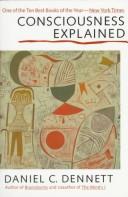
- Consciousness Explained
01
Daniel C. Dennett · Philosophy
Consciousness Explained is Daniel Dennett's attempt to replace what he calls the Cartesian Theater — the intuitive picture of consciousness as a single unified stream of experience observed by a self — with a model he calls Multiple Drafts.
A kindred science fiction read.
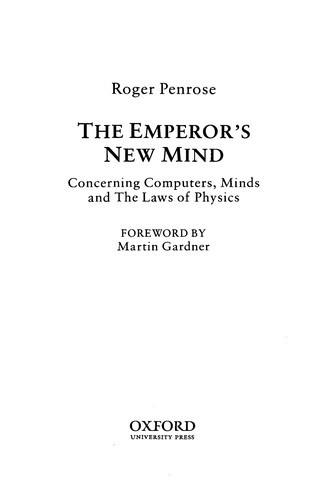
Read the summary → - The Emperor's New Mind
02
Roger Penrose · Science
The Emperor's New Mind is Roger Penrose's argument that human consciousness cannot be reproduced by any computational device — that the mind is not, in the relevant sense, a computer — and that understanding consciousness will require fundamental advances in physics, particularly in reconciling quantum mechanics with general relativity.
A kindred science fiction read.
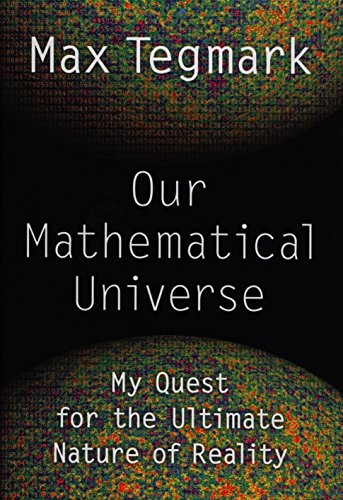
Read the summary → - Our Mathematical Universe
03
Max Tegmark · Science
Our Mathematical Universe is Max Tegmark's argument for what he calls the Mathematical Universe Hypothesis: the bold claim that the universe is not merely described by mathematics but is a mathematical structure.
A kindred science fiction read.
Read the summary →
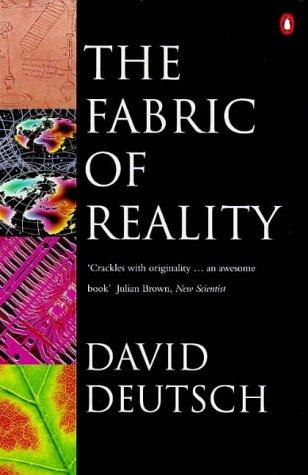
- The Fabric of Reality
04
David Deutsch · Science
The Fabric of Reality is David Deutsch's argument that four distinct strands of explanation — quantum physics, epistemology, the theory of evolution, and the theory of computation — are not separate fields but facets of a single unified description of reality.
A kindred science fiction read.
Read the summary → - How the Mind Works
05
Steven Pinker · Science
How the Mind Works is Steven Pinker's synthesis of cognitive science and evolutionary psychology, built around a central thesis: the mind is a computational system — a neural computer — shaped by natural selection to solve the adaptive problems that faced our ancestors on the Pleistocene savanna.
A kindred science fiction read.
Read the summary → - Blindsight
06
Peter Watts · Science fiction
Blindsight follows a crew of post-human specialists sent to intercept an alien object at the edge of the solar system in 2082.
Both dig into free will.
Read the summary → - Ethics
07
Baruch Spinoza · Philosophy
Spinoza's Ethics, published posthumously in 1677, is one of the most systematically ambitious works in Western philosophy.
Both dig into free will.
Read the summary → - Homo Deus: A Brief History of Tomorrow
08
Homo Deus: A Brief History of Tomorrow
Yuval Noah Harari · History
Homo Deus picks up where Sapiens left off, but turns to face the other direction.
Both dig into free will.
Read the summary → - Incognito: The Secret Lives of the Brain
09
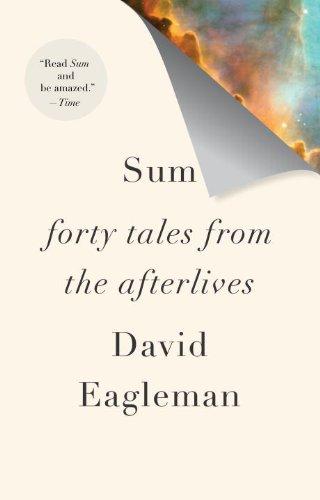
Incognito: The Secret Lives of the Brain
David Eagleman · Psychology
David Eagleman is a neuroscientist at Stanford who argues that the conscious self is a late, small, and largely uninformed participant in the brain's activity.
Both dig into free will.
Read the summary → - 2001: A Space Odyssey
10
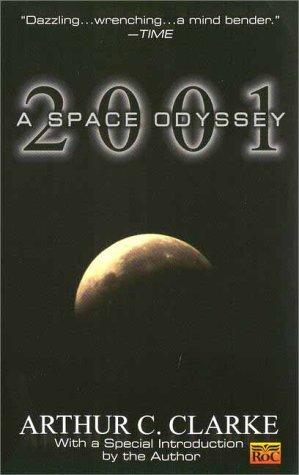
Arthur C. Clarke · Science fiction
2001: A Space Odyssey begins with prehistoric man-apes encountering a featureless black monolith that somehow catalyzes their cognitive leap from prey to hunter.
A kindred science fiction read.
Read the summary → - A Fire Upon the Deep
11
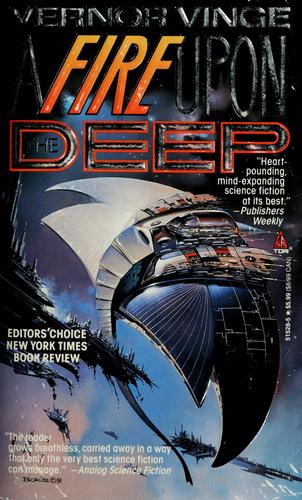
Vernor Vinge · Science fiction
The galaxy in A Fire Upon the Deep is zoned by the speed of thought: near the galactic core, the Slowness, where intelligence itself is limited; farther out, the Unthinking Depths; and further still, the Transcend, where entities of incomprehensible intelligence emerge and occasionally intervene in the affairs of the merely civilized.
A kindred science fiction read.
Read the summary → - A Long Way to a Small, Angry Planet
12
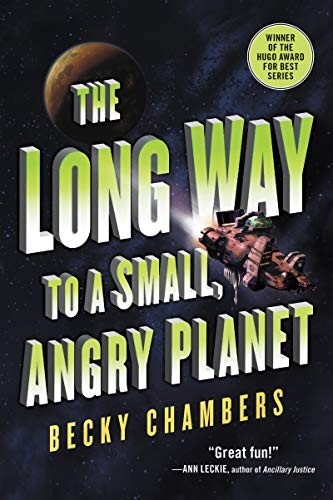
A Long Way to a Small, Angry Planet
Becky Chambers · Science fiction
Rosemary Harper boards the Wayfarer under a false identity, hoping to escape a family history she cannot speak about.
A kindred science fiction read.
Read the summary →
Books like Permutation City: quick answers
What are the best books like Permutation City?
The best books like Permutation City by Greg Egan are Consciousness Explained by Daniel C. Dennett, The Emperor's New Mind by Roger Penrose, Our Mathematical Universe by Max Tegmark, The Fabric of Reality by David Deutsch, How the Mind Works by Steven Pinker, plus 7 more below. Each was chosen for themes it shares with Permutation City, such as simulated reality, consciousness and identity, determinism.
What should I read after Permutation City?
A natural next read after Permutation City is Consciousness Explained by Daniel C. Dennett. A kindred science fiction read. Other strong choices are The Emperor's New Mind by Roger Penrose, Our Mathematical Universe by Max Tegmark, The Fabric of Reality by David Deutsch.
What books are similar to Permutation City by Greg Egan?
Permutation City centers on simulated reality, consciousness and identity, determinism. Books with a similar feel include Consciousness Explained by Daniel C. Dennett, The Emperor's New Mind by Roger Penrose, Our Mathematical Universe by Max Tegmark, The Fabric of Reality by David Deutsch, How the Mind Works by Steven Pinker, Blindsight by Peter Watts — all free to read and chat with on Superbook.
