
Topic · 10 books
Essential AI safety and alignment reading list
AI safety and alignment is the field concerned with ensuring that increasingly capable AI systems behave in ways that are actually beneficial — and don't cause catastrophic harm through misspecification, misuse, or uncontrolled capability gains. What began as a fringe concern in the early 2000s has become one of the most contested and consequential areas in technology policy and computer science. Reading across this literature offers grounding in both the technical arguments and the philosophical stakes before those debates reach mainstream governance.
-
01
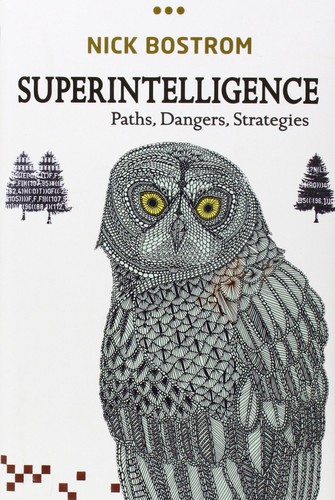
Superintelligence: Paths, Dangers, Strategies
Nick Bostrom
The book that put AI existential risk on the intellectual map. Bostrom's case — that a sufficiently capable optimizer pursuing any fixed goal could instrumentally acquire resources and resist shutdown — remains the most formal statement of the core argument. Still the primary reference for the safety field even where researchers disagree with its conclusions.
-
02
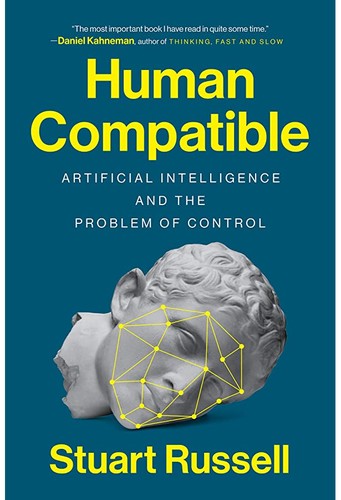
Human Compatible: Artificial Intelligence and the Problem of Control
Stuart Russell
Russell, co-author of the standard AI textbook, argues the field has been building toward the wrong objective function. His alternative — systems that remain uncertain about human preferences rather than maximizing a fixed specification — is the most technically coherent reform proposal to come from inside mainstream AI research.
-
03
Brian Christian
Christian spent years interviewing researchers across machine learning, reinforcement learning, and value alignment. The result is the most accessible account of why getting systems to do what we actually want — rather than what we wrote down — turns out to be genuinely hard. Covers real deployed systems, not hypotheticals.
-
Read these with Superbook
Chat with any book on this list — ask questions, get answers tuned to you.
-
04
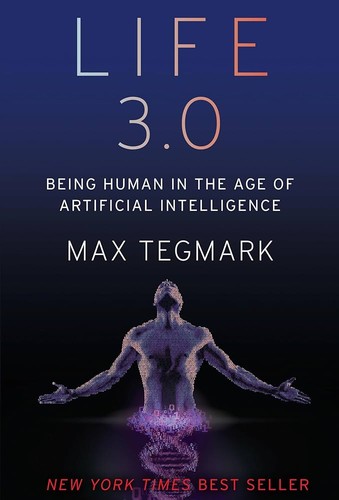
Life 3.0: Being Human in the Age of Artificial Intelligence
Max Tegmark
Tegmark surveys the full range of AI futures, from utopian to catastrophic, without foreclosing any of them. More useful as a map of the possibility space than as a prediction. The Asilomar AI Principles process he helped organize grew partly out of the conversations this book generated among researchers.
-
05
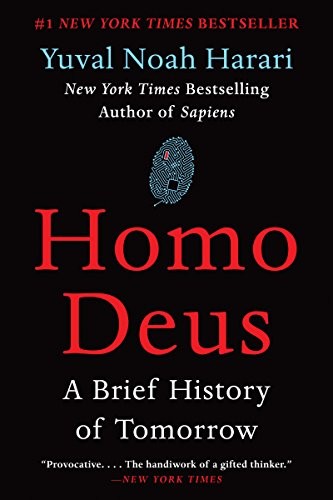
Homo Deus: A Brief History of Tomorrow
Yuval Noah Harari
Harari's concern — that humans may cede decision-making to opaque systems through preference rather than coercion — reframes the alignment problem as a cultural and political challenge, not only a technical one. Less rigorous than Bostrom or Russell, but more widely read, making it a useful lens for understanding public discourse.
-
06
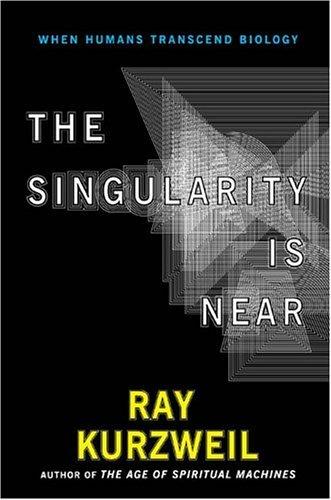
Ray Kurzweil
Kurzweil's optimistic counterpoint to the safety literature. His law of accelerating returns and the vision of intelligence explosion as fundamentally benign is the premise that alignment researchers are most directly arguing against. Reading it gives the other side of the debate its strongest formulation.
-
07
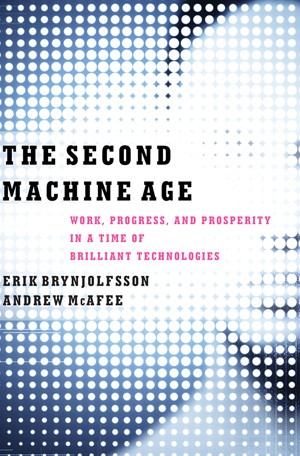
Erik Brynjolfsson and Andrew McAfee
Brynjolfsson and McAfee provide the economic context: AI as a general-purpose technology that decouples productivity from employment. The alignment problem doesn't exist in a vacuum — it plays out in economies where AI is already restructuring labor markets in ways that are hard to reverse.
-
08
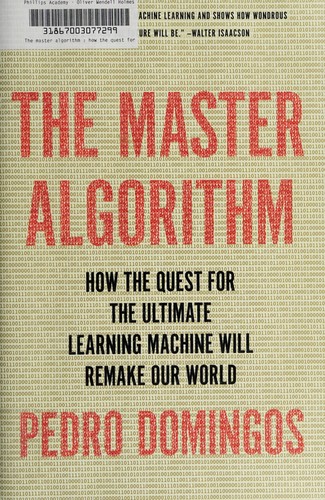
Pedro Domingos
Domingos maps the five major paradigms of machine learning before deep learning became dominant. Understanding what these systems actually are — and what properties they inherit from their training objectives — grounds the alignment debate in technical specifics rather than science fiction.
-
09
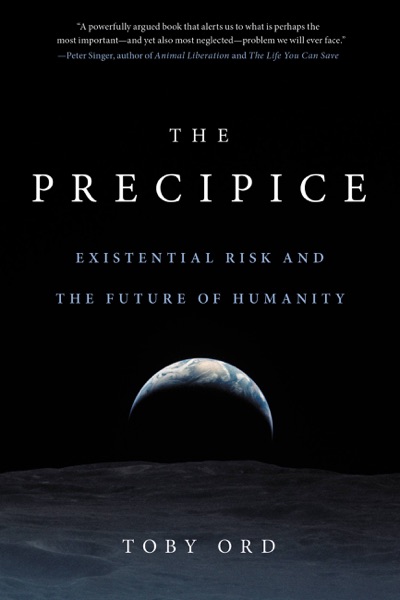
The Precipice: Existential Risk and the Future of Humanity
Toby Ord
Ord, a philosopher at Oxford's Future of Humanity Institute, places AI risk within a broader taxonomy of existential threats and attempts probability estimates for each. His calibrated approach — acknowledging uncertainty while still arguing for prioritization — offers a useful epistemological model for evaluating AI timeline and risk claims.
-
10
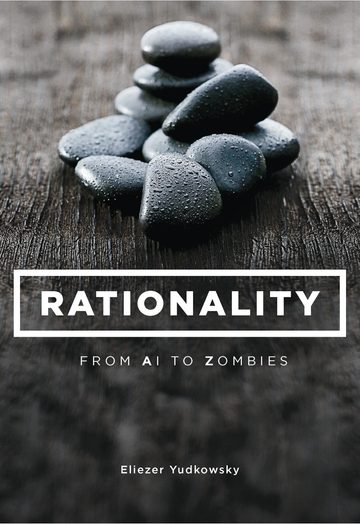
Rationality: From AI to Zombies
Eliezer Yudkowsky
Yudkowsky's collected LessWrong essays, free online and in compiled book form, develop the epistemic foundations that underpin his AI doom arguments. The reasoning about cognitive biases, Bayesian updating, and decision theory is independently useful; the AI safety arguments that follow are the most influential non-peer-reviewed work in the field.

More about this list
The canonical entry point is Bostrom's Superintelligence, which laid out the formal case for existential risk from advanced AI and established the vocabulary — orthogonality thesis, instrumental convergence, value alignment — that subsequent work either builds on or argues against. Reading it first matters not because every claim holds up, but because nearly every later book is in dialogue with it.
From there the list bifurcates. Stuart Russell's Human Compatible and Brian Christian's The Alignment Problem represent the technically grounded wing: what does it concretely mean for an AI system to be aligned, and why is the problem harder than it looks? Eliezer Yudkowsky's collected essays (available as a free compilation and excerpted in various forms) represent the more urgent, doom-adjacent wing — his argument that default AI development trajectories lead to catastrophe is influential enough that any serious reading of the field requires engaging with it.
The middle of the list widens the frame. Tegmark's Life 3.0 maps the possibility space without committing to a single outcome. Harari's Homo Deus approaches the same territory from a historian's vantage, less rigorous but more culturally pervasive. The second half turns to forecasting and governance: Philip Tetlock's Superforecasting provides the epistemological tools for evaluating AI timeline claims, while Ord's The Precipice places AI risk in the broader context of existential threats.
Reading this list in order, the 10th book should change how you read the 1st: Bostrom's abstract arguments become more tractable after Christian's grounded reporting, and Ord's measured probability estimates give Yudkowsky's alarm more analytic shape than his original framing allows.
