
Topic · 14 books
The best books on Artificial Intelligence
Artificial intelligence has moved from academic curiosity to the defining technology of the early 21st century in a span of roughly a decade. This list covers the field from multiple angles: its history, its technical foundations, its economic consequences, and the genuine risks it poses to society. Reading widely across these perspectives gives a more honest picture than any single vantage point — the hype, the fear, and the sober analysis all contain partial truths.
-
01
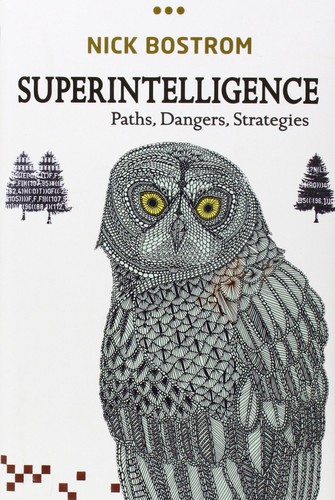
Superintelligence: Paths, Dangers, Strategies
Nick Bostrom
Bostrom's 2014 case that a sufficiently capable AI system could pose an existential risk remains the most rigorous statement of that argument. Whether or not you accept his conclusions, the book defined the terms of the safety debate and is still the primary reference for anyone working on alignment.
-
02
Brian Christian
Brian Christian spent years talking to researchers across machine learning, reinforcement learning, and AI safety. The result is the most readable account of why getting AI to do what we actually want — rather than what we specified — turns out to be genuinely hard. Grounded in real systems rather than hypotheticals.
-
03
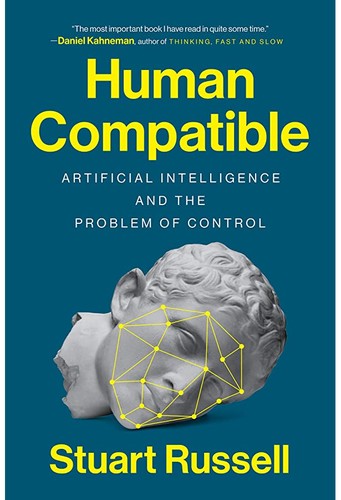
Human Compatible: Artificial Intelligence and the Problem of Control
Stuart Russell
Stuart Russell, co-author of the standard AI textbook, argues that the field has been optimizing for the wrong objective. His proposed fix — building systems that are uncertain about human preferences rather than certain about a fixed goal — is both technically specific and philosophically coherent.
-
Read these with Superbook
Chat with any book on this list — ask questions, get answers tuned to you.
-
04
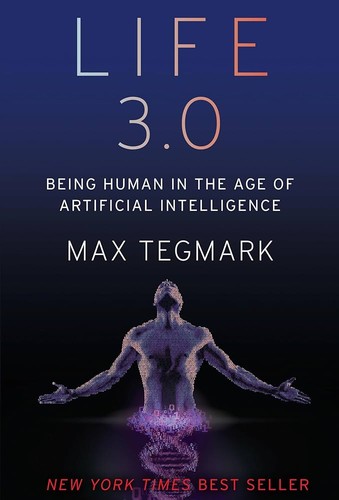
Life 3.0: Being Human in the Age of Artificial Intelligence
Max Tegmark
Tegmark surveys a wide range of possible futures — from utopian to catastrophic — without committing to a single forecast. More useful as a map of the possibility space than as a prediction. The Asilomar conference he helped organize grew partly out of the conversations this book catalyzed.
-
05
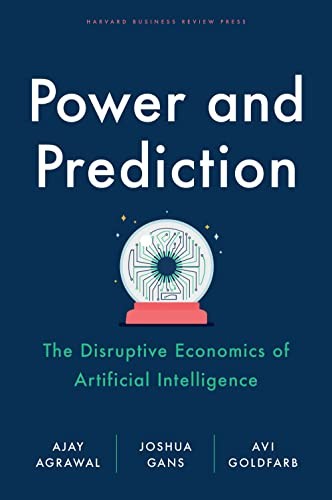
Power and Prediction: The Disruptive Economics of Artificial Intelligence
Ajay Agrawal, Joshua Gans, and Avi Goldfarb
Agrawal, Gans, and Goldfarb apply economic logic to AI's real contribution: cheap prediction. The framework — AI as prediction machine that changes the relative value of judgment and data — is more useful for understanding where AI creates and destroys value than any amount of case studies.
-
06
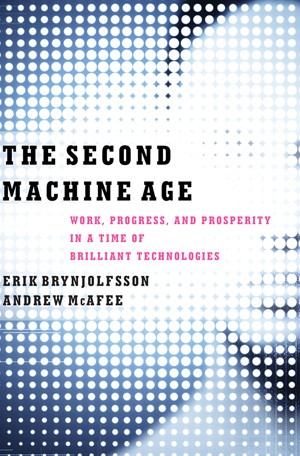
Erik Brynjolfsson and Andrew McAfee
Brynjolfsson and McAfee wrote this before deep learning became dominant, but the core thesis — that digital technology decouples productivity from employment — has aged well. Sets the economic context for every subsequent debate about automation and labor.
-
07
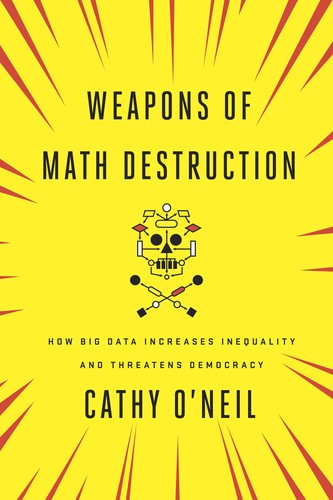
Cathy O'Neil
Cathy O'Neil catalogues algorithmic systems deployed in hiring, lending, policing, and education that reinforce rather than correct existing inequities. The book's value is empirical: these are real systems with documented effects, not speculative risks.
-
08
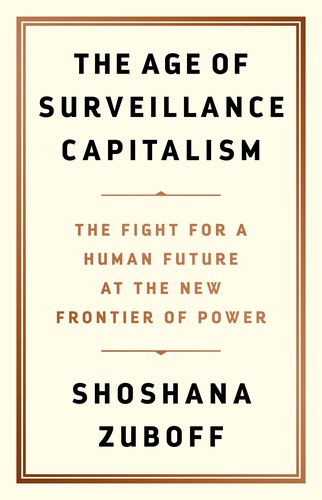
The Age of Surveillance Capitalism: The Fight for a Human Future at the New Frontier of Power
Shoshana Zuboff
Zuboff's argument — that behavioral prediction markets constitute a new economic logic, not just a business model — is sprawling and sometimes polemical. But no other book comes close to explaining why data extraction feels qualitatively different from earlier forms of capitalism.
-
09
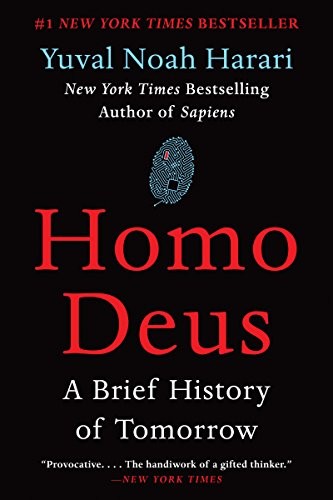
Homo Deus: A Brief History of Tomorrow
Yuval Noah Harari
Harari's section on dataism and algorithmic authority is the most thought-provoking part of this uneven book. His concern that humans may cede decision-making to opaque systems — not through coercion but through preference — reframes the alignment problem as a cultural rather than purely technical challenge.
-
10
Pedro Domingos
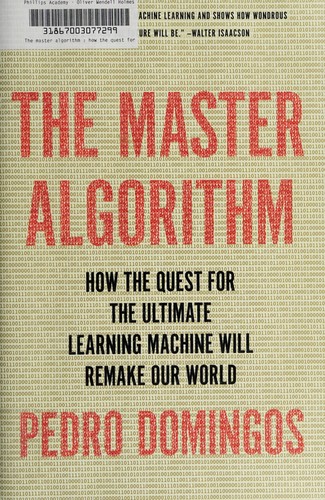
Pedro Domingos provides an unusually clear overview of the five major schools of machine learning — symbolists, connectionists, evolutionaries, Bayesians, and analogizers — and what each can and cannot do. A useful map of the field before deep learning came to dominate most of the territory.
-
11
Cade Metz
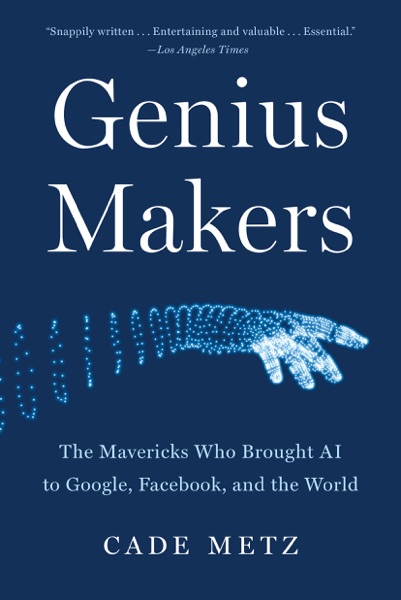
Metz covered AI for the New York Times and Wired for over a decade. This is a narrative history of the deep learning revolution told through the people who built it — Hinton, LeCun, Ng, and the internal dynamics of Google, Facebook, and OpenAI. The best single account of how the current moment came to be.
-
12
Mustafa Suleyman
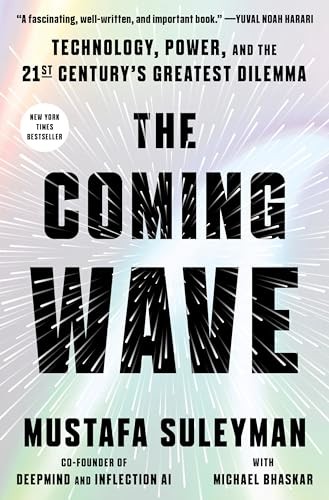
Suleyman co-founded DeepMind and later led Microsoft AI. His argument is that AI and synthetic biology together constitute a wave of general-purpose technologies whose containment will define geopolitics for the next generation. More operationally grounded than most forecasting books because the author was inside the lab.
-
13
Kate Crawford
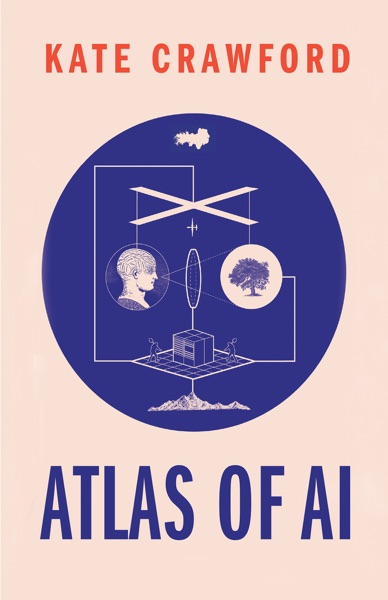
Crawford traces AI systems back to their physical infrastructure — lithium mines, data center labor, military contracts, energy grids. Corrects the tendency to treat AI as purely informational. The book does not try to balance these costs against benefits, which is its limitation as well as its point.
-
14
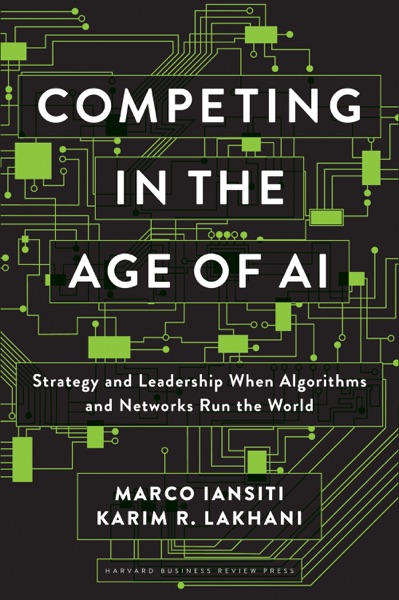
Marco Iansiti & Karim Lakhani
Iansiti and Lakhani examined AI-native firms — Ant Financial, Ocado, Amazon — and documented how AI changes firm architecture, not just processes. The shift from traditional operating models to AI-driven ones turns out to restructure competitive dynamics in ways that standard strategy frameworks miss.

More about this list
The books here are arranged to build understanding in layers. Start with the history — Cade Metz's Genius Makers puts faces and rivalries on what otherwise reads as an abstract technological leap. From there, the theoretical works by Stuart Russell and Nick Bostrom provide the analytical vocabulary for thinking about what capable AI systems actually are and what aligning them with human values requires.
The middle of the list turns to consequences. Power and Prediction examines how AI restructures decisions and the economic entities that make them. Weapons of Math Destruction and The Age of Surveillance Capitalism look at what happens when algorithmic systems meet real institutions — the results are rarely neutral. Shoshana Zuboff's book is the most expansive account of how behavioral data became an economic logic unto itself.
The final tier is speculative but grounded. Tegmark's Life 3.0 and Suleyman's The Coming Wave take seriously the possibility that the next decade will be qualitatively different from the last. Kate Crawford's Atlas of AI pushes back on triumphalism by tracing AI's material costs — the labor, the energy, the geopolitics. Taken together, the arc runs from 'what AI is and where it came from' through 'what it is doing right now' to 'what it might become and at what cost.'
