
Topic · 10 books
The best books on strategic thinking
Strategic thinking is the discipline of positioning and decision-making under uncertainty — reading the environment, shaping it, and acting before an adversary or competitor can. It spans military theory, political philosophy, game theory, and business strategy, and the best work in the field shares a common preoccupation: how do you win not by being stronger, but by being smarter about where and when to apply force or resources?
-
01
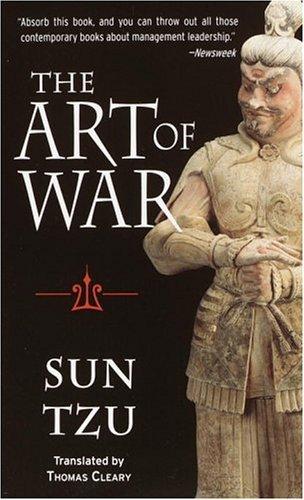
Sun Tzu
The original text on strategic positioning. Sun Tzu's core insight — that winning without fighting is the highest form of strategy — runs through everything that followed. Short enough to read in an afternoon, dense enough to argue about for a career.
-
02
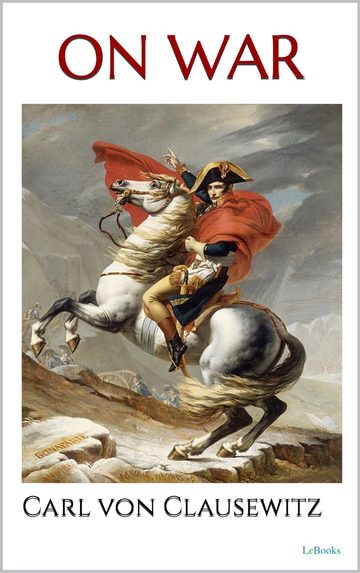
Carl von Clausewitz
Clausewitz introduces friction, fog, and the political nature of conflict as irreducible elements of strategy. His insistence that war is a continuation of politics by other means is the foundational challenge to anyone who wants a purely technical theory of winning.
-
03
Strategy: The Indirect Approach
B. H. Liddell Hart
Liddell Hart's historical survey of military campaigns argues that dislocation — attacking an enemy's psychological equilibrium and logistics rather than their strength — is consistently more decisive than frontal assault. A direct critique of Clausewitz's legacy applied to 20th-century warfare.
-
Read these with Superbook
Chat with any book on this list — ask questions, get answers tuned to you.
-
04
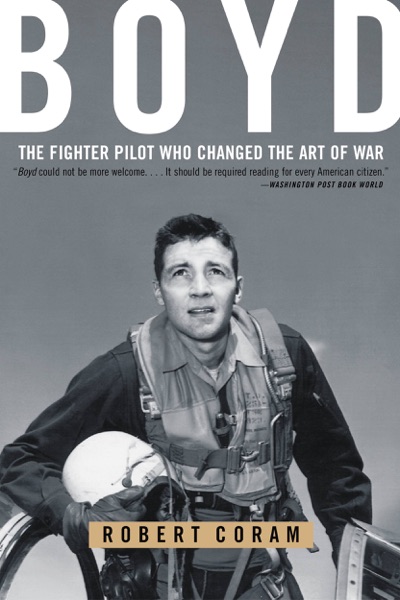
Boyd: The Fighter Pilot Who Changed the Art of War
Robert Coram
The definitive account of John Boyd and the OODA loop. Boyd's contribution was to show that strategy is fundamentally about time and adaptation: the side that observes, orients, decides, and acts faster keeps the opponent reacting rather than acting. His ideas crossed into business, software, and lean manufacturing.
-
05
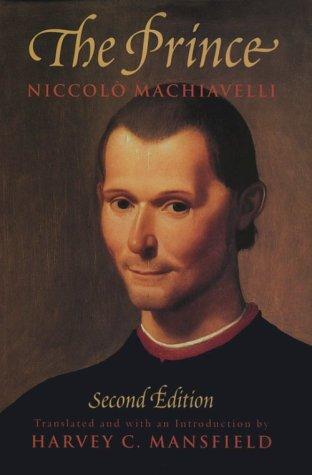
Niccolò Machiavelli
Machiavelli's handbook on political strategy remains disturbing because it separates effectiveness from morality — a distinction every strategic thinker eventually has to confront. His analysis of how new rulers consolidate power is still the sharpest treatment of legitimacy under conditions of uncertainty.
-
06
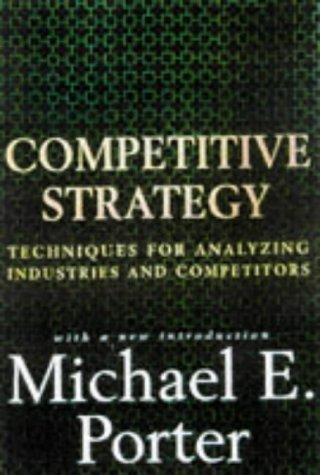
Michael E. Porter
Porter's five forces framework gave business strategy an analytical backbone. By mapping supplier power, buyer power, threat of substitutes, barriers to entry, and competitive rivalry, he made industry structure a strategic variable rather than a fixed backdrop.
-
07
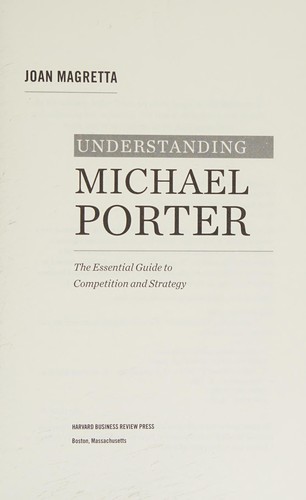
Understanding Michael Porter: The Essential Guide to Competition and Strategy
Joan Magretta
Joan Magretta's accessible synthesis of Porter's body of work clarifies the distinction between operational effectiveness and strategy proper. Essential for anyone who found Competitive Strategy dense or wants the argument stripped of its academic scaffolding.
-
08
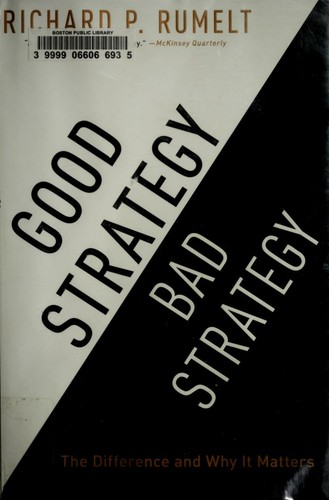
Richard Rumelt
Rumelt's most important contribution is diagnosing what makes strategy bad — fluff, failure to face the challenge, goals masquerading as strategies. His kernel model (diagnosis + guiding policy + coherent actions) is the clearest framework for actually writing strategy, not just talking about it.
-
09
Playing to Win: How Strategy Really Works
Roger L. Martin and A.G. Lafley
Lafley and Martin's account of strategy at Procter & Gamble frames every strategic decision as a cascade of five choices: winning aspiration, where to play, how to win, capabilities, and management systems. One of the few strategy books built from actual corporate decisions rather than retrospective pattern-matching.
-
10
Andrew S. Grove
Andy Grove's concept of the strategic inflection point — the moment when the forces acting on a business fundamentally shift — is one of the most useful constructs in competitive strategy. Written from his experience navigating Intel through the transition from memory chips to microprocessors.
More about this list
The books on this list form an argument about strategy as an evolving practice. Sun Tzu's compact aphorisms establish the foundations: know the enemy, know yourself, avoid direct confrontation where indirect means will serve. Clausewitz then complicates the picture — war is not a clean formula but a continuation of politics, saturated with friction and fog. Liddell Hart's indirect approach reads Clausewitz critically and argues that attacking an opponent's equilibrium matters more than mass destruction.
Boyd's OODA loop (not a book per se, but well documented in Coram's biography) introduced a temporal dimension: strategy is about cycling through observation, orientation, decision, and action faster than your opponent can adapt. This framework crossed from military doctrine into Silicon Valley and lean startup culture, where it blends with Porter's positioning logic and Rumelt's insistence that good strategy requires a diagnosis, a guiding policy, and coherent actions — not just a wish list.
The later books on the list test these ideas against real competitive dynamics: zero-sum markets, platform lock-in, cognitive biases, and the paradox of antifragility. Read in order, the list moves from timeless first-principles to the specific conditions of modern business. By the time you finish Rumelt, the clarity of Sun Tzu should feel different — richer and more demanding — than it did at the start.
