
Topic · 12 books
The best books on founding a startup
Founding a startup means navigating a gauntlet of decisions — which problem to solve, whether customers actually want it, how to build fast enough, how to manage a growing team, when to raise money and from whom. The books that matter most here aren't general business texts: they're written by people who did it, watched others do it, or studied the pattern closely enough to extract real principles.
-
01
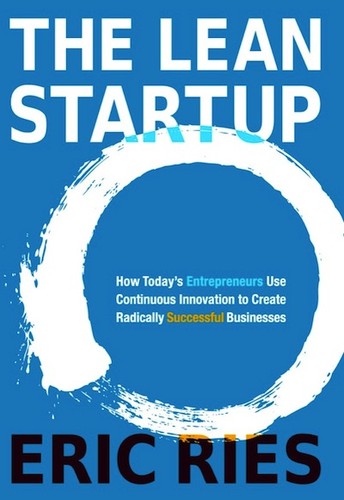
Eric Ries
The book that introduced build-measure-learn loops and the minimum viable product to a mainstream audience. Still the clearest articulation of why premature scaling kills startups, and why feedback from real customers matters more than planning.
-
02
The Four Steps to the Epiphany
Steve Blank
Blank's denser, earlier book that Lean Startup distilled. The customer development methodology laid out here — customer discovery, customer validation, company creation, company building — is the substrate for most modern startup thinking. Harder read, more complete framework.
-
03
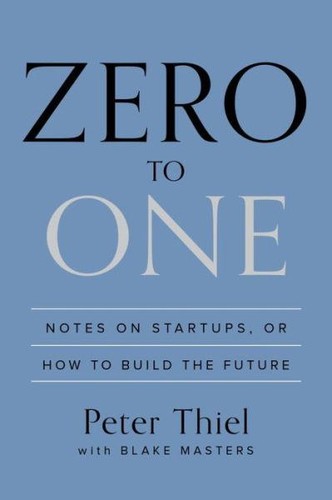
Zero to One: Notes on Startups, or How to Build the Future
Peter Thiel
Thiel's counterargument to incremental improvement: the only startups worth building create something genuinely new rather than copying existing markets. Some of the specific claims are debatable, but the underlying question — 'what important truth do very few people agree with you on?' — is one of the most useful diagnostics for evaluating a startup idea.
-
Read these with Superbook
Chat with any book on this list — ask questions, get answers tuned to you.
-
04
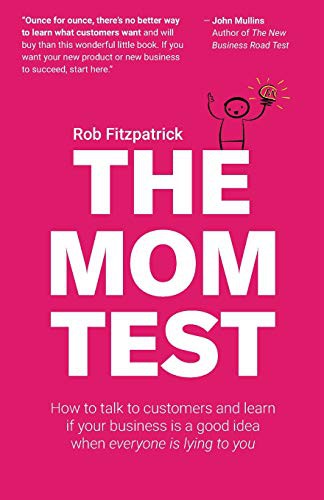
Rob Fitzpatrick
The shortest book in the list and possibly the most practically useful. Fitzpatrick shows why customer interviews almost always produce false positives, then gives a handful of conversation techniques that surface honest signal instead of polite validation. Essential before you commit to a product direction.
-
05
The Hard Thing About Hard Things
Ben Horowitz
Horowitz is explicit that this is not a how-to book — it's about the parts no one tells you: how to manage through layoffs, how to give hard feedback to a cofounder, how to hold a company together when you're personally terrified. The wartime CEO vs. peacetime CEO distinction alone is worth the read.
-
06
Founders at Work: Stories of Startups' Early Days
Jessica Livingston
Livingston interviewed the founders of Apple, PayPal, Flickr, Hotmail, and dozens of others at the moment they were still close to the founding. The consistent thread is how little anyone knew at the start and how much the eventual product differed from the original idea. Useful antidote to retrospective mythology.
-
07
Bill Aulet
Bill Aulet's 24-step framework from MIT for taking a technology or insight and turning it into a product customers will pay for. More methodical than Lean Startup, more useful for engineering-led teams who want a checklist.
-
08
Steve Blank and Bob Dorf
Blank and Dorf's comprehensive customer development manual. Covers B2B and B2C separately, walks through each stage of discovery and validation in detail. Too long to read linearly but invaluable as a reference when you're stuck on a specific question.
-
09
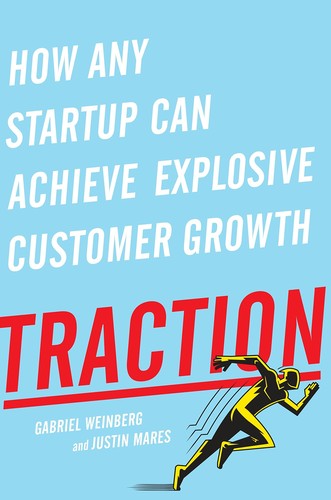
Traction: How Any Startup Can Achieve Explosive Customer Growth
Gabriel Weinberg and Justin Mares
DuckDuckGo founder Weinberg maps 19 customer acquisition channels and describes a framework — Bullseye — for systematically testing which ones work for a given business. The central insight is that traction and product development deserve equal attention, and most teams neglect the former.
-
10
Blitzscaling: The Lightning-Fast Path to Building Massively Valuable Companies
Reid Hoffman and Chris Yeh
Hoffman and Yeh's account of how a small number of companies — LinkedIn, Airbnb, Alibaba — chose speed over efficiency and scaled to massive size faster than their markets could be contested. Useful for understanding when the rules of normal business building don't apply.
-
11
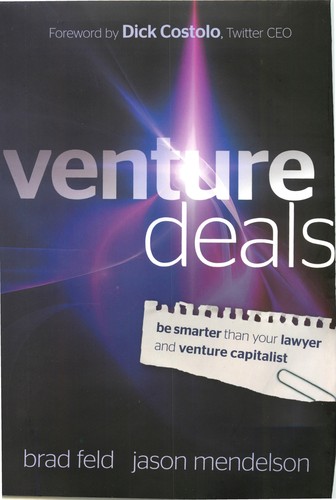
Venture Deals: Be Smarter Than Your Lawyer and Venture Capitalist
Brad Feld and Jason Mendelson
The Brad Feld and Jason Mendelson guide to how VC term sheets actually work — valuations, control provisions, liquidation preferences, anti-dilution. Demystifies a process that is deliberately opaque, and gives founders the vocabulary to negotiate without being steamrolled.
-
12
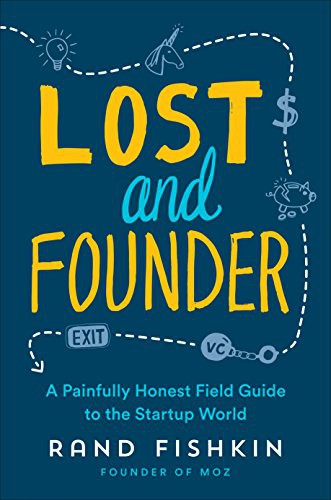
Rand Fishkin
Fishkin's account of building Moz without taking the VC hypergrowth path, and paying real costs for that choice. One of the more honest accounts of what slow, bootstrapped, founder-led growth actually feels like — including the mental health dimension.

More about this list
The canon of startup books didn't emerge at once. Eric Ries and Steve Blank built the vocabulary of customer discovery and iterative building in the early 2010s, codifying lessons from a generation of Silicon Valley failures. Peter Thiel pushed back on iteration entirely, arguing that monopoly and vision matter more than pivoting your way to product-market fit. Those two poles — validated learning versus zero-to-one ambition — run through almost every other book on this list.
Robin Fitzpatrick's Mom Test sits quietly between them, offering a single practical tool: how to have customer conversations that don't lie to you. It's the most underrated book in the stack. Ben Horowitz's Hard Thing About Hard Things arrives later in the arc, when the company is real and the problems are people — how to fire someone you respect, how to survive a moment when the business might not make it.
Jessica Livingston's Founders at Work came before most of these, assembled from interviews with founders who built companies in the 1990s and early 2000s. Read after the frameworks, it functions as a reality check: the path is messier, lonelier, and more contingent than any framework suggests. That sequence — methodology, vision, conversation skills, organizational hard truths, raw founding stories — is roughly the order this list follows.
