
Topic · 11 books
The best books on Design history
Design history traces how human beings have shaped the visual and material world — from the industrial workshops of the Bauhaus to the grid-ruled modernism of postwar Switzerland, and on into the screen-mediated present. Reading widely in this field changes how you see almost everything: a typeface, a chair, a cereal box, an app icon. The canonical texts here are not nostalgic surveys but arguments — about power, perception, function, and form.
-
01
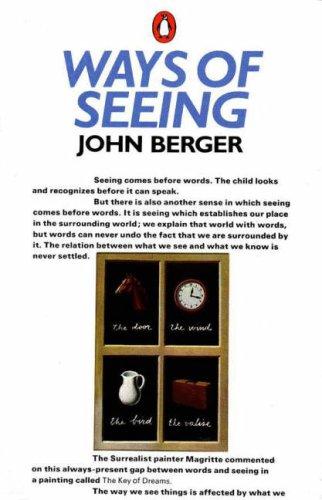
John Berger
The starting point for visual literacy. Berger's 1972 BBC series-turned-book dismantles the idea that looking is neutral. His argument — that what we see is always conditioned by how we have been taught to see — is foundational for anyone studying designed images.
-
02
E.H. Gombrich
Gombrich's survey has introduced more people to art history than any other book. For designers, the value is learning how visual problems recur across centuries: how to represent depth, how to balance a composition, how style signals meaning. A necessary baseline.
-
03
Meggs' History of Graphic Design
Philip B. Meggs
The standard reference text for graphic design history. Dense and encyclopedic, covering everything from Egyptian hieroglyphics to postmodern typography. Not meant to be read cover to cover — it's a reference that rewards dipping in alongside other books on this list.
-
Read these with Superbook
Chat with any book on this list — ask questions, get answers tuned to you.
-
04
Jan Tschichold
Published in 1928, this is one of the most consequential manifestos in design history. Tschichold laid out a systematic argument for asymmetric layout, sans-serif type, and functional hierarchy that still shapes how designers approach the page. His later reversal — returning to classical forms — makes the original document even more interesting.
-
05
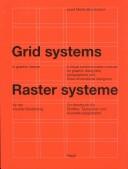
Grid Systems in Graphic Design
Josef Müller-Brockmann
The canonical technical manual of Swiss modernism. Müller-Brockmann explains not just how grids work but why they represent a specific philosophical commitment: that design should be objective, legible, and socially responsible. The diagrams alone are worth the price.
-
06
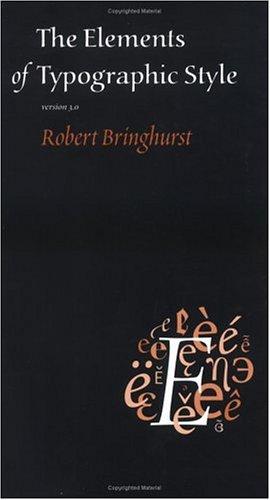
The Elements of Typographic Style
Robert Bringhurst
Bringhurst writes about typography with the precision of a poet and the rigor of a craftsman. This book documents the accumulated knowledge of five centuries of type-setting and is as relevant to screen typography today as it was to metal type when first published in 1992.
-
07
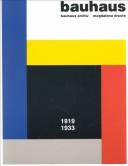
Magdalena Droste
The clearest and most thorough account of the Bauhaus school — its founding ideals, its internal conflicts, its faculty (Klee, Kandinsky, Moholy-Nagy, Albers), and its forced closure by the Nazis. Droste avoids the mythology that has accumulated around the Bauhaus and gives you the institution as it actually operated.
-
08
Kenya Hara
Hara is the art director of Muji and one of Japan's most influential designers. This book is both a portfolio and a philosophy — he develops the concept of 'emptiness' as a design principle, drawing on Zen aesthetics to arrive at conclusions that parallel Swiss minimalism but from a completely different direction.
-
09
Hegarty on Advertising: Turning Intelligence into Magic
John Hegarty
John Hegarty co-founded BBH and created some of the most recognized advertising of the late twentieth century. This book treats advertising as a legitimate design discipline with its own intellectual history and craft standards. A useful corrective for anyone who learned design in a context that dismissed commercial work.
-
10
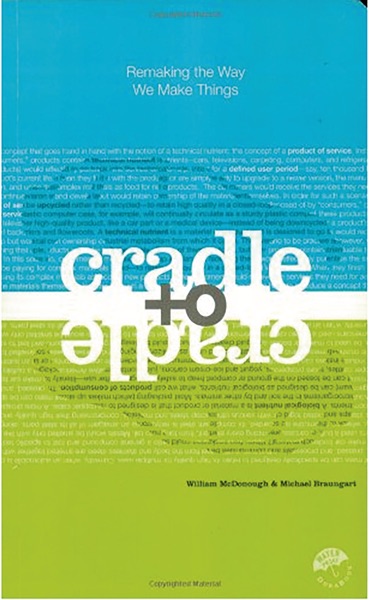
Cradle to Cradle: Remaking the Way We Make Things
William McDonough & Michael Braungart
McDonough and Braungart's argument is simple and radical: the problem is not that we make too much, but that we design for waste. The book is itself printed on synthetic polymer paper as a demonstration of its thesis. It changed how a generation of product designers think about the relationship between design and material consequence.
-
11
Deyan Sudjic
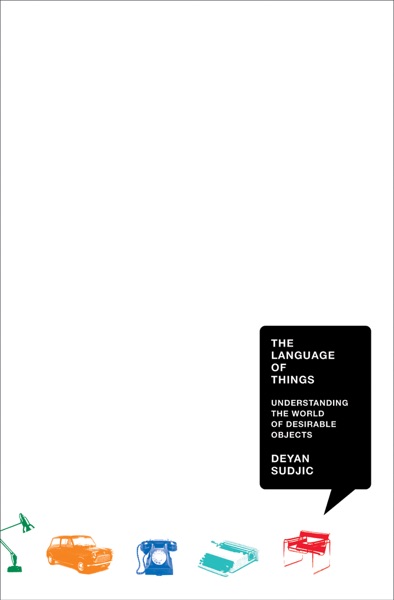
Sudjic, director of the Design Museum in London, asks what objects communicate beyond their function. How does a Rolex signal status? What does an Apple product promise? The book brings cultural theory into contact with industrial design history in a way that is accessible without being shallow.

More about this list
This list moves roughly chronologically by intellectual lineage rather than publication date. It opens with two books that teach you to look — Berger's Ways of Seeing and Gombrich's The Story of Art — before introducing the historical sweep of graphic design through Meggs. From there it descends into the technical and ideological foundations of modern typography: Tschichold's manifesto for the New Typography, Müller-Brockmann's codification of the grid, and Bringhurst's still-definitive guide to typographic craft.
The Bauhaus thread runs through the middle of the list — Droste's monograph is the clearest account of that school's ambitions and contradictions. Designing Design by Kenya Hara then pivots the conversation east, showing how Japanese design philosophy arrived at similar formal commitments through entirely different cultural logic.
The final third widens the frame: Hegarty on Advertising brings commercial persuasion into view as a legitimate design discipline; Cradle to Cradle challenges design's relationship to the material world at an ecological scale; and Deyan Sudjic's The Language of Things asks what objects mean and who decides. By the end, the first book on the list reads differently — Berger's question about who controls images feels more urgent once you understand how those images were produced and distributed.
