
Topic · 10 books
The best books on abstract painting
Abstract painting strips away representation and asks color, shape, line, and surface to carry meaning on their own terms. The field's literature spans manifestos written in the heat of discovery, working artists' notebooks, philosophical defenses and sharp satirical attacks, and perceptual science that explains why these canvases do what they do to the nervous system. Reading widely in it reveals that abstraction is not a single idea but a contested territory — spiritual, formalist, political, bodily — and that the argument is still alive.
-
01
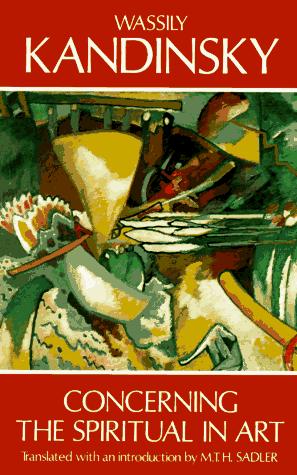
Concerning the Spiritual in Art
Wassily Kandinsky
The founding manifesto of abstraction, written in 1910 before Kandinsky had fully committed to non-representational painting. His theory of color — yellow as aggressive, blue as receding, green as stillness — is more intuitive than scientific, but it gave abstract art its first coherent justification. The genuine excitement of someone working something out for the first time is on every page.
-
02
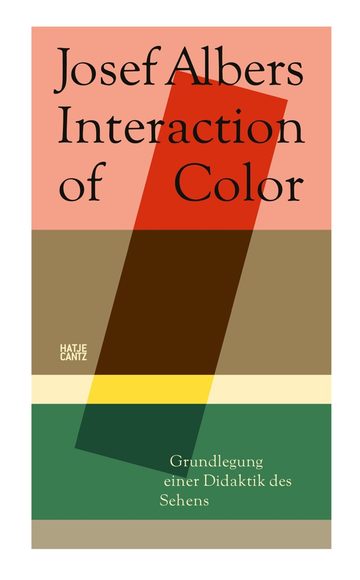
Josef Albers
Where Kandinsky was mystical, Albers was empirical. This book is built around color exercises: how the same color looks different on different grounds, how simultaneous contrast creates optical vibrations, how the eye can be systematically deceived. The original 1963 edition with its silkscreen plates is the definitive version. Nothing in visual education has matched it for rigor.
-
03
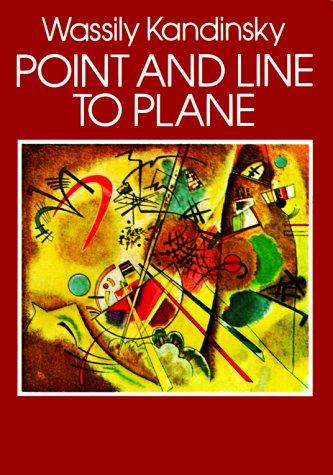
Wassily Kandinsky
Kandinsky's second major theoretical text, written at the Bauhaus in 1926, is more analytical and less mystical than 'Concerning the Spiritual.' He maps the grammar of painting: the properties of the point, the tension of the diagonal line, the psychological weight of compositions. It is the closest thing to a formal theory of abstract composition ever written by a practitioner.
-
Read these with Superbook
Chat with any book on this list — ask questions, get answers tuned to you.
-
04
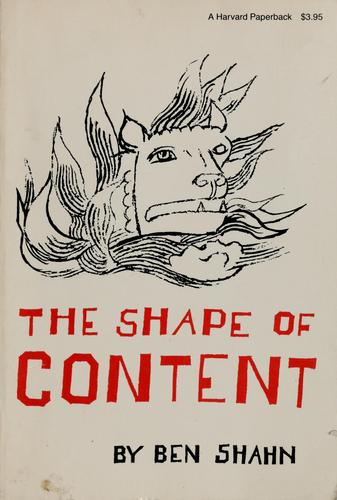
Ben Shahn
Shahn was a figurative painter making an argument against the ascendancy of pure abstraction in the 1950s, but his case is subtle: he is not against abstraction itself but against the suppression of content. The six Harvard lectures collected here remain one of the most persuasive accounts of what gets lost when form becomes entirely self-referential.
-
05
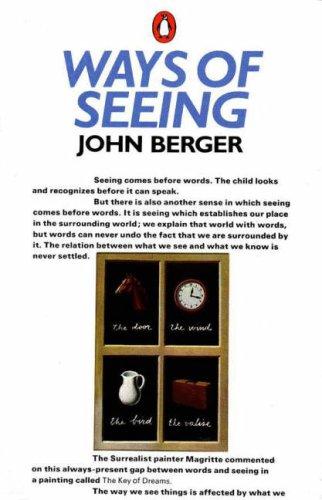
John Berger
Berger's 1972 BBC series turned book does not address abstract painting directly, but it provides the critical framework — about how context, reproduction, and economic function alter what we see — that any serious engagement with abstract art requires. The chapter on oil painting and property is essential background for understanding the Abstract Expressionist boom.
-
06
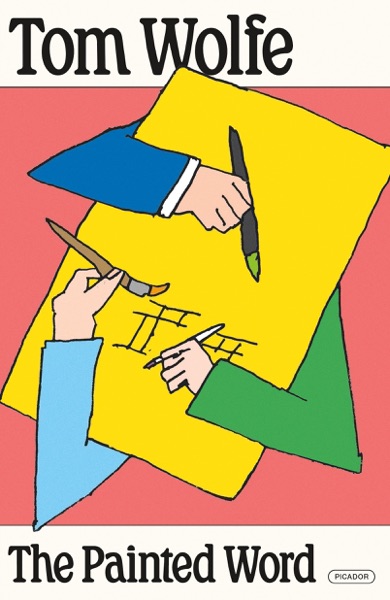
Tom Wolfe
A 1975 polemic arguing that the American abstract art world had become entirely dependent on critical theory — that Greenberg and Rosenberg did not describe the paintings but produced them. Wolfe is deliberately unfair, but his core observation that the art required its literature to be legible at all is not wrong, and it is a useful irritant to have alongside the more reverential texts on this list.
-
07
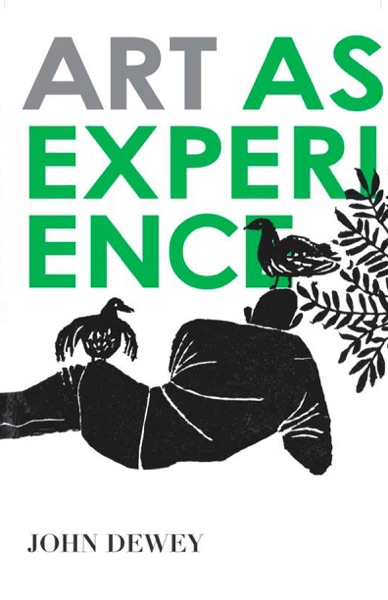
John Dewey
Dewey's 1934 philosophical account of aesthetic experience argues that art is not a category of objects but a quality of experience — continuous with, not separate from, the rest of life. This reframing is particularly important for abstraction, which cannot lean on subject matter. His concept of 'an experience' — complete, unified, self-contained — explains what a Rothko or a Turrell installation is doing.
-
08
Abstract Painting: Concepts and Techniques
Valérie Filiou
A working painter's guide, organized by formal problem rather than historical period. Filiou covers the practical mechanics — grounds, layering, edge relationships, color temperature — in ways that apply directly to the studio. Useful both for painters and for viewers who want to understand what decisions produced what they're looking at.
-
09
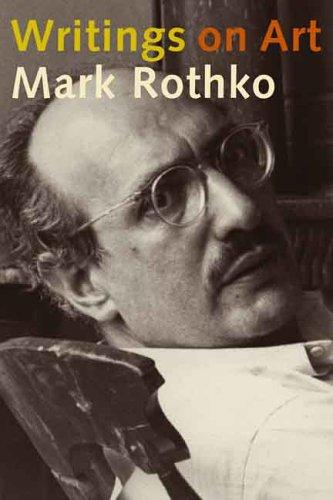
Mark Rothko
Edited by Miguel López-Remiro, this collection assembles Rothko's essays, letters, and statements from across his career. His early writing is more polemical; the later texts grow quieter and more suspicious of his own project. Reading them alongside the paintings makes visible the gap between what he thought he was doing and what viewers received — a gap that defines the problem of abstract painting more broadly.
-
10
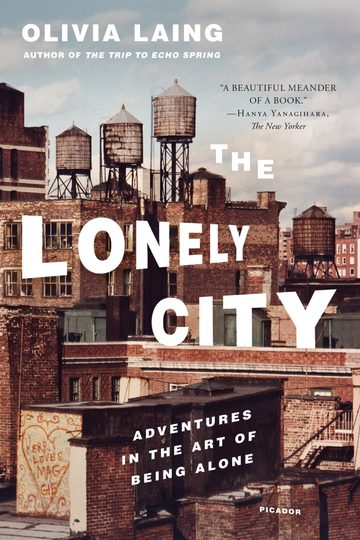
The Lonely City: Adventures in the Art of Being Alone
Olivia Laing
Laing's 2016 book traces loneliness through the work of Hopper, Warhol, Henry Darger, and David Wojnarowicz in New York. It is the most unexpected entry on this list, but it reads abstraction's capacity to hold emotional states without naming them against figurative art's obligation to show a face. The chapter on Warhol's silkscreens, and what repetition does to grief, is the most acute piece of art criticism in the book.
More about this list
The books on this list do not agree with each other, and that disagreement is the point. Kandinsky believed abstraction was a vehicle for spiritual necessity — that pure color and form could bypass rational cognition and speak directly to the soul. Albers believed no such thing; for him, color was a system of relationships to be tested through perception, and the only way to understand it was to look. Both were right about different things, and putting their books side by side is more instructive than reading either in isolation.
The list moves from foundational theory outward into practice, criticism, and lived experience. Kandinsky's two texts — 'Concerning the Spiritual in Art' and 'Point and Line to Plane' — establish the vocabulary that nearly everyone who followed either adopted or argued against. Albers provides the corrective: measurable, repeatable, humbling. From there, the list expands into the cultural moment that produced American Abstract Expressionism, through Ben Shahn's defense of content against pure formalism, and into Tom Wolfe's acidic critique of the entire critical apparatus that grew up around abstraction.
John Dewey arrives not as an art critic but as a philosopher asking what experience itself is — a question that reframes how we approach any canvas that refuses to illustrate something. Rothko's writings and legacy sit at the center: an artist who believed in the spiritual project but grew suspicious of its commodification. The list closes with Olivia Laing's 'The Lonely City,' which is ostensibly about loneliness but follows that thread through Hopper, Warhol, and Henry Darger in ways that illuminate what abstract and semi-abstract work can hold emotionally that no figurative image can.
