
Reading list · 12 books
Sam Altman's reading list
Sam Altman is the CEO of OpenAI and a former president of Y Combinator. He's spent two decades at the intersection of startups, AI, and long-horizon thinking. His reading taste runs to ambitious science fiction, foundational technology texts, and books that grapple seriously with civilizational risk — reflecting someone who genuinely believes the next 20 years will be the most consequential in human history.
-
01
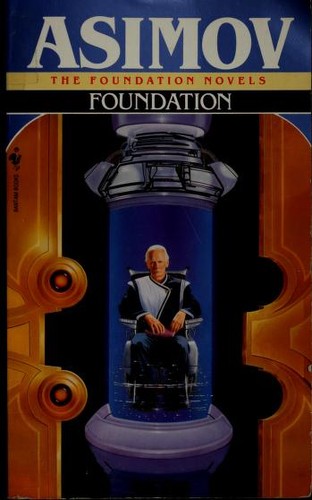
Isaac Asimov
Altman has cited Asimov's Foundation series repeatedly as a formative influence. The premise — a small group working to preserve knowledge across civilizational collapse — maps directly onto how he talks about OpenAI's mission. He read it young and returned to it as a framework for thinking about long arcs of history.
-
02
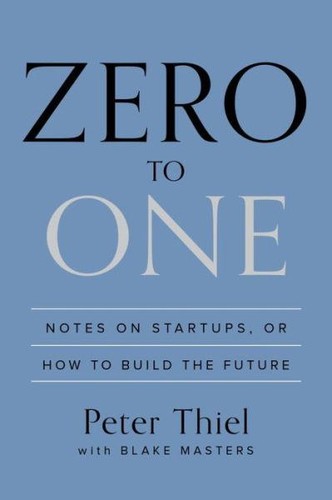
Zero to One: Notes on Startups, or How to Build the Future
Peter Thiel
Altman was close to Thiel at PayPal and YC, and has recommended this book in multiple contexts as the clearest articulation of what it means to build a genuinely new thing rather than an incremental improvement. He's particularly noted Thiel's framing of secrets — things that are true but widely disbelieved.
-
03
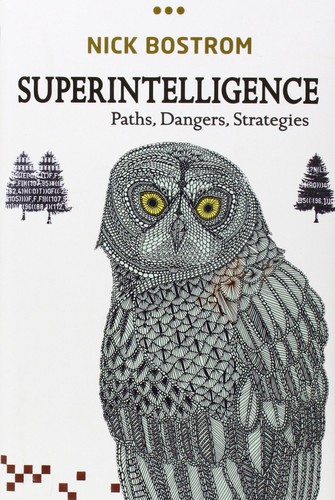
Superintelligence: Paths, Dangers, Strategies
Nick Bostrom
Bostrom's treatise on AI risk is one Altman has mentioned as necessary reading for anyone thinking seriously about where AI goes. He doesn't endorse every conclusion but treats it as a rigorous attempt to map a problem most people were ignoring when it was published.
-
Read these with Superbook
Chat with any book on this list — ask questions, get answers tuned to you.
-
04
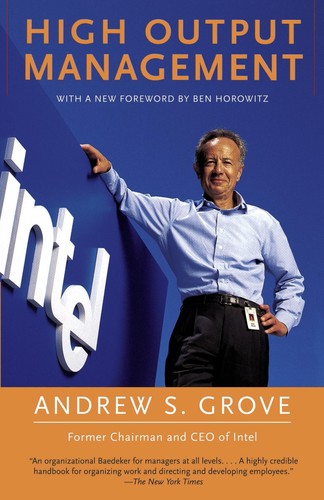
Andrew S. Grove
Andy Grove's management manual appears on virtually every serious founder's list, and Altman is no exception. He's praised it in blog posts as the most practical book on running an organization at scale — dense with operational clarity rather than inspiration.
-
05
Charlie Munger
Altman has cited Munger's mental models framework as a lasting influence on how he evaluates decisions. The book functions as an intellectual autobiography of one of the 20th century's sharpest thinkers, organized around the disciplines Munger drew on to build Berkshire.
-
06
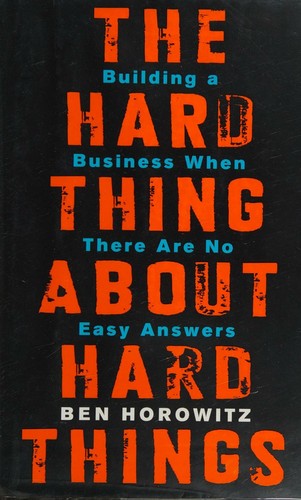
The Hard Thing About Hard Things
Ben Horowitz
Horowitz's account of navigating Opsware through near-death experiences is one Altman has recommended to YC founders. He's said it's the most honest book about the emotional reality of building companies — less framework, more account of what it actually felt like.
-
07
Blitzscaling: The Lightning-Fast Path to Building Massively Valuable Companies
Reid Hoffman and Chris Yeh
Altman wrote the foreword to this book, which came out of a Stanford course on scaling companies rapidly. His involvement reflects genuine agreement with Hoffman's thesis that certain market dynamics require prioritizing speed over efficiency in ways that feel counterintuitive.
-
08
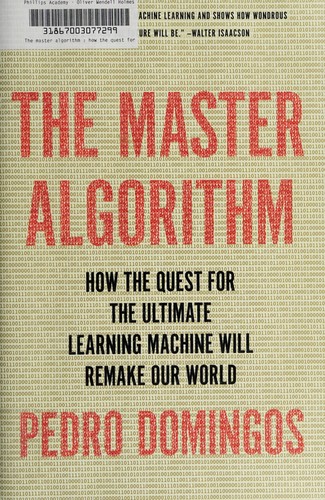
Pedro Domingos
Pedro Domingos's overview of the five tribes of machine learning is one Altman has mentioned as a useful map for non-specialists. It argues for a unified learning algorithm underlying all approaches — an idea that aged interestingly given where deep learning went after the book's publication.
-
09
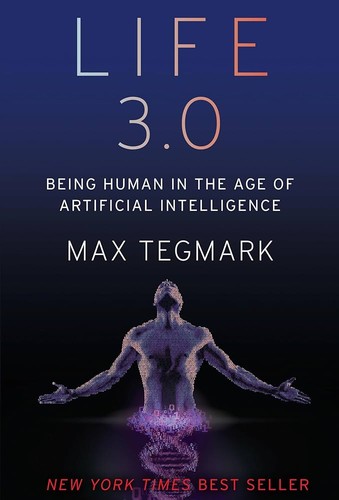
Life 3.0: Being Human in the Age of Artificial Intelligence
Max Tegmark
Tegmark's book on AI scenarios is one Altman has engaged with publicly. It's more accessible than Bostrom while covering similar ground on what various futures look like — Altman has praised it as a rigorous attempt to think through scenarios rather than just assert them.
-
10
Brian Christian
Brian Christian's account of the state of AI alignment research is one Altman has flagged as the best current-state overview for a general audience. It covers the difficulty of specifying what we want AI to do in a way that makes the problem legible without reducing it.
-
11
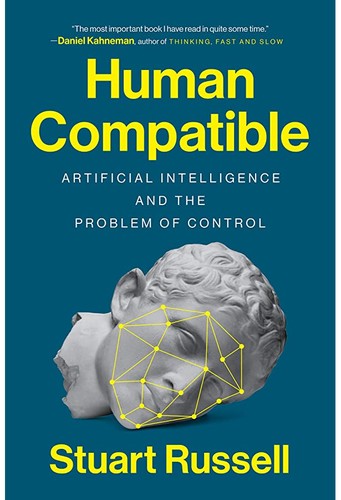
Human Compatible: Artificial Intelligence and the Problem of Control
Stuart Russell
Stuart Russell's reformulation of AI safety — replacing 'make machines intelligent' with 'make machines that know they don't know what humans want' — is one Altman has mentioned as a serious contribution. Russell's 'assistance games' framing influenced how alignment researchers think about the problem.
-
12
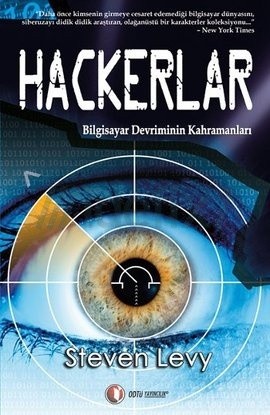
Hackers: Heroes of the Computer Revolution
Steven Levy
Levy's history of the early hacker culture at MIT and Stanford is a book Altman has recommended to people who want to understand the cultural substrate of the tech industry. It documents a particular ethos — openness, meritocracy, computers as tools for expanding human capability — that still shapes how people in Silicon Valley see themselves.


More on Sam Altman's picks
Altman's reading recommendations surface through his blog (samaltman.com), occasional Twitter threads, and interviews with journalists and podcasters. What unifies the list is a consistent preoccupation with scale: scale of ambition, of consequence, of time horizon. He reads science fiction not for escapism but as a way of thinking seriously about futures that most people dismiss as implausible.
The nonfiction runs toward understanding power — how companies compound, how ideas spread, how founders survive the transition from small to enormous. He's cited Paul Graham's essays repeatedly as formative, and his enthusiasm for Peter Thiel and Reid Hoffman's work reflects a shared interest in the structural dynamics of technology companies rather than their operational details.
The AI books on this list aren't casual additions. Altman has spoken about Bostrom and Russell as thinkers who shaped how he frames alignment, and his endorsement of Tegmark's work reflects a view that existential risk deserves the same rigor as any other hard engineering problem. Read together, the list traces an arc from 'how do you build something that lasts' toward 'what does it mean to build something that could outlast humanity.'
