
Reading list · 15 books
Naval Ravikant's reading list
Naval Ravikant is an angel investor and entrepreneur best known as co-founder of AngelList. He has become one of the most widely followed thinkers on wealth, happiness, and philosophy through his podcast, Twitter aphorisms, and the Almanack of Naval Ravikant. His reading taste runs toward evolutionary biology, physics, ancient philosophy, and epistemology — books that update your model of reality rather than your to-do list.
-
01
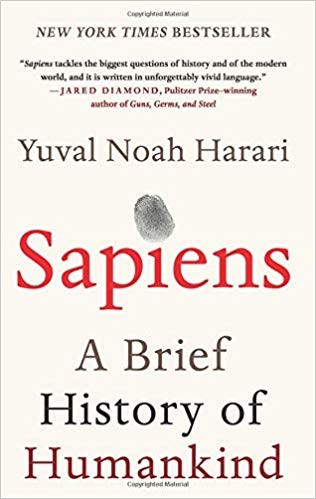
Sapiens: A Brief History of Humankind
Yuval Noah Harari
A perennial Naval recommendation, cited across multiple podcast appearances. He values it for resetting baseline assumptions about human nature and civilization — what cooperation and shared fictions actually built, stripped of romanticism.
-
02
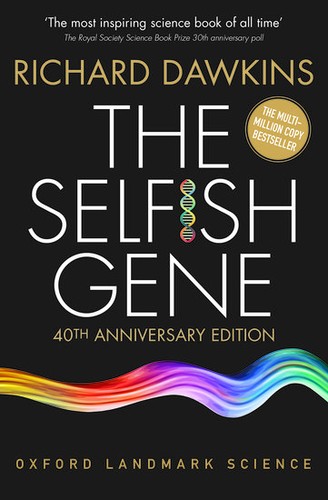
Richard Dawkins
Dawkins's argument that natural selection operates at the gene level is, for Naval, one of the most clarifying ideas in all of science. He has called it essential for understanding why humans behave the way they do without invoking moralizing explanations.
-
03
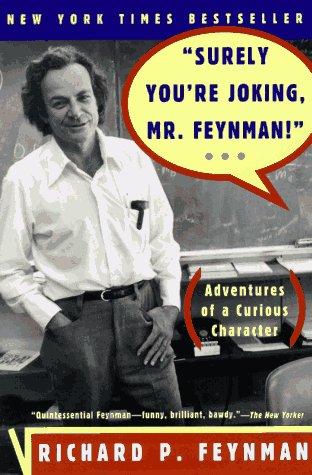
Surely You're Joking, Mr. Feynman!
Richard P. Feynman
Naval returns to Feynman repeatedly as a model of curiosity-driven thinking and intellectual honesty. The book demonstrates how playfulness and rigor coexist — a mindset Naval considers more important than any specific technique.
-
Read these with Superbook
Chat with any book on this list — ask questions, get answers tuned to you.
-
04
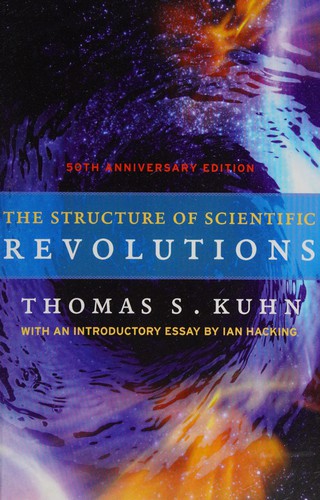
The Structure of Scientific Revolutions
Thomas S. Kuhn
Kuhn's account of how scientific paradigms shift rather than accumulate smoothly is a recurring reference for Naval on the Tim Ferriss Show. It inoculates against assuming that current consensus is final truth.
-
05
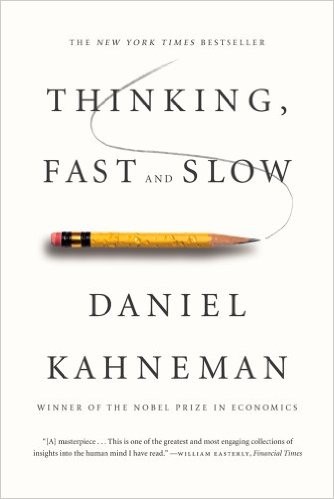
Daniel Kahneman
Kahneman's two-system model of cognition maps directly onto Naval's interest in improving decision-making. He has cited it as foundational for understanding why humans are systematically irrational and how to partially correct for it.
-
06
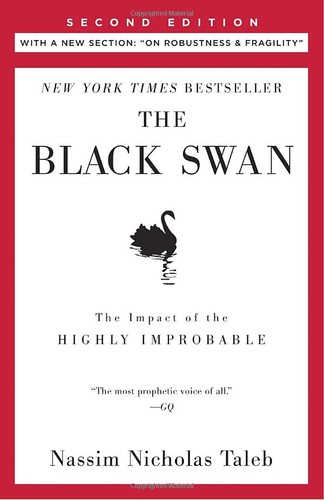
The Black Swan: The Impact of the Highly Improbable
Nassim Nicholas Taleb
Taleb's argument about the outsized role of rare, unpredictable events aligns with Naval's views on risk and the limits of forecasting. He has discussed Taleb's broader Incerto project as essential reading for anyone making bets under uncertainty.
-
07
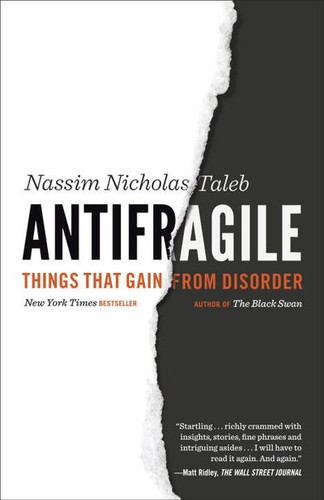
Antifragile: Things That Gain from Disorder
Nassim Nicholas Taleb
Of the Incerto books, Naval has mentioned Antifragile most in the context of startups and wealth-building — the idea that some systems benefit from volatility rather than merely surviving it maps onto his philosophy of optionality.
-
08
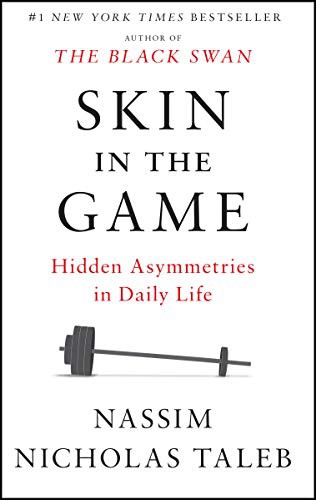
Skin in the Game: Hidden Asymmetries in Daily Life
Nassim Nicholas Taleb
The principle that advice from people without personal exposure to downside is worthless is central to Naval's thinking on trust, expertise, and incentives. He has referenced Taleb's skin-in-the-game concept as a heuristic he applies constantly.
-
09
Charlie Munger
Munger's mental models framework — the idea of building a lattice of models from multiple disciplines — is one Naval has explicitly endorsed as a model for how to think. He has described Munger as one of the clearest thinkers about decision-making under uncertainty.
-
10
Marcus Aurelius
Marcus Aurelius appears consistently in Naval's discussions of philosophy on the Tim Ferriss Show and his own podcast. He values the Stoic emphasis on distinguishing what is and isn't within your control as a practical tool for equanimity, not an academic exercise.
-
11
Laozi
Naval has cited the Tao Te Ching alongside Stoic texts as a complementary tradition — less about strategy and more about releasing resistance. He considers it among the clearest expressions of how to move through the world with less friction.
-
12
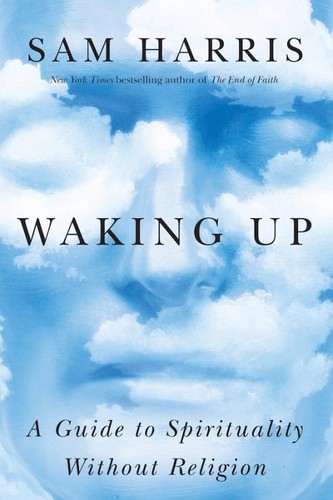
Waking Up: A Guide to Spirituality Without Religion
Sam Harris
Sam Harris's case for secular meditation and the neuroscience of consciousness aligns with Naval's interest in the nature of mind and the practical benefits of meditation. Naval has recommended it to people who find traditional spiritual framing an obstacle.
-
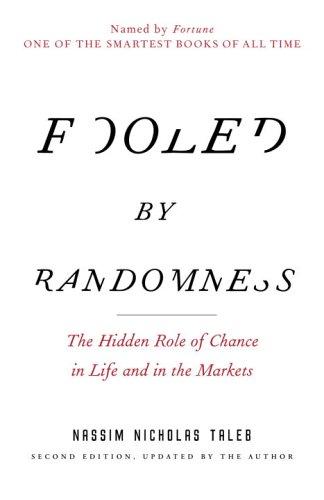
13
Nassim Nicholas Taleb
Earlier Taleb, and in some ways more personal than Black Swan. Naval has discussed the book's central insight — that successful people routinely mistake luck for skill — as one he thinks about regularly when evaluating both his own decisions and other people's claims.
-
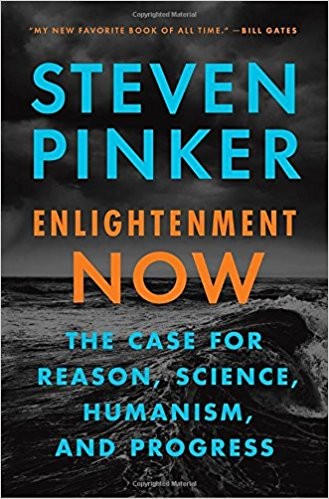
14
Steven Pinker
Pinker's data-driven case for human progress appears in Naval's recommendations as a corrective to pessimism and as a demonstration of how empirical thinking can cut through ideological noise. Naval has paired it with Sapiens as a pair of reality-calibrating books.
-
15
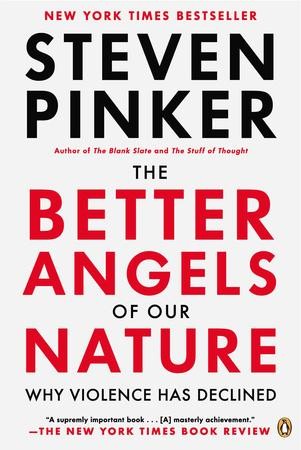
The Better Angels of Our Nature
Steven Pinker
The longer companion to Enlightenment Now. Naval has cited Pinker's evolutionary and historical account of declining violence as evidence that our intuitions about the world are systematically wrong in ways that have real consequences for how we act.



More on Naval Ravikant's picks
Naval's reading recommendations surface through a handful of recurring venues: his appearances on the Joe Rogan Experience and the Tim Ferriss Show, his own podcast with Nivi, and the Almanack compiled by Eric Jorgenson. What unifies the list is a preference for works that change how you think rather than what you do. He gravitates toward foundational texts — books close enough to first principles that everything else in a field becomes derivable from them.
The evolutionary biology cluster (Dawkins, Pinker, Sapolsky) gives him a framework for human behavior that sidesteps the moralizing he distrusts. The physics and mathematics shelf (Feynman, Deutsch, Tegmark) trains intuition about how reality actually works. The philosophy shelf skews Stoic and Eastern — texts about equanimity, acceptance, and the nature of perception that he has cited as more practically useful than most self-help. Scattered through the list are works on decision-making, epistemology, and the history of knowledge: books that sharpen how you evaluate any new claim.
