
Reading list · 15 books
Patrick Collison's reading list
Patrick Collison is the co-founder and CEO of Stripe, the payments infrastructure company. He came to prominence as a teenage entrepreneur in Ireland before building Stripe into one of the most valuable private technology companies in the world. Collison has maintained a publicly readable bookshelf at patrickcollison.com/bookshelf for years, and it skews heavily toward the history and philosophy of science, biographies of great builders and thinkers, and works that examine why some civilizations and periods of history produce outsized technological and scientific progress.
-
01
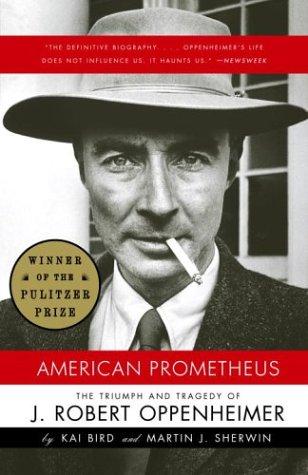
Kai Bird and Martin J. Sherwin
The biography of J. Robert Oppenheimer, and by extension the biography of a moment when theoretical physics and massive state resources briefly converged. Collison has cited this as one of the most revealing books about what it actually takes to organize scientific talent toward an ambitious goal.
-
02
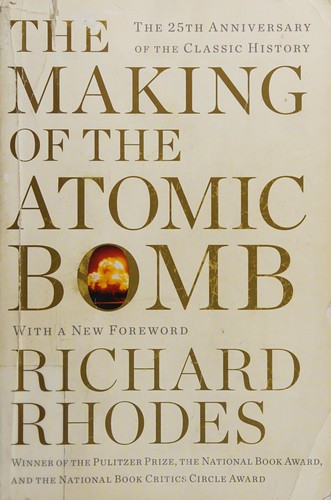
Richard Rhodes
Richard Rhodes won the Pulitzer for this account of the Manhattan Project, and it earns the prize by being both rigorous physics history and a study of institutional design under extreme time pressure. Collison has recommended it as a window into how progress actually gets made.
-
03
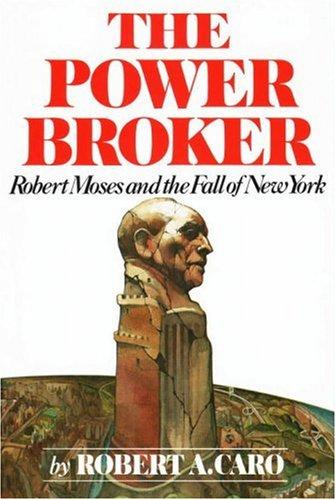
The Power Broker: Robert Moses and the Fall of New York
Robert A. Caro
Robert Caro's biography of Robert Moses is central to how Collison thinks about power and institutional inertia. Moses built more of 20th-century New York than any elected official ever did — the book is about what that kind of concentrated leverage looks like in practice, for better and worse.
-
Read these with Superbook
Chat with any book on this list — ask questions, get answers tuned to you.
-
04
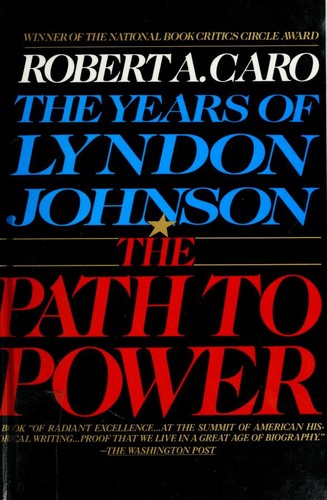
Robert A. Caro
The first volume of Caro's Lyndon Johnson series, tracing Johnson's origins in the Texas Hill Country to his first Senate race. Collison has spoken about Caro repeatedly — this volume is the foundation, establishing how ruthless ambition and genuine policy conviction can coexist in a single person.
-
05
Means of Ascent: The Years of Lyndon Johnson, Volume II
Robert A. Caro
The second Caro Johnson volume, covering the stolen 1948 Senate election. Caro spends more time on a single eighty-seven-vote margin than most historians spend on entire administrations, and the result is a portrait of political will that Collison finds endlessly instructive.
-
06
Master of the Senate: The Years of Lyndon Johnson, Volume III
Robert A. Caro
The third Johnson volume, covering LBJ's transformation of the Senate from a dysfunctional antebellum relic into a working legislative instrument. For Collison, this is Caro at his best — a detailed case study in institutional change driven by a single relentless operator.
-
07
Robert Kanigel
Robert Kanigel's biography of Srinivasa Ramanujan, the self-taught Indian mathematician who produced theorems of extraordinary depth with almost no formal training. Collison has pointed to Ramanujan as an example of how intellectual talent can emerge in the most improbable circumstances when the right opening appears.
-
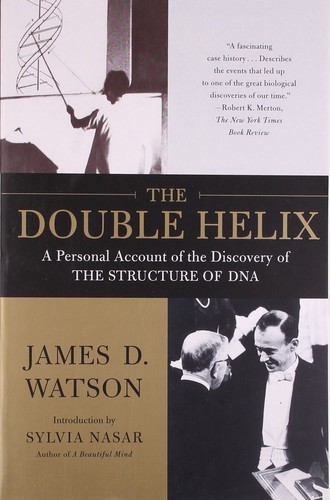
08
James D. Watson
Watson's account of the race to crack DNA's structure is unsparing about the sociology of science — the competitiveness, the luck, the way credit gets allocated. Collison values it as an honest look at how major discoveries actually happen rather than how they are commemorated afterward.
-
09
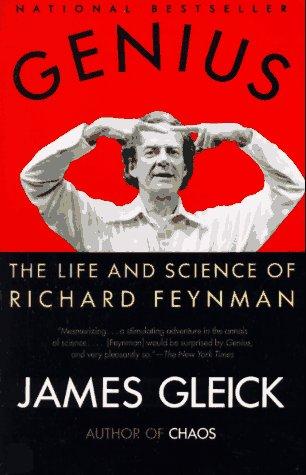
Genius: The Life and Science of Richard Feynman
James Gleick
James Gleick's biography of Richard Feynman. Collison is an admirer of Feynman's way of thinking, and this is the most complete account of where that style came from — the Rockaway childhood, the Los Alamos years, the Caltech decades. Better than Surely You're Joking for understanding the full arc.
-
10
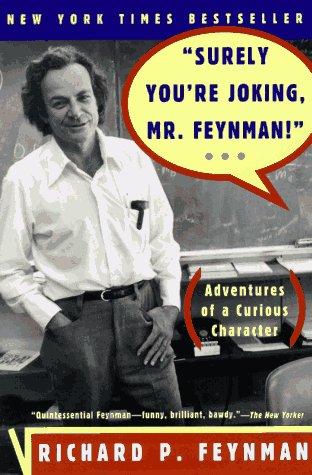
Surely You're Joking, Mr. Feynman!
Richard P. Feynman
Feynman's own stories, self-edited into a portrait of relentless curiosity applied to everything from safecracks to samba. On Collison's list as a companion to the Gleick biography — together they show both the method and the personality.
-
11
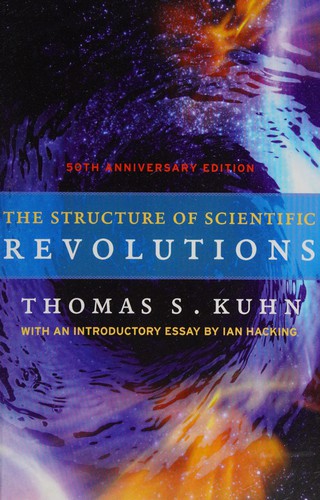
The Structure of Scientific Revolutions
Thomas S. Kuhn
Kuhn's 1962 monograph on how scientific fields actually change — through crises and paradigm shifts rather than steady accumulation — is foundational for Collison's thinking about why progress is lumpy and how institutions resist it. Short and still argues well with you.
-
12
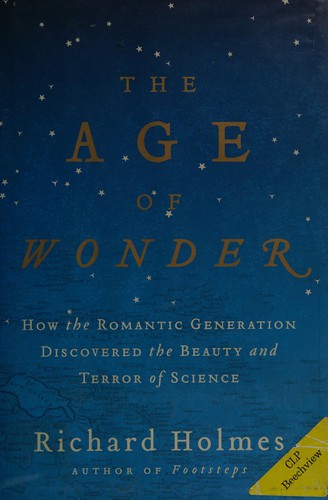
The Age of Wonder: The Romantic Generation and the Discovery of the Beauty and Terror of Science
Richard Holmes
Richard Holmes's account of the Romantic-era scientific revolution — Banks, Davy, Herschel, Shelley — when science was still entangled with poetry and natural philosophy. Collison sees this as one of history's underappreciated acceleration episodes.
-
13
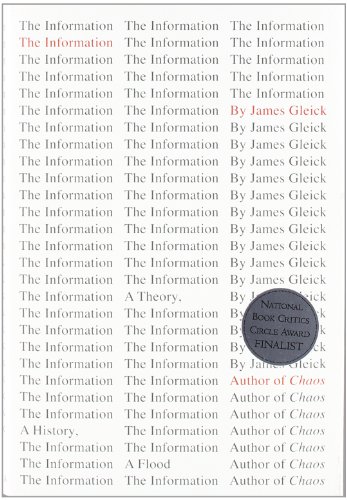
The Information: A History, a Theory, a Flood
James Gleick
James Gleick's history of information, from African drums to Shannon's formalization of entropy. Collison is drawn to books that trace the long prehistory of what now seems obvious, and this is one of the best at that.
-
14
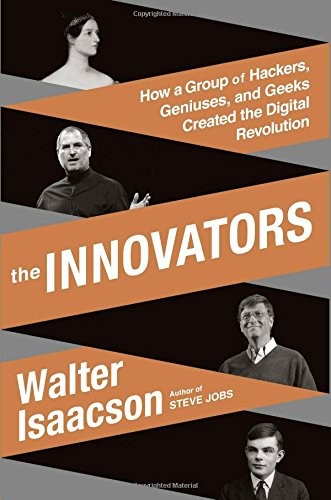
The Innovators: How a Group of Hackers, Geniuses, and Geeks Created the Digital Revolution
Walter Isaacson
Walter Isaacson's history of the digital revolution, structured as a set of portraits of the people behind each step. Less hagiographic than his Jobs biography and better for it — Collison has cited it as useful for understanding how computing's key breakthroughs required both individual genius and collaborative infrastructure.
-
15
Endurance: Shackleton's Incredible Voyage
Alfred Lansing
Alfred Lansing's account of Shackleton's trapped Antarctic expedition. Collison has mentioned it as the best available study of leadership under conditions where every option is bad and the only variable is how you make decisions under duress.


More on Patrick Collison's picks
Collison's reading taste is shaped by a single sustained question: why does rapid progress happen when it does, and why does it stop? That question pulls him toward two types of books — deep biographies of the people who actually built things (Robert Caro's multi-volume Johnson series, the canonical histories of the Manhattan Project, portraits of anomalous geniuses like Ramanujan) and structural accounts of how institutions, incentives, and luck combine to accelerate or throttle discovery.
The books here are not arranged as a greatest-hits list. They form something closer to an argument. The biographies establish what exceptional individuals actually do and what conditions they require. The history-of-science books show those conditions failing and occasionally working at civilizational scale. And a handful of more analytical works — Kuhn on paradigm shifts, Rhodes on the organizational sociology of Los Alamos — try to extract transferable lessons from the cases the biographies document. Reading them together makes Collison's intellectual project legible: he is trying to understand how to make more of the world that produced the things he most admires.
