
Reading list · 27 books
Marc Andreessen's reading list
Marc Andreessen co-created Mosaic, co-founded Netscape, and is the general partner of Andreessen Horowitz (a16z), one of Silicon Valley's most influential venture capital firms. His reading tastes run toward economic history, technology biography, libertarian political philosophy, and the deep architecture of how civilizations rise and fall. He has shared recommendations across his Substack, his archived pmarca blog posts, and years of public interviews — returning repeatedly to a canon that asks why some societies and institutions compound progress while others stall.
-
Economic history & capitalism
-
01
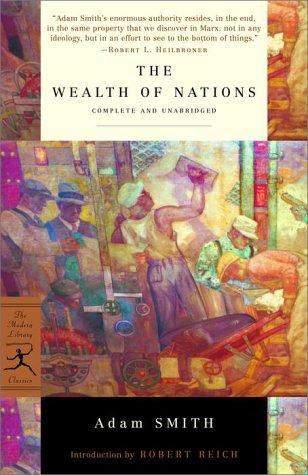
Adam Smith
Andreessen treats Smith's division-of-labour insight as the original source code of market economies. He has referenced it in discussions of why specialisation and trade create compounding wealth, and why attempts to short-circuit that mechanism through industrial policy tend to fail.
-
02
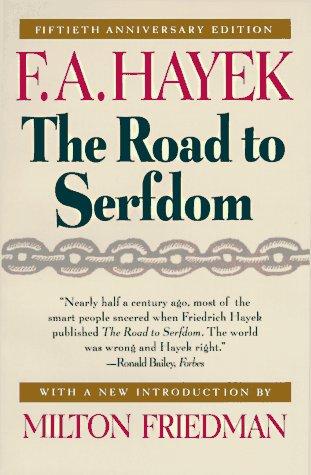
F. A. Hayek
Hayek's argument that central planning inevitably concentrates power is a bedrock text in Andreessen's political economy. He has referenced it repeatedly to explain his skepticism of regulatory overreach in tech, particularly around cryptocurrency, speech platforms, and AI governance.
-
03
Robert Nozick
Nozick's libertarian philosophy — the minimal state as the only legitimate one — pairs with Hayek in Andreessen's political canon. His 2023 Techno-Optimist Manifesto drew heavily on this tradition, specifically the entitlement theory of property and the critique of redistributive taxation.
-
Read these with Superbook
Chat with any book on this list — ask questions, get answers tuned to you.
-
04
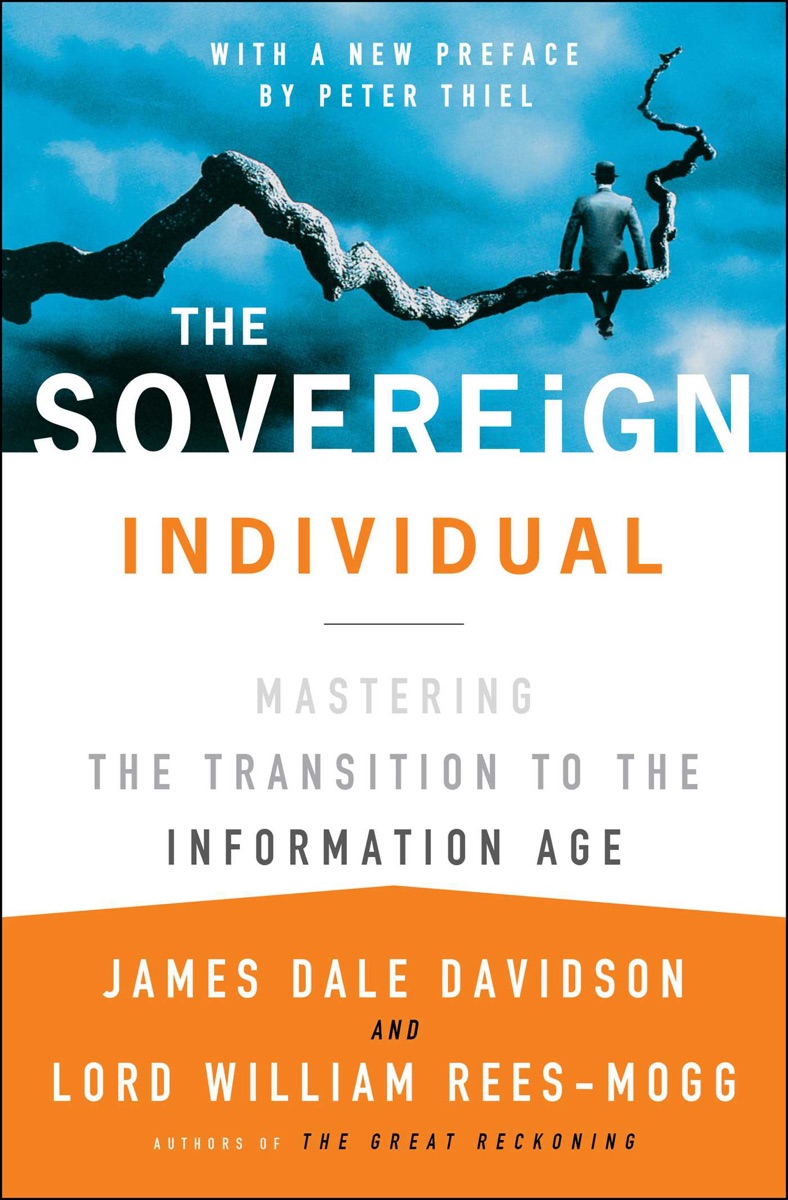
James Dale Davidson & William Rees-Mogg
One of Andreessen's most-cited books publicly, especially on cryptocurrency and digital sovereignty. The 1997 prediction that cryptography would allow individuals to route around nation-state taxation and censorship maps almost exactly onto his crypto investment thesis and his views on network states.
-
05
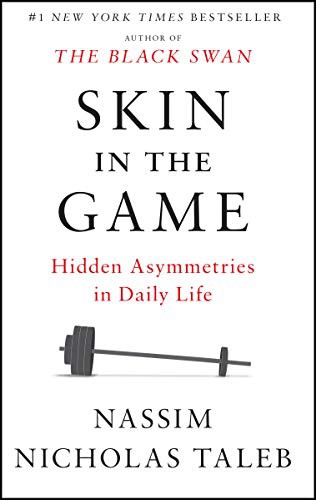
Skin in the Game: Hidden Asymmetries in Daily Life
Nassim Nicholas Taleb
Taleb's argument that decision-makers must bear the consequences of their decisions aligns with how Andreessen talks about founder-led companies versus hired-manager-run ones. He has praised Taleb's broader framework for puncturing the credentialism of institutions that socialise risk while privatising reward.
-
06
Jared Diamond
Diamond's geographic determinism is a foil Andreessen engages with seriously — it provides the environmental frame he then pushes back on with institutional and individual-choice arguments. He has cited it as essential for understanding the baseline before layering on what human agency and technology can change.
-
Technology & innovation history
-
07
Hackers: Heroes of the Computer Revolution
Steven Levy
Steven Levy's 1984 history of the first hacker generation shaped Andreessen's self-conception of what software builders are. He has recommended it as the founding myth of the culture he operates inside — the origin story of why information wants to be free and why the best builders ignore institutional authority.
-
08
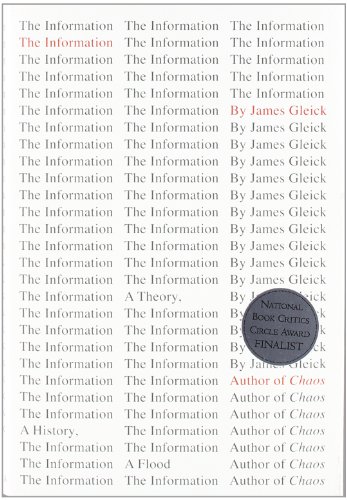
The Information: A History, a Theory, a Flood
James Gleick
Gleick's history of how humans learned to store and transmit information — from African drums to Claude Shannon's theorems — is the kind of deep-time framing Andreessen gravitates toward. He has cited it as essential for understanding why software is categorically more powerful than prior general-purpose technologies.
-
09
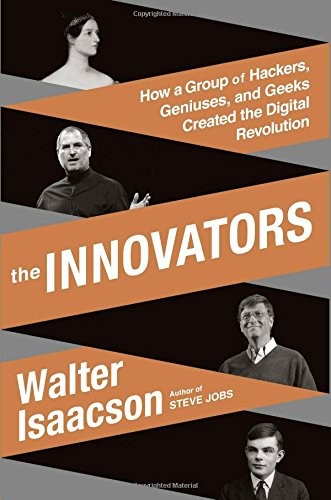
The Innovators: How a Group of Hackers, Geniuses, and Geeks Created the Digital Revolution
Walter Isaacson
Isaacson's narrative of computing's pioneers — from Ada Lovelace to the internet — is the accessible entry point Andreessen recommends for understanding how collaboration between theory and engineering actually works. The book reinforces his view that the computer was not invented by one genius but assembled across generations.
-
10
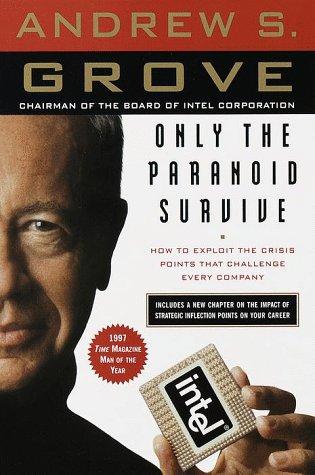
Andrew S. Grove
Grove's strategic-inflection-point model maps directly onto Andreessen's core investing thesis. His 2011 'Software Is Eating the World' essay is essentially this framework applied to every industry simultaneously — the moment of maximum peril is also the moment of maximum opportunity for a fast-moving challenger.
-
11
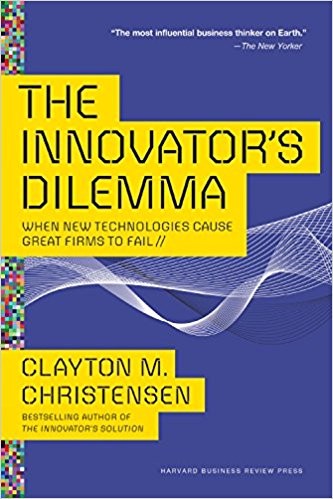
Clayton M. Christensen
Christensen's disruption model is probably the single most-referenced intellectual framework in a16z's public writing and podcasts. Andreessen has described it as one of the clearest explanations of why large companies systematically fail to see what is coming — and why startups attacking low-end markets are so dangerous.
-
12
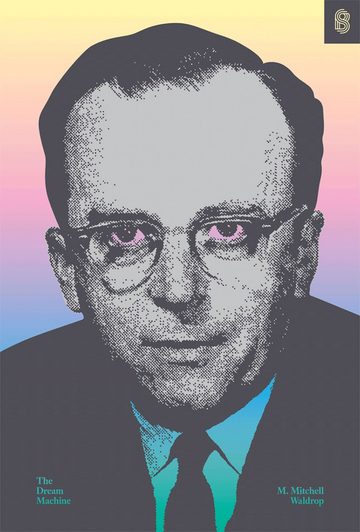
The Dream Machine: J.C.R. Licklider and the Revolution That Made Computing Personal
M. Mitchell Waldrop
Waldrop's biography of Licklider is a recurring Andreessen recommendation for understanding the ARPA-funded origin of interactive computing and the internet. It shows how visionary government research patronage — distinct from industrial policy — can seed genuinely transformative platforms decades later.
-
Science fiction
-
13
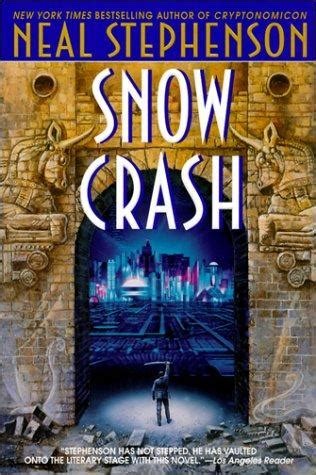
Neal Stephenson
Stephenson's 1992 novel coined 'metaverse' and depicted a fragmented, privatised future internet decades before the concept was plausible. Andreessen has cited it alongside Cryptonomicon as one of the books that made him believe software would restructure not just commerce but sovereignty itself.
-
14
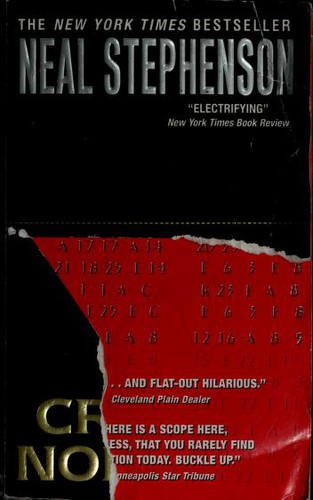
Neal Stephenson
Stephenson's 1999 novel about cryptography, World War II codebreaking, and a fictional digital currency appears repeatedly in Andreessen's recommendations. He has described it as the book that made cryptocurrency feel inevitable — a rare case where a novel functioned as both a technical and philosophical blueprint.
-
15
Isaac Asimov
Asimov's psychohistory — the idea that the arc of civilisation can be predicted and steered by those who understand its dynamics — is a recurrent frame in how Andreessen talks about technology waves. He and Elon Musk have both cited Foundation as a formative influence on thinking at civilisational scale.
-
16
Frank Herbert
Herbert's novel about resource control, imperial power, and ecological constraint has been cited by Andreessen as a study in how monopoly over a critical resource shapes politics across an entire civilisation. The spice-as-energy-source analogy maps cleanly onto his analysis of compute, semiconductors, and network effects.
-
Biography & profiles
-
17
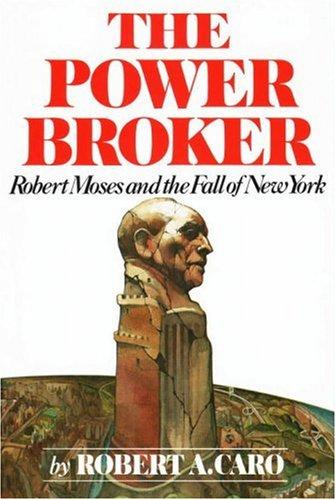
The Power Broker: Robert Moses and the Fall of New York
Robert A. Caro
Caro's biography of Robert Moses is on this list because it shows how infrastructure, regulation, and institutional power actually accumulate and calcify over decades. Andreessen has cited it as essential context for understanding why American cities stopped being able to build things — and why the regulatory environment startups face is the product of deliberate political choices.
-
18
Master of the Senate: The Years of Lyndon Johnson, Volume III
Robert A. Caro
Caro's LBJ series is the companion to The Power Broker: it dissects how legislative power is built, traded, and wielded. Andreessen has recommended Caro's work broadly as the best available study of how large institutions actually function versus how they claim to function.
-
19
Kai Bird and Martin J. Sherwin
Bird and Sherwin's biography of Oppenheimer shows what it looks like to assemble the scientific and organisational resources to push a technology far enough to matter — and what the political consequences of that success can be. Andreessen has recommended it as a study in the relationship between scientists and the state.
-
20
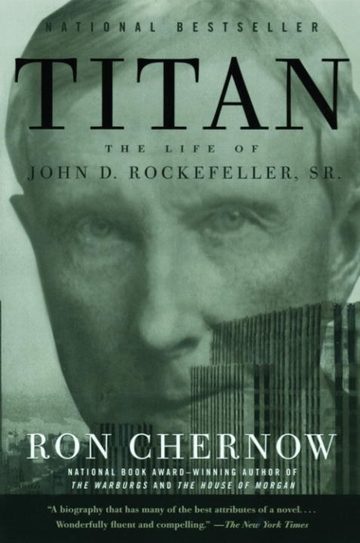
Titan: The Life of John D. Rockefeller Sr.
Ron Chernow
Chernow's biography of Rockefeller is cited in Andreessen's orbit as the best case study in how a completely new industry — oil — gets built from nothing by a founder willing to operate at a scale and with a focus that contemporaries found incomprehensible. The parallels to platform-scale tech companies are explicit in a16z discussions.
-
Psychology & human nature
-
21
Donella H. Meadows
Meadows' primer on feedback loops, stocks, and flows is cited by Andreessen as foundational for understanding why complex systems — markets, platforms, ecosystems — behave counterintuitively. The book makes explicit why optimising one variable in a system often degrades the whole, a lesson he applies to both product design and policy debates.
-
22
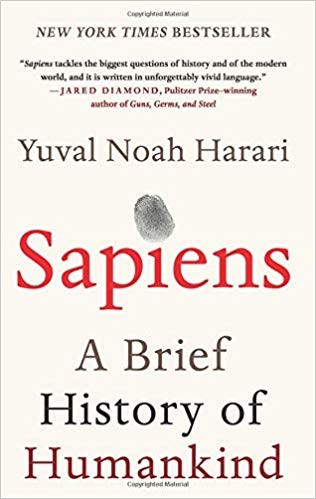
Sapiens: A Brief History of Humankind
Yuval Noah Harari
Harari's scale of analysis — the entire human species over 70,000 years — matches how Andreessen thinks about technology waves. He recommended it publicly around 2015 as one of the best books on how collective fictions (money, states, corporations) actually work, and why the ability to coordinate around shared narratives is what separates humans from every other species.
-
23
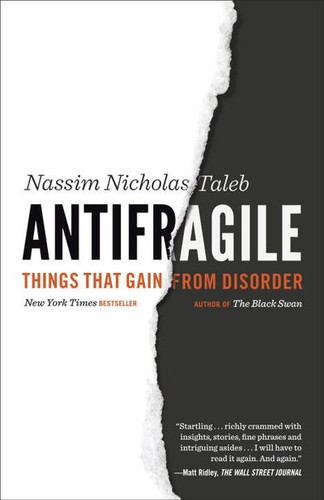
Antifragile: Things That Gain from Disorder
Nassim Nicholas Taleb
Taleb's concept of antifragility — systems that gain from disorder — is embedded in how Andreessen talks about startups versus large institutions. He has drawn on it to argue that the tech ecosystem's high failure rate is a feature, not a bug: optionality and variance are what produce large positive outcomes.
-
Business & strategy
-
24
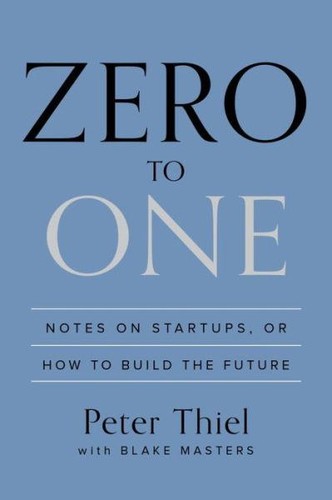
Zero to One: Notes on Startups, or How to Build the Future
Peter Thiel
Andreessen has cited Thiel's monopoly thesis repeatedly, and a16z's investment philosophy mirrors it closely — back companies building something genuinely new, not incremental improvements. The section on secrets and the contrarian question ('what important truth do very few people agree with you on?') is particularly referenced in a16z evaluations.
-
25
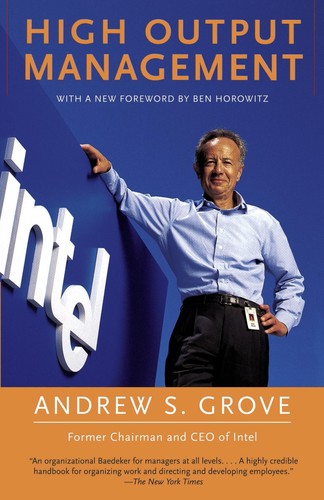
Andrew S. Grove
Andy Grove's operational bible is foundational to how a16z coaches portfolio companies. Andreessen has recommended it in multiple interviews as the most practical management book ever written, particularly the leverage concept, the manager-as-trainer frame, and the one-on-one structure.
-
26
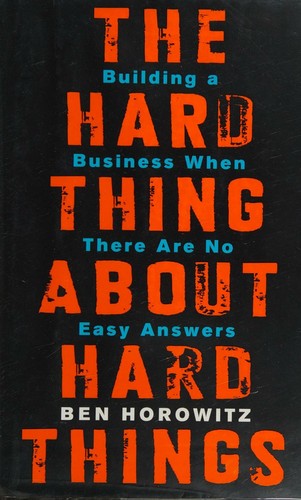
The Hard Thing About Hard Things
Ben Horowitz
Ben Horowitz is Andreessen's partner at a16z, and this book grew directly out of his blog posts that Andreessen helped shape. It is on the list not for sentiment but because the wartime-CEO framework and the brutally practical advice on firing, hiring, and preserving culture under pressure are how both men think about building companies.
-
27
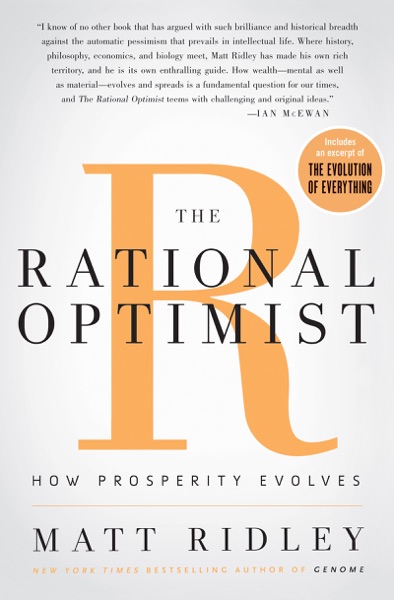
The Rational Optimist: How Prosperity Evolves
Matt Ridley
Ridley's argument that voluntary exchange and specialisation are the engine of human progress aligns closely with the techno-optimist worldview Andreessen formalised in his 2023 manifesto. He has cited Ridley's data-driven optimism as a corrective to the dominant media narrative that things are getting worse.





More on Marc Andreessen's picks
Andreessen's reading list has a through-line that isn't immediately obvious: it's a theory of who controls the future and why. The economic-history books establish the baseline — how capital, institutions, and property rights determine whether innovation compounds or collapses. The technology-history layer shows what those conditions actually produced: the computer, the internet, the chip industry. Science fiction closes the loop by making the long-run futures feel visceral and real.
Biography anchors the abstract in individual lives. Caro on Robert Moses shows how regulatory power accumulates and calcifies; Chernow on Rockefeller shows how an industry gets built from nothing; Gleick on Shannon shows how a single idea about information reshaped everything downstream. Andreessen gravitates toward subjects who operated at civilizational scale — people whose decisions rippled across decades.
The psychology and philosophy layer is the most personal. Hayek, Nozick, and Taleb are not decorative — they form the operating system behind a16z's public positions on regulation, crypto, and platform governance. His 2023 Techno-Optimist Manifesto is largely a remix of this shelf.
Taken together, the list reads less like a recommended-reading page and more like a complete intellectual stack: economic theory explains why innovation happens where it does; history shows the pattern playing out; biography makes it human-scale; fiction makes it felt. If you want to understand how Andreessen thinks about a startup pitch, a regulatory battle, or a new computing paradigm, this is the primary source material.
