
Topic · 10 books
Essential Cognitive biases and decision flaws reading list
Cognitive biases are systematic errors in thinking that affect every judgment we make — from how we evaluate risk to how we remember the past to how we choose a candidate. The field sits at the intersection of psychology, economics, and neuroscience, and the last five decades of research have dismantled the assumption that humans are rational agents. Reading widely here reveals not just a catalog of flaws, but a deeper picture of how minds evolved to cut corners in ways that worked well on the savanna and misfire badly in modern markets, institutions, and relationships.
-
01
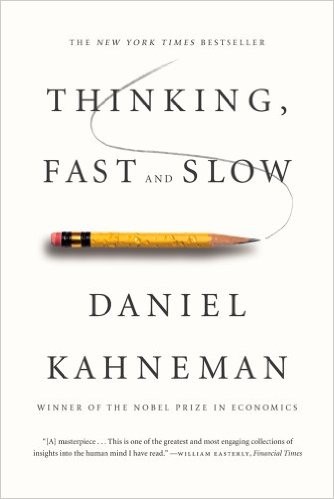
Daniel Kahneman
The book that organized decades of Kahneman and Tversky's research into a single, teachable framework. System 1 and System 2 aren't neuroscience — they're a useful fiction for understanding when intuition outpaces evidence. The anchor, availability, and representativeness chapters remain the clearest accounts of those heuristics in print.
-
02
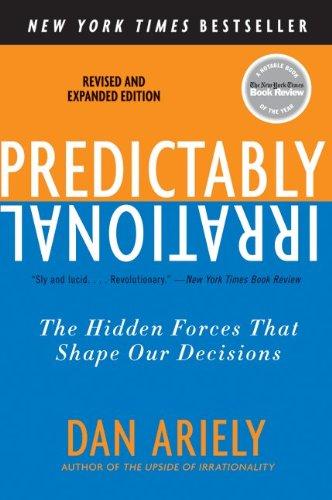
Dan Ariely
Ariely's contribution is showing that our irrationality is not random — it follows predictable patterns that can be mapped and, to some degree, engineered around. His experiments on relativity, free, and social versus market norms each isolate a mechanism that pure psychology literature tends to bury in statistical tables.
-
03
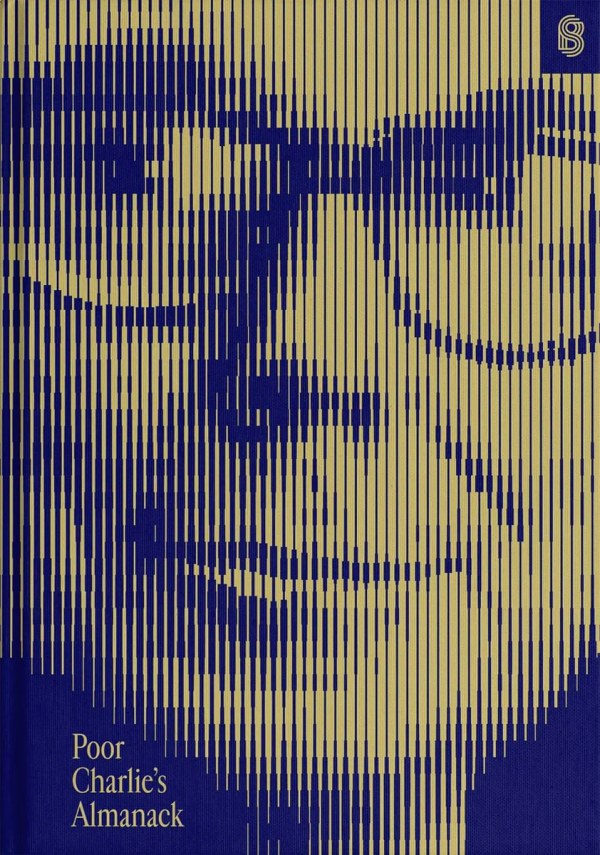
Charlie Munger
The Psychology of Human Misjudgment chapter — Munger's own lecture, reproduced in full — is the most practically organized treatment of cognitive bias in any investing text. He names 25 tendencies, illustrates each with a story, and asks how they compound. Reading this after Kahneman shows how the academic vocabulary translates into judgment under real stakes.
-
Read these with Superbook
Chat with any book on this list — ask questions, get answers tuned to you.
-
04
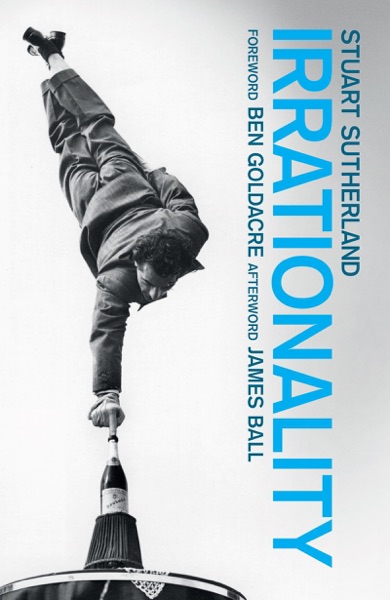
Stuart Sutherland
First published in 1992 and less famous than it deserves to be. Sutherland was a psychologist at Sussex who synthesized experimental evidence from social psychology, cognitive science, and psychiatry into a single readable volume. His treatment of in-group bias, obedience research, and medical decision-making fills gaps that the Kahneman-focused literature tends to leave.
-
05
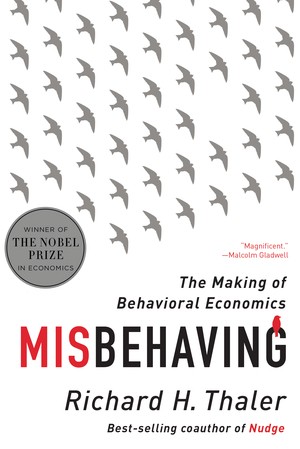
Misbehaving: The Making of Behavioral Economics
Richard H. Thaler
Thaler's memoir of behavioral economics as a discipline reads as a history of how the field fought its way into mainstream economics. The Econs versus Humans distinction is useful shorthand, but the deeper contribution is showing how institutional design — retirement savings defaults, cafeteria layouts — can nudge behavior without restricting choice.
-
06
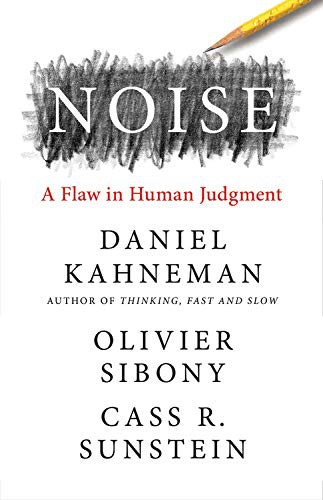
Noise: A Flaw in Human Judgment
Daniel Kahneman, Olivier Sibony, and Cass R. Sunstein
Kahneman's follow-up to Thinking, Fast and Slow shifts the focus from systematic bias to statistical noise: the finding that two doctors, two judges, or two underwriters given the same case will reach different conclusions for no principled reason. The implications for hiring, forecasting, and clinical judgment are uncomfortable and largely unaddressed in organizations.
-
07
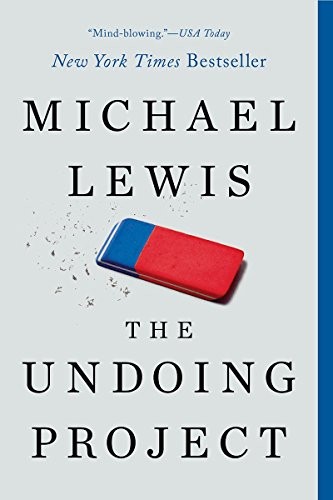
Michael Lewis
Michael Lewis's account of the Kahneman-Tversky collaboration works as intellectual biography and as a second path through the research for readers who find academic writing slow. The friendship and its eventual fracture clarifies how two very different minds produced work that neither could have done alone.
-
08
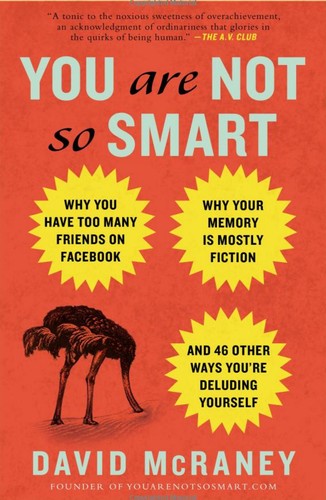
David McRaney
McRaney's blog turned book is the most self-deprecating entry on the list — each chapter names a bias, explains the research, and shows how the author himself falls for it. The format is reductive but effective for readers who want a broad survey without the weight of the primary sources.
-
09
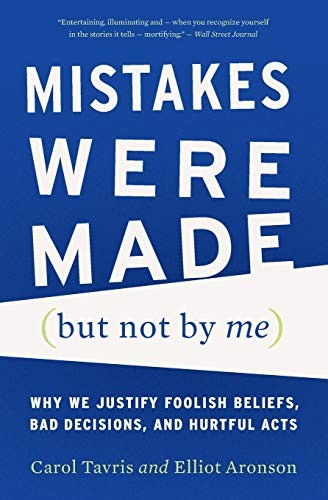
Mistakes Were Made (But Not by Me)
Carol Tavris and Elliot Aronson
Tavris and Aronson focus on what happens after a bias fires: the self-justification, narrative revision, and escalating commitment that follow. Cognitive dissonance, they argue, is not a personality flaw but a universal mechanism, and understanding it explains police misconduct, political tribalism, and therapy failures in a single framework.
-
10
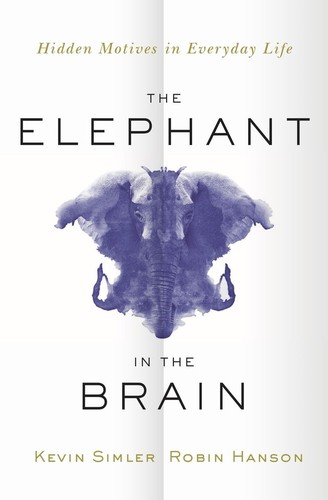
The Elephant in the Brain: Hidden Motives in Everyday Life
Kevin Simler and Robin Hanson
Hanson and Simler make the most provocative claim in this list: that self-deception is not a flaw but an adaptive strategy — we hide our real motives from ourselves so we can more convincingly hide them from others. If true, the entire bias-correction project has a ceiling. This book belongs at the end so it reframes everything before it.
More about this list
The literature on cognitive biases has a clear founding moment — the collaboration between Daniel Kahneman and Amos Tversky in the 1970s — and the reading list below traces the arc from that origin through its practical applications and its critics.
Kahneman's own synthesis is the natural starting point, but the arc grows richer when paired with Ariely's behavioral-economics experiments, which shift the focus from laboratory heuristics to real-world irrationality in markets and everyday life. Stuart Sutherland's earlier, less celebrated survey broadens the lens to include social psychology and psychiatric literature that the economics mainstream often ignores.
Charlie Munger's Psychology of Human Misjudgment — collected in his Almanack — approaches the same territory from a practitioner's angle: a working investor cataloging the mental errors that cost money and what to do about them. Thaler bridges the gap between academic psychology and economic policy, showing how the same biases that Kahneman described in the lab ended up in the design of pension systems and tax forms.
The later books on the list do something subtler. Kahneman, Sibony, and Sunstein's Noise shows that random variability in judgment — not just systematic bias — is a largely overlooked source of bad decisions. Tavris and Aronson examine why we double down rather than admit error once a bias has fired. McRaney's work and Hanson and Simler's show what the field looks like when popularized in different registers — one journalistic and self-aware, the other uncomfortable in its implications about self-deception as a strategy rather than a flaw. By the end of the list, the first book reads differently: the biases look less like bugs and more like features of a mind optimized for social survival rather than accuracy.
