
Topic · 12 books
The best books on behavioral economics
Behavioral economics sits at the intersection of psychology and economics, studying how people actually make decisions rather than how rational-agent models say they should. Since Kahneman and Tversky's foundational work on cognitive biases in the 1970s, the field has moved from academic curiosity to one of the most practically applied social sciences — shaping public policy, product design, financial advice, and medical consent. Reading widely in it reveals not just a catalog of human quirks but a coherent challenge to the assumption of rationality that underpins classical economics.
-
01
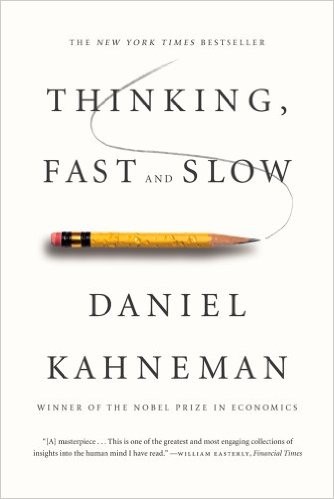
Daniel Kahneman
The foundational text. Kahneman organizes decades of research into the System 1 / System 2 framework, covering prospect theory, anchoring, availability, and the planning fallacy. Dense in places but the research underpins most of what follows on this list.
-
02
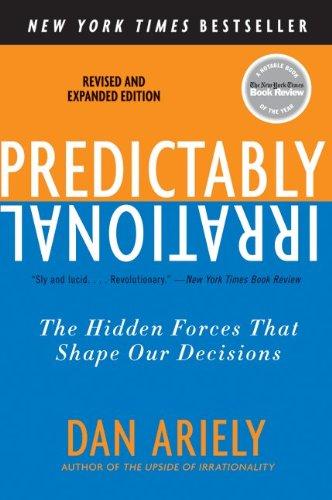
Dan Ariely
Ariely's first and best book demonstrates that human irrationality is not random noise — it follows predictable patterns. His chapters on free offers, social vs. market norms, and the placebo effect are especially useful for understanding consumer behavior.
-
03
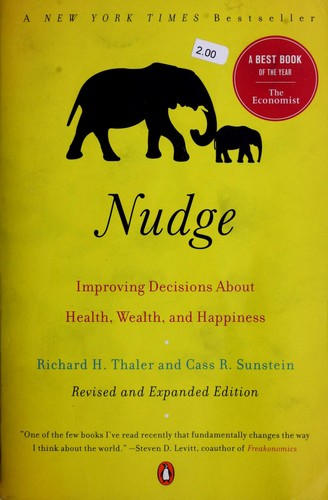
Nudge: Improving Decisions About Health, Wealth, and Happiness
Richard H. Thaler and Cass R. Sunstein
Thaler and Sunstein's case for 'libertarian paternalism' — using choice architecture to steer people toward better decisions without removing options. The foundation for behavioral public policy, from organ donation defaults to retirement savings design.
-
Read these with Superbook
Chat with any book on this list — ask questions, get answers tuned to you.
-
04
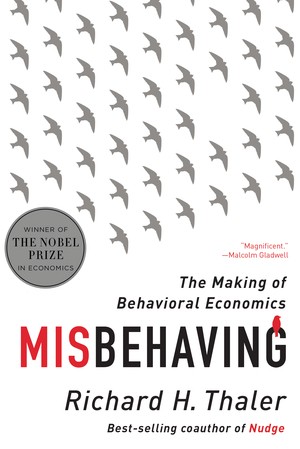
Misbehaving: The Making of Behavioral Economics
Richard H. Thaler
Thaler's memoir of behavioral economics from the inside, covering the resistance from orthodox economists and his own research on mental accounting, the endowment effect, and the Ultimatum Game. More accessible than his academic papers and more honest about the field's politics.
-
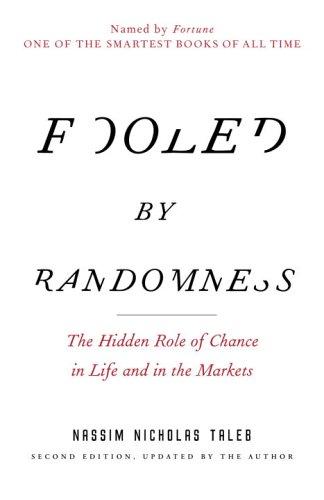
05
Nassim Nicholas Taleb
Taleb's opening salvo on how humans systematically confuse luck with skill, especially in finance. The behavioral economics research on hindsight bias and narrative fallacy is here, but framed aggressively rather than academically.
-
06
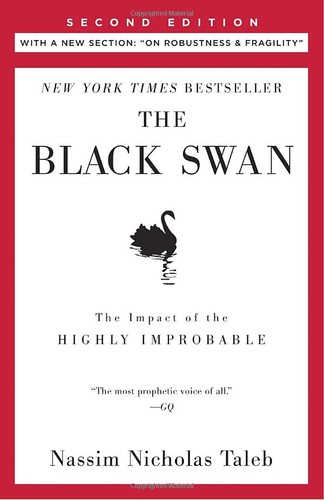
The Black Swan: The Impact of the Highly Improbable
Nassim Nicholas Taleb
Less directly about cognitive bias than Fooled by Randomness, but the argument — that rare, high-impact events are systematically underweighted because we build models from past data — depends entirely on behavioral economics research on availability and representativeness.
-
07
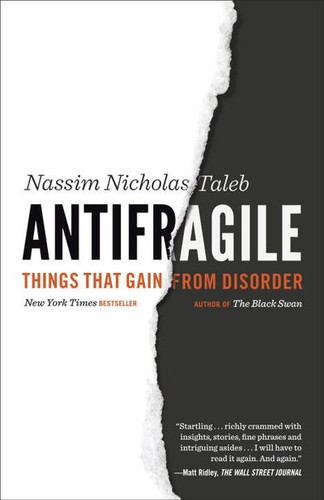
Antifragile: Things That Gain from Disorder
Nassim Nicholas Taleb
Taleb's constructive response to the bias literature: instead of trying to fix human judgment, build systems that benefit from volatility. A challenge to the nudge-and-correct approach taken by Kahneman and Thaler.
-
08
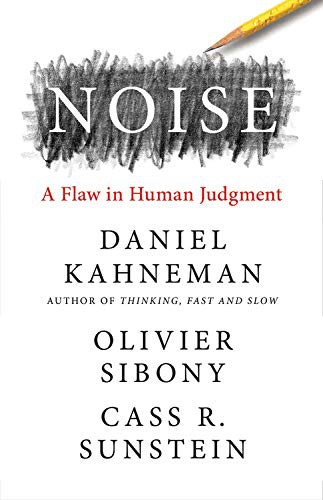
Noise: A Flaw in Human Judgment
Daniel Kahneman, Olivier Sibony, and Cass R. Sunstein
Kahneman, Sibony, and Sunstein's argument that variability in human judgment — different judges giving different sentences for identical crimes, different doctors giving different diagnoses — is at least as damaging as systematic bias, and much less discussed. The follow-up Kahneman's work needed.
-
09
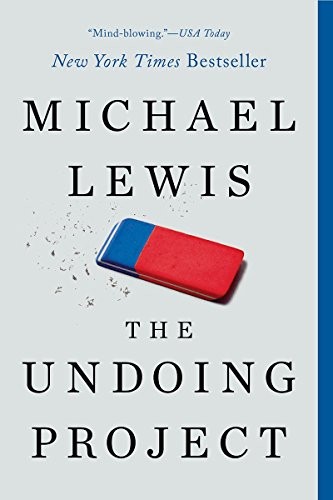
Michael Lewis
Michael Lewis tells the story of Kahneman and Tversky's collaboration and eventual estrangement. Essential context for understanding why the heuristics-and-biases research had the shape it did — including the debates about how pessimistic the conclusions should be.
-
10
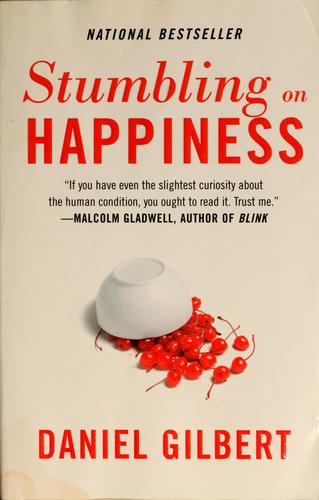
Daniel Gilbert
Daniel Gilbert's accessible account of affective forecasting — our poor ability to predict what will make us happy. His research on immune neglect and focalism is less cited than Kahneman's work but equally well-evidenced.
-
11
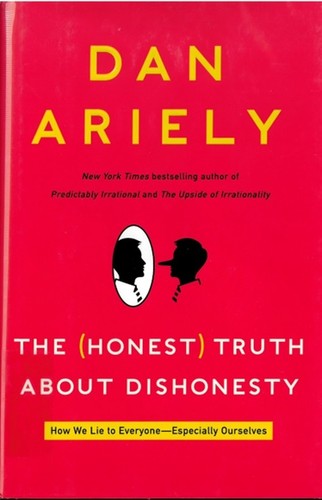
The (Honest) Truth About Dishonesty
Dan Ariely
Ariely's research on cheating shows that most people will bend rules slightly but not dramatically — a finding that complicates simple models of self-interest. His fudge factor theory is at odds with rational-choice accounts of honesty.
-
12
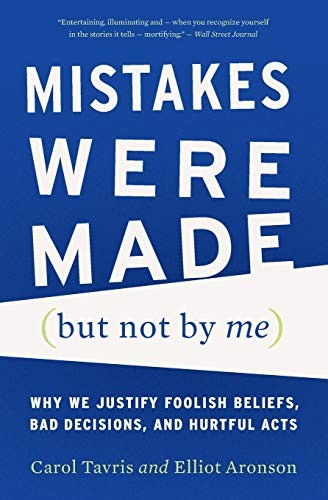
Mistakes Were Made (But Not by Me)
Carol Tavris and Elliot Aronson
Tavris and Aronson's account of cognitive dissonance and self-justification. The best popular treatment of why people hold onto beliefs in the face of contradicting evidence, and why admitting error is so cognitively costly.
More about this list
The reading arc here starts with the empirical foundation: Kahneman's slow unpacking of System 1 and System 2 thinking, and the Nobel Prize-winning research on prospect theory and heuristics that preceded it. Ariely and Thaler then extend that foundation in different directions — Ariely into the everyday irrationality of markets and relationships, Thaler into what institutions and policymakers can do about it.
From there the list turns more critical. Taleb's trilogy (Fooled by Randomness, The Black Swan, Antifragile) takes the field's findings about cognitive bias seriously but attacks the quantitative models that economists built on them. Noise, Kahneman's late collaboration with Sibony and Sunstein, shifts the focus from bias — systematic error — to variability in human judgment that is just as costly but far less studied.
The final third of the list is critique and application. The Undoing Project tells the story of how Kahneman and Tversky's friendship and rivalry produced the research. Mistakes Were Made (But Not By Me) is the best account of motivated reasoning and self-justification. You Are Not So Smart and The Art of Thinking Clearly are field guides to the biases named in the academic literature. The Elephant in the Brain argues that much of human behavior is motivated by self-deception we cannot easily see. Together these books don't just describe the field — they interrogate its limits.
