
Reading list · 12 books
Charlie Munger's reading list
Charlie Munger was vice chairman of Berkshire Hathaway and Warren Buffett's longtime partner. A self-taught polymath who read voraciously across biology, physics, history, psychology, and economics, Munger developed the concept of the 'latticework of mental models'—the idea that wisdom comes from integrating insights across many disciplines rather than mastering one. His reading recommendations appear throughout Poor Charlie's Almanack, his USC Law School commencement speeches, and decades of Wesco Financial and Daily Journal shareholder meeting transcripts.
-
01
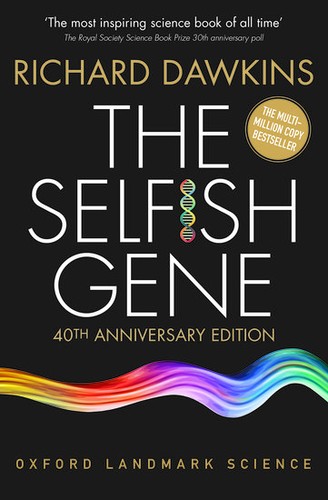
Richard Dawkins
Munger repeatedly named this as one of the most important books he ever read. He credited Dawkins with showing how evolutionary logic explains behavior that looks irrational at the organism level—selfishness, cooperation, deception—because the unit of selection is the gene, not the individual. Essential framing for his psychology of misjudgment work.
-
02
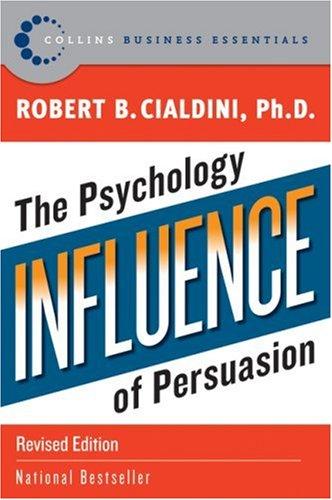
Influence: The Psychology of Persuasion
Robert B. Cialdini
Munger was an early, vocal champion of Cialdini's work long before it became business-book canon. He sent copies to friends and cited the six principles of influence in his Almanack as the foundation for understanding salesmanship, advertising, and self-deception. In his USC speeches he called it required reading for anyone who wanted to avoid being manipulated.
-
03
Charlie Munger
Munger's own collected talks, edited by Peter Kaufman. The core text for understanding his latticework framework and the 25 tendencies toward misjudgment. His 'Elementary, Worldly Wisdom' speech from USC is in here—the closest thing to a curriculum for his interdisciplinary approach to thinking.
-
Read these with Superbook
Chat with any book on this list — ask questions, get answers tuned to you.
-
04
The Autobiography of Benjamin Franklin
Benjamin Franklin
Munger cited Franklin more than almost any other figure. He admired Franklin's habit of reasoning from first principles, his comfort operating in multiple fields simultaneously (printing, diplomacy, science, finance), and his practical approach to self-improvement—systematic, incremental, unsentimental. He saw Franklin as proof that breadth and depth weren't in tension.
-
05
Einstein: His Life and Universe
Walter Isaacson
Isaacson's biography of Einstein was one Munger recommended for understanding how a genuinely original thinker operates—specifically Einstein's willingness to discard assumptions that everyone else treated as fixed. Munger believed the habit of questioning axioms, not just working within them, was the rarest and most valuable intellectual trait.
-
06
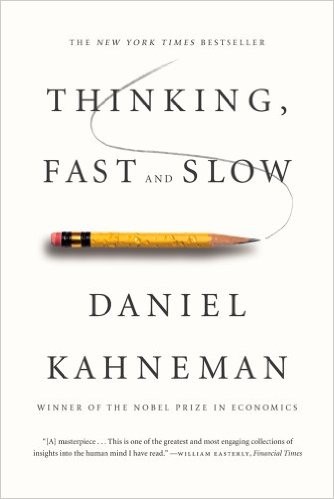
Daniel Kahneman
Kahneman's synthesis of decades of behavioral research maps closely onto the psychology of misjudgment Munger had been cataloguing independently. Munger recommended it as a rigorous, research-grounded companion to Cialdini—where Cialdini focused on external manipulation, Kahneman focused on the internal architecture of cognitive error.
-
07
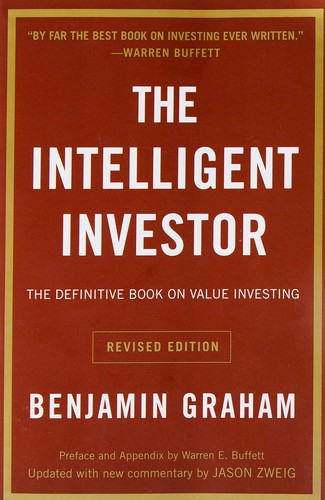
Benjamin Graham
Graham's book was foundational for Munger, though he ultimately pushed Berkshire beyond pure Graham-style deep value toward buying quality businesses. He frequently cited Mr. Market and the margin-of-safety concept as the two ideas from Graham that survived his own evolution as an investor. The framework for separating price from value is still here.
-
08
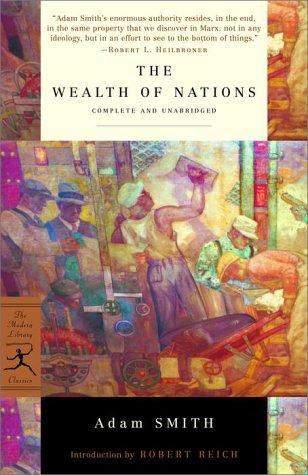
Adam Smith
Munger considered Smith's invisible hand one of the truly big ideas—a mechanism that generates coordination without central direction. He cited it alongside Darwin's natural selection as examples of simple principles with vast explanatory power. He believed most people knew the phrase but had never sat with the actual argument.
-
09
Jared Diamond
Diamond's argument that geography and biology, not racial or cultural superiority, explain which civilizations dominated history appealed to Munger's habit of looking for root causes rather than proximate ones. He recommended it as a model of multidisciplinary reasoning applied to a historical question—exactly the kind of synthesis he valued.
-
10
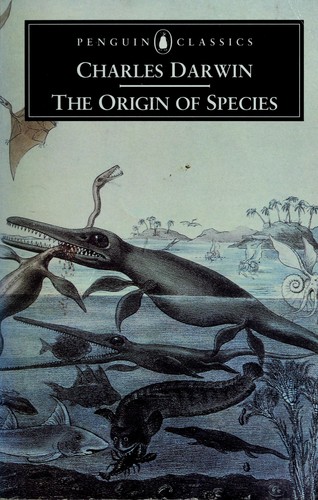
Charles Darwin
Munger kept returning to Darwin not just for the content but for the method. He admired the way Darwin marshaled evidence across many fields, acknowledged counterarguments directly, and built a case slowly rather than asserting a conclusion. He told students that if they wanted to improve their thinking, reading Darwin carefully was better than most courses in logic.
-
11
The Structure of Scientific Revolutions
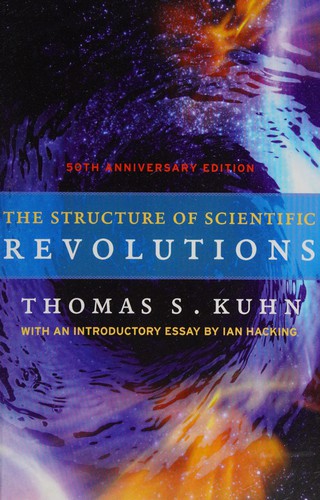
Thomas S. Kuhn
Kuhn's account of how scientific paradigms shift—not through gradual accumulation but through crisis and replacement—informed Munger's skepticism about consensus views. He believed understanding how smart people stay wrong long past the evidence should have changed their minds was essential for any investor or thinker trying to avoid the same trap.
-
12
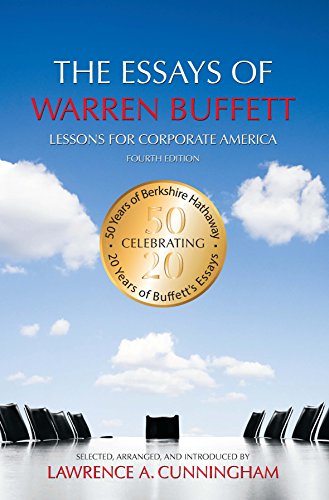
Warren Buffett
Cunningham's compilation of Buffett's shareholder letters is the best record of the Munger-Buffett intellectual partnership in practice. Munger's fingerprints are visible throughout—the emphasis on business quality over statistical cheapness, the distrust of financial complexity, the long time horizons. Reading the essays alongside Poor Charlie's Almanack shows how their frameworks converged.



More on Charlie Munger's picks
Munger organized his intellectual life around what he called 'big ideas'—the handful of core concepts from each major discipline that, taken together, explain most of what matters. The books on this list reflect that architecture.
A cluster of biology and evolutionary thinking comes first: Munger said The Selfish Gene changed how he saw human behavior, and he returned to Darwin repeatedly as a model of careful, evidence-driven reasoning. Darwin's habit of immediately recording evidence that contradicted his theories—to prevent motivated forgetting—struck Munger as a discipline worth emulating.
From there, the list moves into psychology. Munger's famous Poor Charlie's Almanack catalogues 25 tendencies toward misjudgment, drawing heavily on Cialdini's Influence and the behavioral economics of Kahneman. He wasn't interested in psychology as therapy; he wanted a checklist against his own cognitive errors.
Biography forms the third pillar. Munger read biographies obsessively, believing you could 'absorb the lifetime learning of extraordinary people' without paying the tuition. His favorites—Franklin, Einstein, Feynman—share a quality he prized: the willingness to say 'I don't know' and reason from first principles rather than authority.
The investing titles here aren't separate from the rest of the list—Munger treated investing as applied psychology, applied math, and applied history simultaneously. The books he recommended on markets are the ones that treat price and value as a problem in epistemology, not just arithmetic.
