
Topic · 10 books
The best books on meditation and mindfulness
Meditation and mindfulness sit at the intersection of ancient contemplative practice and modern neuroscience. Once confined to monasteries, these practices have been rigorously studied in clinical and laboratory settings, with strong evidence for reducing chronic stress, reshaping emotional reactivity, and improving attention. Reading widely in this field lets you trace the tradition from its Pali canon roots, through the secularizing work of Jon Kabat-Zinn in hospital settings, to contemporary cognitive science that can explain mechanistically why sitting quietly with your breath actually changes the brain.
-
01
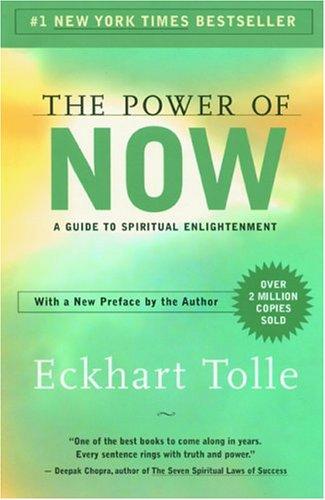
Eckhart Tolle
Tolle's central claim — that most suffering is the product of compulsive mental commentary on past and future — is the clearest entry point into why meditation practice addresses something real. It reads less as a self-help manual than as a direct phenomenological report of what it is like to step out of narrative mind.
-
02
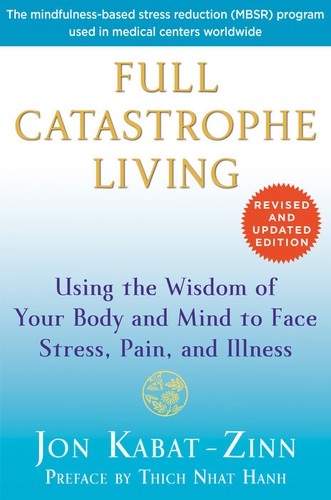
Jon Kabat-Zinn
Kabat-Zinn built Mindfulness-Based Stress Reduction at the University of Massachusetts Medical Center in 1979, and this book is its manual. Unlike most meditation literature, it was written to be tested against clinical outcomes in chronic pain and anxiety populations. The evidence-base behind MBSR is now substantial, making this the most rigorously grounded book on the list.
-
03
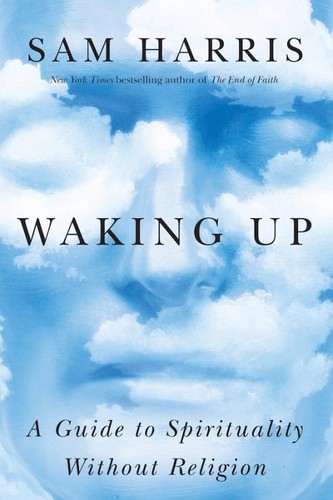
Waking Up: A Guide to Spirituality Without Religion
Sam Harris
Harris separates the genuine phenomenological insights of meditation — particularly the observation that a locatable, unified self is not detectable on close inspection — from the religious and metaphysical scaffolding that usually carries them. For readers who want the practice without the tradition, this is the most useful philosophical guide on the list.
-
Read these with Superbook
Chat with any book on this list — ask questions, get answers tuned to you.
-
04
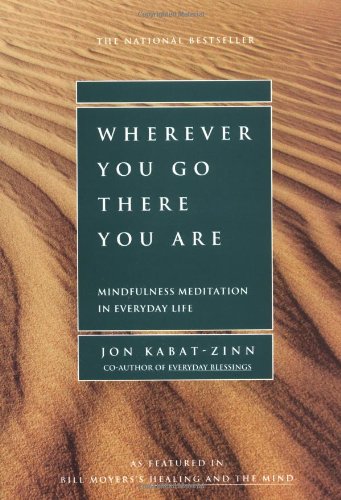
Wherever You Go, There You Are
Jon Kabat-Zinn
Kabat-Zinn's more accessible companion to *Full Catastrophe Living*: short chapters, no clinical apparatus, aimed at daily life rather than an eight-week program. Often recommended as a first book precisely because it doesn't front-load commitment; it shows what informal mindfulness practice looks like outside of scheduled sitting.
-
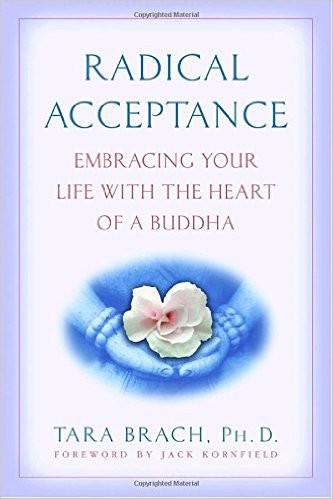
05
Tara Brach
Tara Brach's contribution is a psychological framing she calls the "trance of unworthiness" — a Western condition of chronic self-judgment that meditation alone doesn't dissolve. She draws on Theravada teaching and her training as a clinical psychologist to argue that acceptance (not approval) of present experience is the specific mechanism that makes practice therapeutic.
-
06
When Things Fall Apart: Heart Advice for Difficult Times
Pema Chödrön
Pema Chodron's Tibetan Buddhist approach starts from the opposite premise to most Western self-help: groundlessness is not a problem to solve. This book is most useful after early meditation practice has produced some capacity to sit with discomfort; it offers a framework for turning difficulty into the practice rather than an obstacle to it.
-
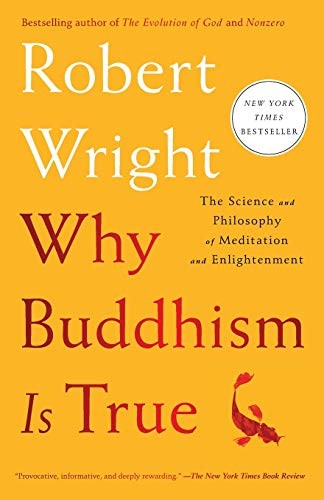
07
Robert Wright
Robert Wright reads the early Buddhist analysis of mind through evolutionary psychology — arguing that natural selection shaped a mind prone to misread its own experience, and that Buddhist practice corrects for exactly those distortions. The result is an unusually rigorous secular case for meditation that doesn't require metaphysical commitments.
-
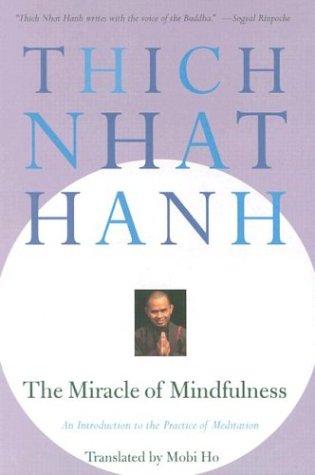
08
Thich Nhat Hanh
Thich Nhat Hanh's 1975 manual, written as a letter to a fellow monk during the Vietnam War, remains the most economical introduction to the basic mechanics of mindfulness practice. Its brevity is the point: it demonstrates that the core instruction requires almost no words, while every other book on this list adds elaboration.
-
09
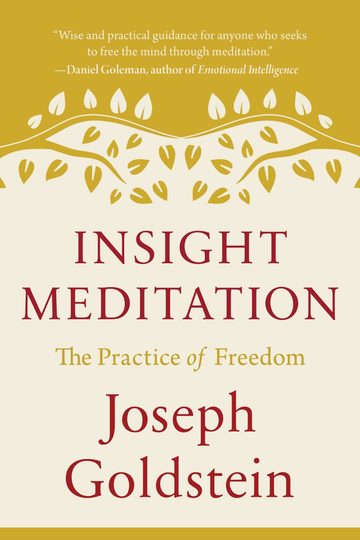
Insight Meditation: The Practice of Freedom
Joseph Goldstein
Goldstein co-founded the Insight Meditation Society in 1975 and has taught vipassana for over fifty years. This book provides the technical depth on bare attention practice — distinguishing concentration from insight, explaining the stages of insight described in the Pali canon, and grounding the whole account in direct practice experience rather than theory.
-
10
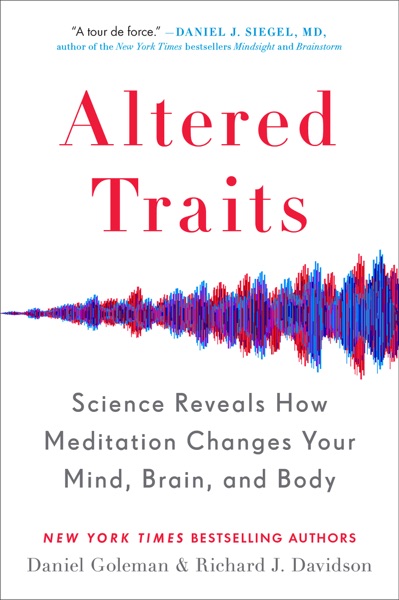
Altered Traits: Science Reveals How Meditation Changes Your Mind, Brain, and Body
Daniel Goleman and Richard J. Davidson
Davidson runs one of the world's largest contemplative neuroscience labs; Goleman popularized emotional intelligence. Their joint project here is to separate the meditation research that holds up under scrutiny from the large body of hype. What actually changes, at what dose, in what population — this is the book that puts the scientific claims of the field on honest ground.

More about this list
The books on this list form a rough arc rather than a flat collection. It begins with Eckhart Tolle and Jon Kabat-Zinn, who translated Eastern practice into language accessible to Western secular readers — one through direct phenomenological description, the other through clinical protocol. From there, Sam Harris takes the experience apart philosophically, arguing the insights are real and separable from the metaphysics. Joseph Goldstein's *Insight Meditation* provides the technical depth that comes only from decades on the cushion, and Daniel Goleman and Richard Davidson's *Altered Traits* subjects the whole tradition to peer-reviewed scrutiny.\n\nThe middle of the list moves through different temperaments and lineages: Tara Brach's psychological framing of radical acceptance, Robert Wright's evolutionary-biology lens on why ordinary mind generates suffering, and Pema Chodron's Tibetan approach to working with difficulty rather than around it. Thich Nhat Hanh's simplicity acts as a recurring correction — reminding the reader that elaboration is not always progress.\n\nBy the end, the list loops back on itself. Kabat-Zinn's clinical results look different after you've absorbed the original teachings. Harris's atheist case for meditation sits in richer context once you've read what he's secularizing. The tenth book changes how you read the first.
