
Reading list · 12 books
Reid Hoffman's reading list
Reid Hoffman co-founded LinkedIn, was an early investor in Facebook and Airbnb, and is a partner at Greylock Partners. He developed the concept of "blitzscaling" — prioritizing speed over efficiency when building network-effect businesses — and has written extensively on the overlap of organizational design, technology philosophy, and career strategy. His reading taste runs toward books that explain how systems scale: networks, institutions, companies, and individuals.
-
01
Blitzscaling: The Lightning-Fast Path to Building Massively Valuable Companies
Reid Hoffman and Chris Yeh
Hoffman's own framework for scaling companies faster than is conventionally prudent — accepting chaos in exchange for market capture. Referenced constantly in Masters of Scale episodes as the conceptual backbone for every case study he discusses.
-
02
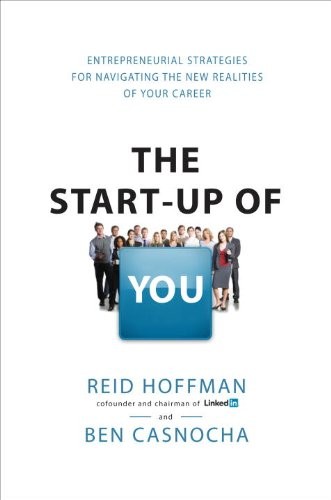
Reid Hoffman and Ben Casnocha
Co-written with Ben Casnocha, this applies network logic to individual career development. Hoffman's argument is that careers should be managed like startup portfolios — adaptive, networked, and built on iterative bets rather than linear plans.
-
03
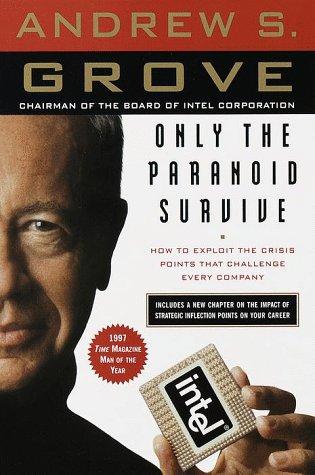
Andrew S. Grove
Andy Grove's account of Intel navigating strategic inflection points. Hoffman has cited this as a foundational text for thinking about when the rules of competition change and why most incumbents fail to respond in time.
-
Read these with Superbook
Chat with any book on this list — ask questions, get answers tuned to you.
-
04
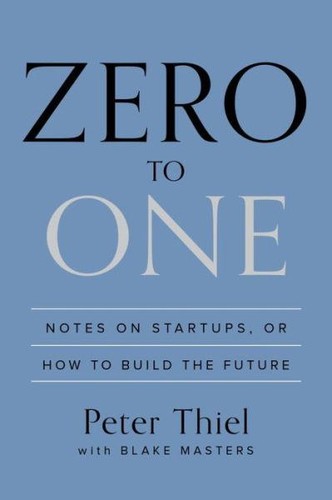
Zero to One: Notes on Startups, or How to Build the Future
Peter Thiel
Peter Thiel's contrarian take on monopoly and competition. Hoffman and Thiel are longtime colleagues from the PayPal era; Hoffman has discussed Thiel's framework for secrets and differentiation as a productive counterpoint to his own network-effect thinking.
-
05
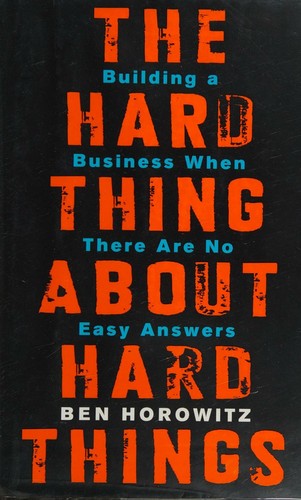
The Hard Thing About Hard Things
Ben Horowitz
Ben Horowitz on the unglamorous decisions founders face — layoffs, demotions, board conflicts. Hoffman has recommended this on Masters of Scale as one of the most honest accounts of what operating a scaling company actually requires.
-
06
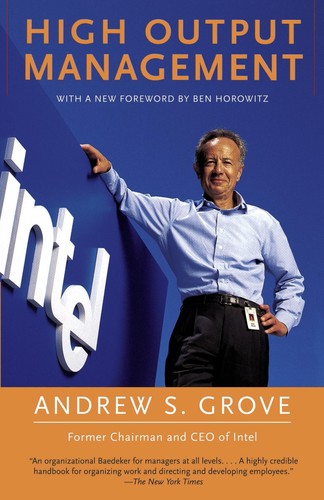
Andrew S. Grove
Andy Grove's operational manual for managing through leverage. Hoffman has described Grove's concept of managerial output — that a manager's work is the work of their team — as a foundational idea he returned to when building LinkedIn's leadership team.
-
07
Geoffrey G. Parker, Marshall W. Van Alstyne, and Sangeet Paul Choudary
Parker, Van Alstyne, and Choudary lay out the economics of two-sided platforms — the same structural logic underpinning LinkedIn. Hoffman has pointed to platform dynamics as underappreciated by founders who think of their product as a service rather than an infrastructure layer.
-
08
Andrew Chen
Andrew Chen's detailed study of network effects — how to get them started, what kills them, and how they evolve at scale. Closely aligned with Hoffman's own frameworks on network bootstrapping and the cold-start dilemma LinkedIn itself faced in 2003.
-
09
Give and Take: Why Helping Others Drives Our Success
Adam Grant
Adam Grant's research on how givers, takers, and matchers perform across careers and organizations. Hoffman has discussed generosity as a structural feature of successful networks and recommended this as the empirical case for why reciprocity norms shape long-run outcomes.
-
10
No Rules Rules: Netflix and the Culture of Reinvention
Reed Hastings and Erin Meyer
Reed Hastings and Erin Meyer on Netflix's culture of radical candor and high talent density. Hoffman has referenced this as the clearest articulation of how to build an organization that can scale without bureaucratic drag.
-
11
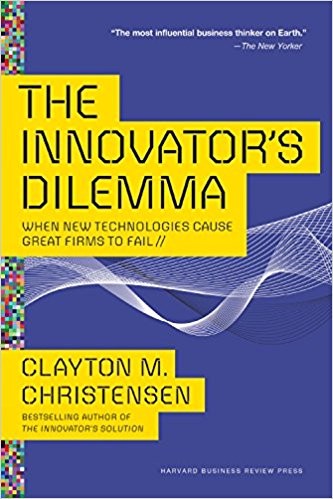
Clayton M. Christensen
Clayton Christensen's theory of disruption. Hoffman has cited this in Masters of Scale discussions of why large companies consistently fail to respond to emerging competitors — particularly relevant for his arguments about why incumbents lose platform transitions.
-
12
Venture Deals: Be Smarter Than Your Lawyer and Venture Capitalist
Brad Feld and Jason Mendelson
Brad Feld and Jason Mendelson's practical guide to term sheets and VC mechanics. Hoffman has recommended this to founders as the baseline technical knowledge any entrepreneur needs before entering financing conversations — a tool for leveling information asymmetry.



More on Reid Hoffman's picks
Hoffman's recommendations cluster around two obsessions: the mechanics of scale and the ethics of how technology reshapes human coordination. He returns often to books that deal with organizational theory from first principles — not management advice, but structural explanations for why some organizations compound while others plateau.
A second thread is network theory applied to careers and strategy. Hoffman has argued that careers and companies are increasingly governed by network logic, and the books he recommends consistently return to how relationships, platforms, and interdependencies shape outcomes more than individual talent or effort.
Sources for this list draw primarily from the Masters of Scale podcast (where Hoffman has named books in guest conversations and solo episodes), his two-part LinkedIn newsletter series on blitzscaling, and interviews in which he discusses influences on his thinking about Silicon Valley's growth playbook.
