
Topic · 10 books
The best books on relationships and marriage
Relationships and marriage sit at the intersection of neuroscience, evolutionary biology, psychology, and culture—and the gap between what we intuit and what the research actually shows is enormous. These books pull from longitudinal couples studies, attachment neuroscience, and clinical observation to explain why partnerships succeed, stall, or fracture, and what is actually possible to change.
-
01
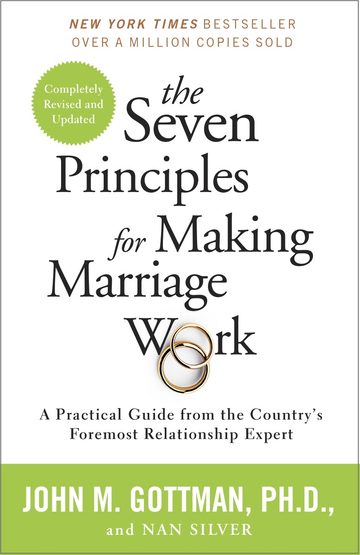
The Seven Principles for Making Marriage Work
John Gottman and Nan Silver
The empirical anchor of this list. Gottman's observational research identified the specific behaviors—contempt above all—that predict divorce with 93% accuracy. The prescriptions are grounded in what couples who stay together actually do, not what therapists assumed they should do.
-
02
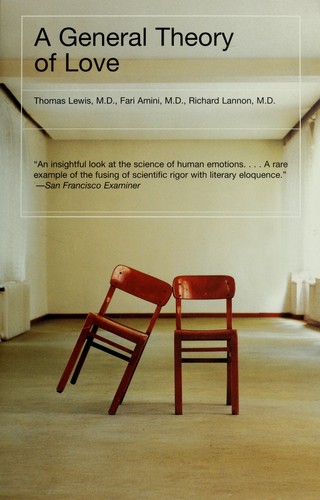
Thomas Lewis, Fari Amini, and Richard Lannon
Three psychiatrists drawing on neuroscience to argue that human love is a biological process—limbic resonance, regulation, revision—not merely a feeling. The most scientifically grounded argument for why relationships literally reshape the brain, and why early attachment experiences cast such long shadows into adult partnerships.
-
03
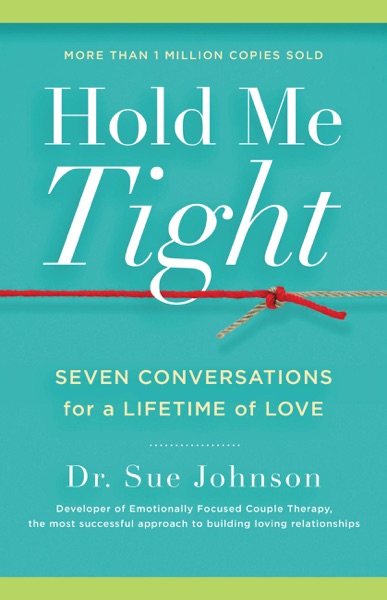
Hold Me Tight: Seven Conversations for a Lifetime of Love
Sue Johnson
Johnson developed Emotionally Focused Therapy, which treats couples' conflicts as attachment bids misread as attacks. This book makes that clinical framework accessible: the argument is that most relationship fights are really about the question 'Are you there for me?' and most destructive patterns follow from not knowing how to ask or answer it.
-
Read these with Superbook
Chat with any book on this list — ask questions, get answers tuned to you.
-
04
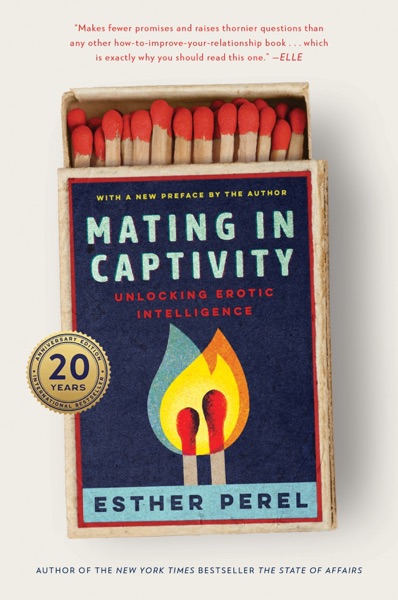
Mating in Captivity: Unlocking Erotic Intelligence
Esther Perel
The central provocation: domesticity and eroticism are in tension by design, not by accident. Perel argues from clinical observation that the conditions that create security—familiarity, transparency, merging—tend to extinguish erotic charge. The book reframes long-term desire as a skill requiring intentional cultivation of separateness.
-
05
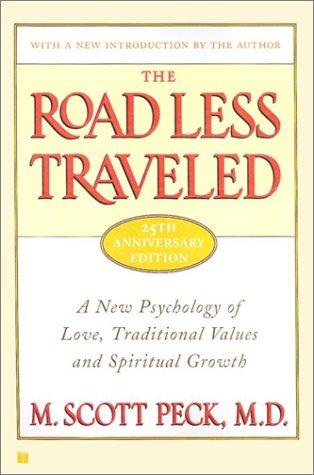
M. Scott Peck
Peck's definition of love—the will to extend oneself for another's spiritual growth—is the sharpest counter to the feeling-based pop-psychology version. His argument that genuine love requires work, discipline, and the willingness to be changed is foundational for thinking clearly about what marriage actually asks of people.
-
06
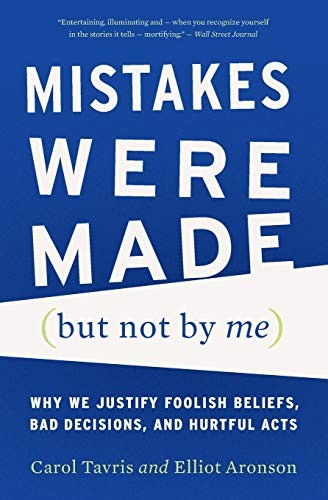
Mistakes Were Made (But Not by Me)
Carol Tavris and Elliot Aronson
Tavris and Aronson's account of self-justification is required reading for understanding why couples conflicts escalate and harden. The mechanism of cognitive dissonance explains why people who love each other can simultaneously be certain they were right and their partner was wrong—and why apologizing is so hard.
-
07
The Examined Life: How We Lose and Find Ourselves
Stephen Grosz
Grosz's psychoanalytic casebook includes some of the most precise writing on the psychology of intimacy available outside academic journals. His cases illuminate why people repeatedly choose unavailable partners, why change feels like loss, and what it means to understand someone versus simply knowing them well.
-
08
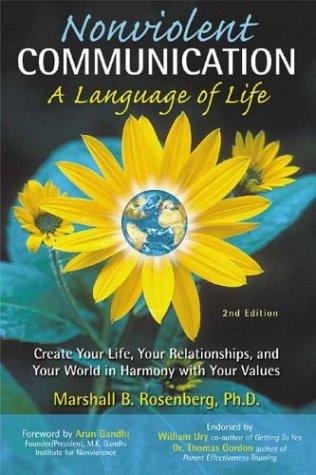
Marshall B. Rosenberg
Rosenberg's framework for distinguishing observations from evaluations and needs from demands is practically useful in any relationship context. The distinction between expressing feeling and making accusations accounts for a large fraction of what makes couples arguments unproductive.
-
09
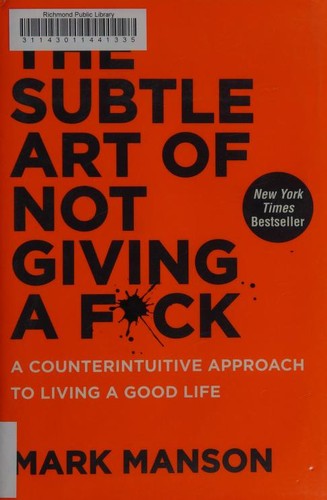
The Subtle Art of Not Giving a F*ck
Mark Manson
The contrarian entry. Manson argues that modern romantic culture's demand for constant validation and unconditional acceptance is not love but codependency—and that healthy relationships require the willingness to disagree, disappoint, and accept disappointment. A useful corrective to the sentimental framing that dominates most relationship advice.
-
10
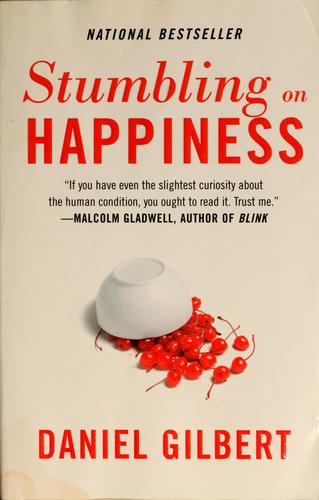
Daniel Gilbert
Gilbert's research on affective forecasting—how badly we predict what will make us happy—has direct implications for relationship decisions. The gap between imagined and lived experience of major commitments explains why people who expect marriage to solve their unhappiness are often surprised to find it doesn't.
More about this list
The list begins with the science of what makes relationships work or fail—Gottman's decades of observing couples in his "Love Lab" provide a foundation no other researcher has matched for empirical rigor. From there it moves into the biological architecture of love: why the early-stage bonding system works differently from the long-term attachment system, and what that means for sustaining desire alongside security.
Attachment theory—originally Bowlby's observations of infants—turns out to explain enormous amounts of adult romantic behavior. Johnson's work brings that framework into couples therapy; Levine and Heller bring it into accessible self-examination. Reading Gottman and Johnson together, you see the same terrain mapped from different angles: one behavioral and predictive, the other experiential and relational.
Esther Perel then complicates the picture productively. Her argument is that the conditions that make a relationship feel safe are often precisely what kills erotic charge—and that pretending otherwise is why so many long-term partnerships quietly go cold. Her work doesn't contradict Gottman; it operates in a different dimension of the same relationship.
The final books handle the harder edges: the neuroscience of love and heartbreak, the psychology of self-deception in conflict, and—with the Manson entry—an explicitly contrarian view on why some of the conventional wisdom about relationships actively makes things worse. By the end, the first books read differently: more complicated, less prescriptive, more useful.
