Science · Similar reads
Books like Seven Brief Lessons on Physics
The best books like Seven Brief Lessons on Physics are The Order of Time, Reality Is Not What It Seems, and Astrophysics for People in a Hurry. Seven Brief Lessons on Physics by Carlo Rovelli is about physics, general relativity, quantum mechanics. If that's what drew you in, here are 12 books that share its DNA — each summarized on Superbook, and ready to chat with in the app.
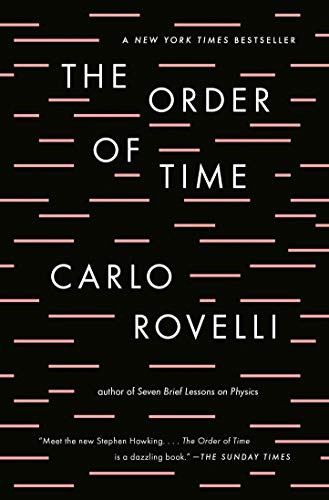
- The Order of Time
01
Carlo Rovelli · Science
Carlo Rovelli's meditation on time begins with a simple observation: the time we experience — flowing forward, carrying us from past toward future — is not quite what physics describes.
Both dig into physics.
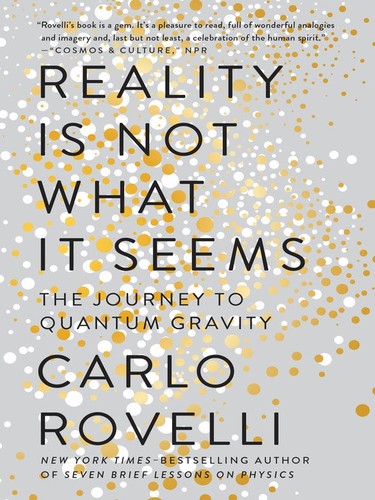
Read the summary → - Reality Is Not What It Seems
02
Carlo Rovelli · Science
Reality Is Not What It Seems is Rovelli's most ambitious popular book: a history of human understanding of physical reality from the pre-Socratics to loop quantum gravity, the theory of quantum spacetime that Rovelli himself has spent his career developing.
Shares quantum mechanics and cosmology with Seven Brief Lessons on Physics.
Read the summary → - Astrophysics for People in a Hurry
03
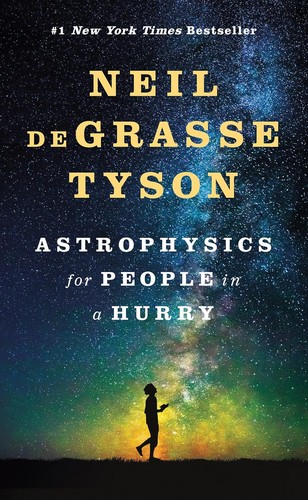
Astrophysics for People in a Hurry
Neil deGrasse Tyson · Science
Astrophysics for People in a Hurry is Neil deGrasse Tyson's deliberately compact introduction to the biggest ideas in modern astrophysics.
Both dig into cosmology.
Read the summary →
- A Short History of Nearly Everything
04
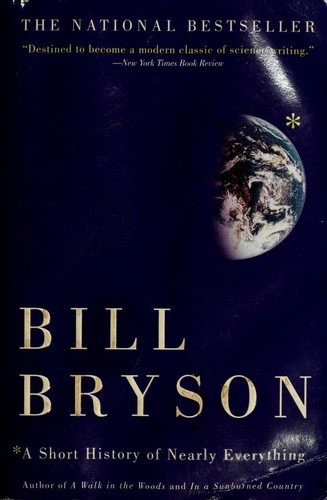
A Short History of Nearly Everything
Bill Bryson · Science
A Short History of Nearly Everything is Bill Bryson's attempt to understand the scientific story of everything — from the Big Bang to the emergence of modern humans — by spending three years talking to scientists and reading science history.
Both dig into cosmology.
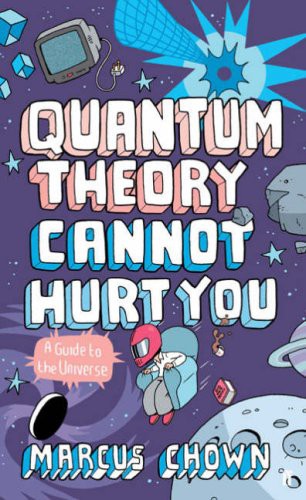
Read the summary → - Quantum Theory Cannot Hurt You
05
Quantum Theory Cannot Hurt You
Marcus Chown · Science
Marcus Chown, a former radio astronomer and longtime science writer, takes two of the most counterintuitive theories in physics — quantum mechanics and special relativity — and presents them in a single short book aimed squarely at readers who find both intimidating.
Shares physics and quantum mechanics with Seven Brief Lessons on Physics.
Read the summary → - The Fabric of the Cosmos
06
Brian Greene · Science
The Fabric of the Cosmos is Brian Greene's attempt to explain what physicists actually mean when they talk about space and time — not the intuitive everyday notions, but the deeply strange picture that emerges from general relativity and quantum mechanics.
Shares physics and quantum mechanics with Seven Brief Lessons on Physics.
Read the summary → - A Brief History of Time
07
Stephen Hawking · Science
A Brief History of Time is Stephen Hawking's attempt to explain the biggest questions in physics — where the universe came from, how it behaves, and where it might be going — to readers with no scientific training.
Shares quantum mechanics and cosmology with Seven Brief Lessons on Physics.
Read the summary → - Our Mathematical Universe
08
Max Tegmark · Science
Our Mathematical Universe is Max Tegmark's argument for what he calls the Mathematical Universe Hypothesis: the bold claim that the universe is not merely described by mathematics but is a mathematical structure.
Shares physics and cosmology with Seven Brief Lessons on Physics.
Read the summary → - Six Easy Pieces
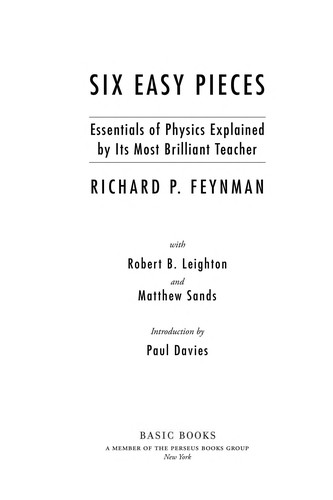
09
Richard P. Feynman · Science
Six Easy Pieces is a selection of six lectures from Richard Feynman's legendary Caltech introductory physics course, delivered in 1961–62 and published in full as The Feynman Lectures on Physics.
Shares physics and quantum mechanics with Seven Brief Lessons on Physics.
Read the summary → - The Elegant Universe

10
Brian Greene · Science
The Elegant Universe is Brian Greene's attempt to bring string theory — one of the most mathematically demanding ideas in modern physics — within reach of general readers.
Shares quantum mechanics and cosmology with Seven Brief Lessons on Physics.
Read the summary → - The Grand Design
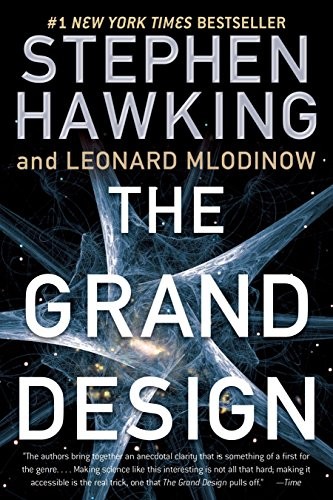
11
Stephen Hawking and Leonard Mlodinow · Science
The Grand Design is Stephen Hawking and Leonard Mlodinow's short, provocative book about the deepest questions in physics: Why is there something rather than nothing?
Shares quantum mechanics and cosmology with Seven Brief Lessons on Physics.
Read the summary → - The Hidden Reality: Parallel Universes and the Deep Laws of the Cosmos
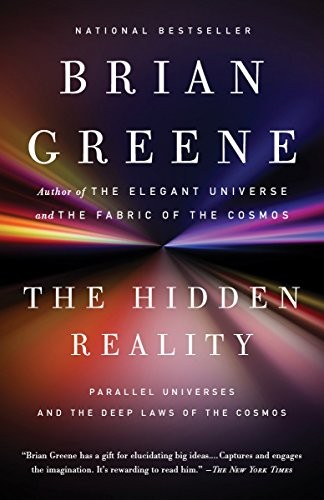
12
The Hidden Reality: Parallel Universes and the Deep Laws of the Cosmos
Brian Greene · Science
Brian Greene, a string theorist at Columbia University and the author of The Elegant Universe, devoted this book to a single sprawling question: does our universe have company?
Shares quantum mechanics and cosmology with Seven Brief Lessons on Physics.
Read the summary →
Books like Seven Brief Lessons on Physics: quick answers
What are the best books like Seven Brief Lessons on Physics?
The best books like Seven Brief Lessons on Physics by Carlo Rovelli are The Order of Time by Carlo Rovelli, Reality Is Not What It Seems by Carlo Rovelli, Astrophysics for People in a Hurry by Neil deGrasse Tyson, A Short History of Nearly Everything by Bill Bryson, Quantum Theory Cannot Hurt You by Marcus Chown, plus 7 more below. Each was chosen for themes it shares with Seven Brief Lessons on Physics, such as physics, general relativity, quantum mechanics.
What should I read after Seven Brief Lessons on Physics?
A natural next read after Seven Brief Lessons on Physics is The Order of Time by Carlo Rovelli. Both dig into physics. Other strong choices are Reality Is Not What It Seems by Carlo Rovelli, Astrophysics for People in a Hurry by Neil deGrasse Tyson, A Short History of Nearly Everything by Bill Bryson.
What books are similar to Seven Brief Lessons on Physics by Carlo Rovelli?
Seven Brief Lessons on Physics centers on physics, general relativity, quantum mechanics. Books with a similar feel include The Order of Time by Carlo Rovelli, Reality Is Not What It Seems by Carlo Rovelli, Astrophysics for People in a Hurry by Neil deGrasse Tyson, A Short History of Nearly Everything by Bill Bryson, Quantum Theory Cannot Hurt You by Marcus Chown, The Fabric of the Cosmos by Brian Greene — all free to read and chat with on Superbook.
