Economics · Similar reads
Books like The Capitalist Manifesto: Why the Global Free Market Will Save the World
The best books like The Capitalist Manifesto: Why the Global Free Market Will Save the World are Enlightenment Now, Why Nations Fail: The Origins of Power, Prosperity, and Poverty, and The Wealth of Nations. The Capitalist Manifesto: Why the Global Free Market Will Save the World by Johan Norberg is about free markets, global trade, poverty reduction. If that's what drew you in, here are 12 books that share its DNA — each summarized on Superbook, and ready to chat with in the app.
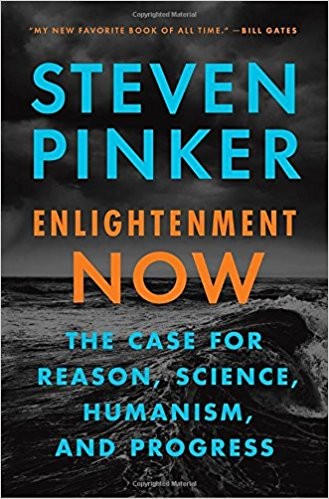
- Enlightenment Now
01
Steven Pinker · Science
Enlightenment Now is Steven Pinker's argument that the ideals of the Enlightenment — reason, science, humanism, and progress — have been responsible for a dramatic and continuing improvement in human wellbeing across virtually every measurable dimension, and that these ideals are under threat from counter-Enlightenment movements on both the left and the right.
A kindred economics read.
Read the summary → - Why Nations Fail: The Origins of Power, Prosperity, and Poverty
02
Why Nations Fail: The Origins of Power, Prosperity, and Poverty
Daron Acemoglu and James A. Robinson · Economics
Daron Acemoglu and James Robinson argue that the fundamental difference between rich and poor countries is not geography, culture, or bad luck.
A kindred economics read.
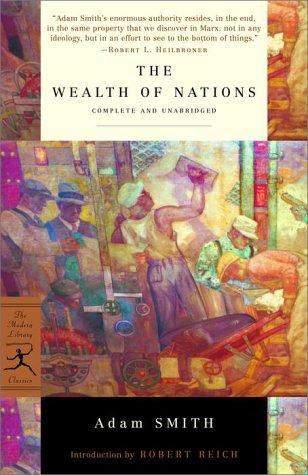
Read the summary → - The Wealth of Nations
03
Adam Smith · Economics
An Inquiry into the Nature and Causes of the Wealth of Nations, published in 1776, is Adam Smith's comprehensive account of how modern commercial economies work and what policies promote prosperity.
Both dig into free markets.
Read the summary →
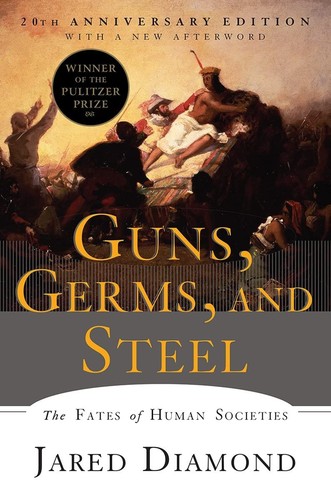
- Guns, Germs, and Steel
04
Jared Diamond · Science
Guns, Germs, and Steel is Jared Diamond's attempt to answer a question posed to him by a Papua New Guinean politician named Yali: why did Europeans end up with so much cargo — wealth, technology, power — while other peoples had comparatively little?
A kindred economics read.
Read the summary → - Americana
05
Bhu Srinivasan · History
Americana is Bhu Srinivasan's attempt to tell the history of American capitalism through its defining industries and the entrepreneurs who built them.
Shares innovation and capitalism with The Capitalist Manifesto: Why the Global Free Market Will Save the World.
Read the summary → - Capital: Volume I

06
Karl Marx · Economics
Capital: A Critique of Political Economy, Volume I, published in 1867, is Karl Marx's systematic analysis of the capitalist mode of production.
Both dig into capitalism.
Read the summary → - Economics in One Lesson
07
Henry Hazlitt · Economics
Henry Hazlitt wrote Economics in One Lesson in 1946, based on a single insight he credited to the nineteenth-century French economist Frédéric Bastiat: the difference between a good economist and a bad economist is that the good economist considers the effects of a policy on all groups, not just the immediately visible beneficiaries, and over the long run, not just the immediate term.
Both dig into free markets.
Read the summary → - Factfulness: Ten Reasons We're Wrong About the World
08
Factfulness: Ten Reasons We're Wrong About the World
Hans Rosling · Economics
Hans Rosling spent decades testing audiences of students, professors, journalists, and politicians on basic facts about global development — child mortality rates, literacy, extreme poverty, life expectancy — and found consistently that even well-educated, well-intentioned people performed worse than chance.
Both dig into poverty reduction.
Read the summary → - Free to Choose: A Personal Statement
09
Free to Choose: A Personal Statement
Milton Friedman and Rose Friedman · Economics
Free to Choose began as a ten-part television series on PBS in 1980, later expanded into the book Milton and Rose Friedman wrote together.
Both dig into free markets.
Read the summary → - Prosperity: Better Business Makes the Greater Good
10
Prosperity: Better Business Makes the Greater Good
Colin Mayer · Economics
Prosperity is Colin Mayer's argument that the modern corporation has lost its sense of purpose — and that recovering it requires not marginal adjustments but a fundamental rethinking of what corporations are for.
Both dig into capitalism.
Read the summary → - The Great Transformation
11
Karl Polanyi · Economics
The Great Transformation is Karl Polanyi's 1944 account of how a self-regulating market economy emerged in nineteenth-century England, what social catastrophe that emergence caused, and why the market society created its own political reaction.
Both dig into capitalism.
Read the summary → - The Rational Optimist: How Prosperity Evolves
12
The Rational Optimist: How Prosperity Evolves
Matt Ridley · Economics
Matt Ridley's argument in The Rational Optimist is evolutionary in the literal sense: he treats the expansion of human prosperity as the result of a Darwinian process operating at the cultural level, where ideas combine, compete, and recombine to produce innovations that raise living standards.
Both dig into innovation.
Read the summary →
Books like The Capitalist Manifesto: Why the Global Free Market Will Save the World: quick answers
What are the best books like The Capitalist Manifesto: Why the Global Free Market Will Save the World?
The best books like The Capitalist Manifesto: Why the Global Free Market Will Save the World by Johan Norberg are Enlightenment Now by Steven Pinker, Why Nations Fail: The Origins of Power, Prosperity, and Poverty by Daron Acemoglu and James A. Robinson, The Wealth of Nations by Adam Smith, Guns, Germs, and Steel by Jared Diamond, Americana by Bhu Srinivasan, plus 7 more below. Each was chosen for themes it shares with The Capitalist Manifesto: Why the Global Free Market Will Save the World, such as free markets, global trade, poverty reduction.
What should I read after The Capitalist Manifesto: Why the Global Free Market Will Save the World?
A natural next read after The Capitalist Manifesto: Why the Global Free Market Will Save the World is Enlightenment Now by Steven Pinker. A kindred economics read. Other strong choices are Why Nations Fail: The Origins of Power, Prosperity, and Poverty by Daron Acemoglu and James A. Robinson, The Wealth of Nations by Adam Smith, Guns, Germs, and Steel by Jared Diamond.
What books are similar to The Capitalist Manifesto: Why the Global Free Market Will Save the World by Johan Norberg?
The Capitalist Manifesto: Why the Global Free Market Will Save the World centers on free markets, global trade, poverty reduction. Books with a similar feel include Enlightenment Now by Steven Pinker, Why Nations Fail: The Origins of Power, Prosperity, and Poverty by Daron Acemoglu and James A. Robinson, The Wealth of Nations by Adam Smith, Guns, Germs, and Steel by Jared Diamond, Americana by Bhu Srinivasan, Capital: Volume I by Karl Marx — all free to read and chat with on Superbook.
