Economics · Similar reads
Books like The Rational Optimist: How Prosperity Evolves
The best books like The Rational Optimist: How Prosperity Evolves are Enlightenment Now, Factfulness: Ten Reasons We're Wrong About the World, and Sapiens: A Brief History of Humankind. The Rational Optimist: How Prosperity Evolves by Matt Ridley is about human progress, trade and exchange, innovation. If that's what drew you in, here are 12 books that share its DNA — each summarized on Superbook, and ready to chat with in the app.
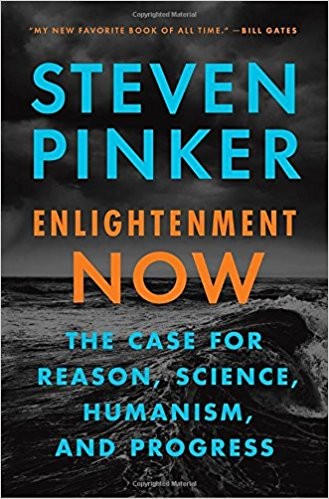
- Enlightenment Now
01
Steven Pinker · Science
Enlightenment Now is Steven Pinker's argument that the ideals of the Enlightenment — reason, science, humanism, and progress — have been responsible for a dramatic and continuing improvement in human wellbeing across virtually every measurable dimension, and that these ideals are under threat from counter-Enlightenment movements on both the left and the right.
A kindred economics read.
Read the summary → - Factfulness: Ten Reasons We're Wrong About the World
02
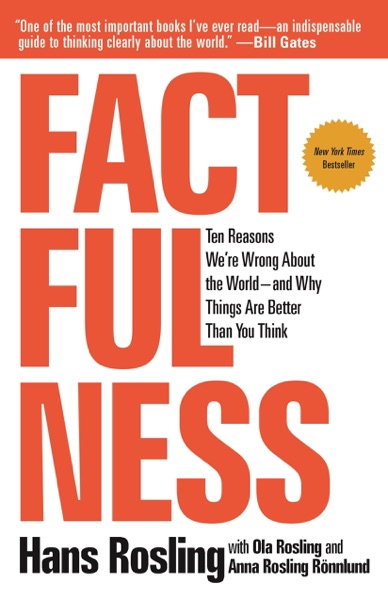
Factfulness: Ten Reasons We're Wrong About the World
Hans Rosling · Economics
Hans Rosling spent decades testing audiences of students, professors, journalists, and politicians on basic facts about global development — child mortality rates, literacy, extreme poverty, life expectancy — and found consistently that even well-educated, well-intentioned people performed worse than chance.
Both dig into human progress.
Read the summary → - Sapiens: A Brief History of Humankind
03
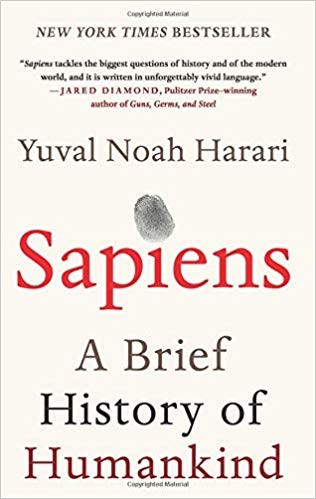
Sapiens: A Brief History of Humankind
Yuval Noah Harari · History
Sapiens traces the full arc of human history from the emergence of Homo sapiens in Africa roughly 70,000 years ago to the present.
A kindred economics read.
Read the summary →
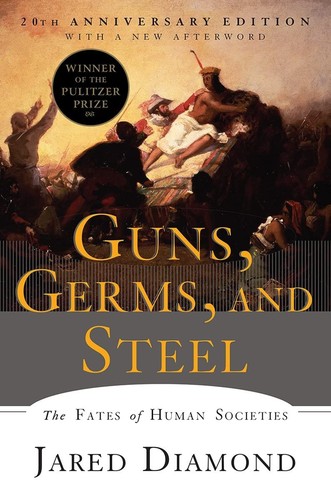
- Guns, Germs, and Steel
04
Jared Diamond · Science
Guns, Germs, and Steel is Jared Diamond's attempt to answer a question posed to him by a Papua New Guinean politician named Yali: why did Europeans end up with so much cargo — wealth, technology, power — while other peoples had comparatively little?
A kindred economics read.
Read the summary → - Why Nations Fail: The Origins of Power, Prosperity, and Poverty
05
Why Nations Fail: The Origins of Power, Prosperity, and Poverty
Daron Acemoglu and James A. Robinson · Economics
Daron Acemoglu and James Robinson argue that the fundamental difference between rich and poor countries is not geography, culture, or bad luck.
A kindred economics read.
Read the summary → - The Capitalist Manifesto: Why the Global Free Market Will Save the World

06
The Capitalist Manifesto: Why the Global Free Market Will Save the World
Johan Norberg · Economics
Johan Norberg has made a career of making the case that open markets have lifted more people out of poverty than any other force in human history, and The Capitalist Manifesto is his most direct statement of that argument.
Both dig into innovation.
Read the summary → - Americana
07
Bhu Srinivasan · History
Americana is Bhu Srinivasan's attempt to tell the history of American capitalism through its defining industries and the entrepreneurs who built them.
Both dig into innovation.
Read the summary → - Blue Ocean Strategy
08
W. Chan Kim and Renée Mauborgne · Business
Blue Ocean Strategy is Kim and Mauborgne's case that the most successful companies don't compete in existing markets by beating rivals at their own game — they create new market spaces where competition is irrelevant.
Both dig into innovation.
Read the summary → - Boyd: The Fighter Pilot Who Changed the Art of War

09
Boyd: The Fighter Pilot Who Changed the Art of War
Robert Coram · Biography
Boyd is Robert Coram's biography of Colonel John Boyd, the Air Force fighter pilot who became one of the most influential military strategists of the twentieth century without ever having commanded a major unit, written a best-selling book, or achieved the rank that would have made him famous while alive.
Both dig into innovation.
Read the summary → - Competing Against Luck
10
Clayton M. Christensen · Business
Competing Against Luck is Clayton Christensen's most complete development of the Jobs to Be Done framework, which he introduced briefly in The Innovator's Solution.
Both dig into innovation.
Read the summary → - Continuous Discovery Habits
11
Teresa Torres · Business
Continuous Discovery Habits is Teresa Torres's practical guide to making product discovery a sustainable, weekly team practice rather than a periodic research event.
Both dig into innovation.
Read the summary → - Creative Selection
12
Ken Kocienda · Business
Creative Selection is Ken Kocienda's first-hand account of how software gets made at Apple during the period when the iPhone and iPad were born.
Both dig into innovation.
Read the summary →
Books like The Rational Optimist: How Prosperity Evolves: quick answers
What are the best books like The Rational Optimist: How Prosperity Evolves?
The best books like The Rational Optimist: How Prosperity Evolves by Matt Ridley are Enlightenment Now by Steven Pinker, Factfulness: Ten Reasons We're Wrong About the World by Hans Rosling, Sapiens: A Brief History of Humankind by Yuval Noah Harari, Guns, Germs, and Steel by Jared Diamond, Why Nations Fail: The Origins of Power, Prosperity, and Poverty by Daron Acemoglu and James A. Robinson, plus 7 more below. Each was chosen for themes it shares with The Rational Optimist: How Prosperity Evolves, such as human progress, trade and exchange, innovation.
What should I read after The Rational Optimist: How Prosperity Evolves?
A natural next read after The Rational Optimist: How Prosperity Evolves is Enlightenment Now by Steven Pinker. A kindred economics read. Other strong choices are Factfulness: Ten Reasons We're Wrong About the World by Hans Rosling, Sapiens: A Brief History of Humankind by Yuval Noah Harari, Guns, Germs, and Steel by Jared Diamond.
What books are similar to The Rational Optimist: How Prosperity Evolves by Matt Ridley?
The Rational Optimist: How Prosperity Evolves centers on human progress, trade and exchange, innovation. Books with a similar feel include Enlightenment Now by Steven Pinker, Factfulness: Ten Reasons We're Wrong About the World by Hans Rosling, Sapiens: A Brief History of Humankind by Yuval Noah Harari, Guns, Germs, and Steel by Jared Diamond, Why Nations Fail: The Origins of Power, Prosperity, and Poverty by Daron Acemoglu and James A. Robinson, The Capitalist Manifesto: Why the Global Free Market Will Save the World by Johan Norberg — all free to read and chat with on Superbook.
