
Reading list · 12 books
Elon Musk's reading list
Elon Musk is the founder or co-founder of PayPal, SpaceX, Tesla, Neuralink, and xAI, and the owner of X (formerly Twitter). He grew up in South Africa largely self-taught, reportedly reading through two encyclopedias and then moving on to science fiction and physics texts by his early teens. His reading taste leans toward first-principles science, engineering history, and sweeping narratives about civilizations and individuals who bent the arc of events — genres that map directly onto his stated goal of making humanity multiplanetary.
-
01
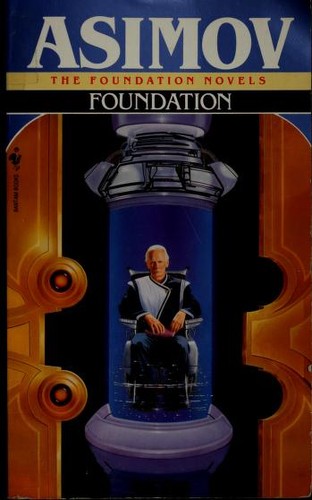
Isaac Asimov
Musk has cited this series more than any other single work when explaining why SpaceX exists. Hari Seldon's project to shorten a galactic dark age by preserving knowledge at the edge of civilization maps almost exactly onto Musk's stated rationale for Mars colonization.
-
02
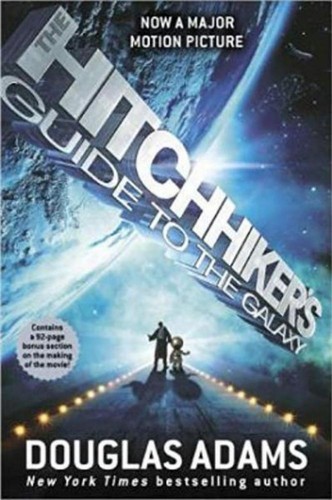
The Hitchhiker's Guide to the Galaxy
Douglas Adams
Musk named this in multiple interviews as formative reading. He absorbed Adams's central argument — that asking the right question matters more than having the answer — and it shows up in how he frames engineering problems as wrong-question problems rather than impossible-answer problems.
-
03
J.R.R. Tolkien
Musk has mentioned Tolkien's world-building as an early influence. He's drawn to the idea of a small, committed group undertaking a quest that most observers believe is futile — a narrative he's applied to both Tesla's early near-bankruptcy years and SpaceX's first three failed launches.
-
Read these with Superbook
Chat with any book on this list — ask questions, get answers tuned to you.
-
04
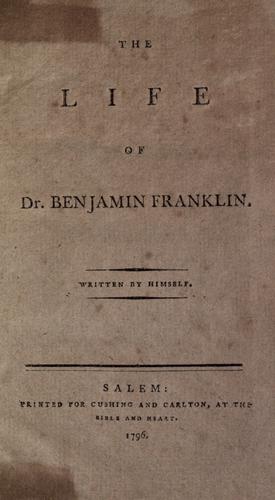
The Autobiography of Benjamin Franklin
Benjamin Franklin
Franklin built a printing business, organized civic institutions, ran electricity experiments, and negotiated the Treaty of Paris — all without formal schooling in any of those domains. Musk has cited him as the archetype of the generalist who achieves things specialists say are impossible.
-
05
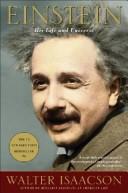
Einstein: His Life and Universe
Walter Isaacson
Isaacson's biography of Einstein, which Musk has recommended in interviews. The portrait of someone who rejected academic consensus through thought experiments rather than lab work resonates with Musk's first-principles approach to physics-constrained engineering problems like battery chemistry and rocket propulsion.
-
06
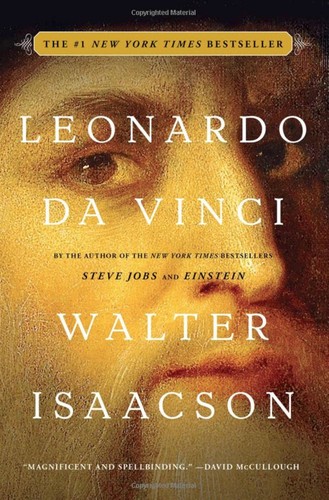
Walter Isaacson
Musk recommended Isaacson's Da Vinci biography when it came out, noting that Da Vinci's notebooks — which moved between anatomy, optics, engineering, and painting without treating them as separate disciplines — model the kind of cross-domain thinking he tries to cultivate at his companies.
-
07
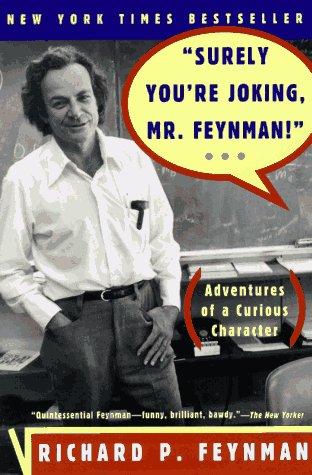
Surely You're Joking, Mr. Feynman!
Richard P. Feynman
Feynman's memoir is a recurring recommendation from Musk. The book's core argument — that curiosity pursued for its own sake produces better science than status-seeking does — is something Musk has echoed when talking about hiring and how he approaches technical problems he has no formal training in.
-
08
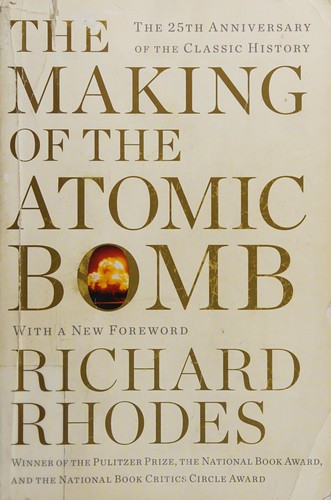
Richard Rhodes
Rhodes's Pulitzer-winning account of the Manhattan Project shows how theoretical physics, industrial engineering, and wartime administration had to be integrated under extreme time pressure. Musk has pointed to it as a model for how a small team with clear goals can accomplish things governments and large institutions cannot.
-
09
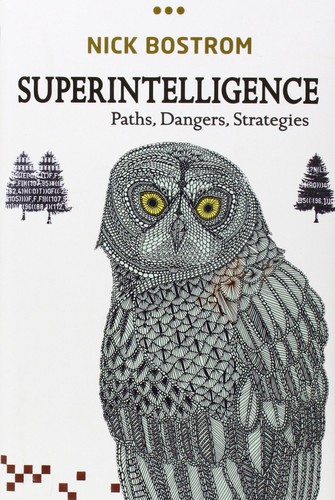
Superintelligence: Paths, Dangers, Strategies
Nick Bostrom
Bostrom's analysis of risks from advanced AI is one Musk has publicly cited and endorsed, and it directly influenced his decision to co-found OpenAI and later xAI. He has described reading it as the moment he became alarmed about AI development trajectories.
-
10
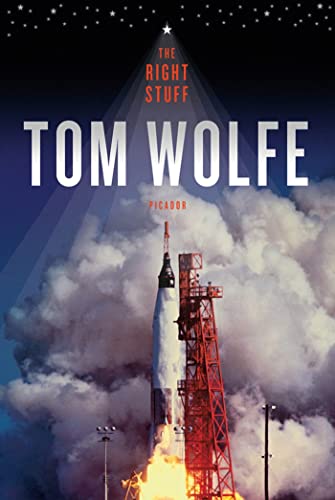
Tom Wolfe
Wolfe's portrait of the Mercury astronauts and the competitive culture of early NASA is on Musk's list partly for its romanticization of risk-taking and partly as a study in what drove individuals to do things with extremely high probability of death. He has referenced the astronaut ethos when discussing how SpaceX recruits.
-
11
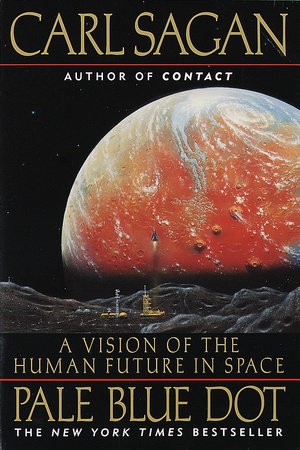
Pale Blue Dot: A Vision of the Human Future in Space
Carl Sagan
Sagan's reflection on Earth's smallness from the Voyager photograph is a direct ancestor of Musk's Mars reasoning. He has quoted or paraphrased its core argument — that a species confined to one planet is inherently fragile — in the context of SpaceX's mission more than once.
-
12
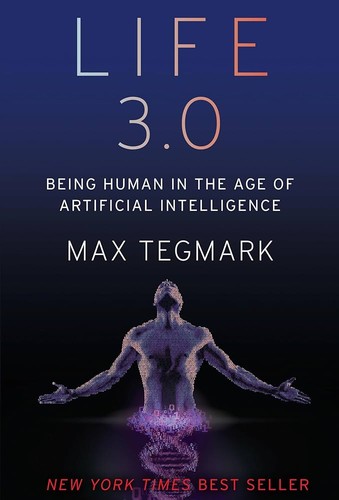
Life 3.0: Being Human in the Age of Artificial Intelligence
Max Tegmark
Tegmark's survey of possible AI futures, from utopian to existential-risk scenarios, is a book Musk has recommended alongside Superintelligence as background reading for thinking seriously about where AI development leads. He helped fund the Future of Life Institute, which Tegmark co-founded.
More on Elon Musk's picks
Musk's recommendations cluster around two poles that turn out to be the same thing viewed from different angles: how the universe actually works, and what happens when humans decide to reshape it anyway.
The science fiction pole — Asimov, Adams, Tolkien — reads less as escapism than as moral and strategic philosophy. Foundation gave Musk the framing of civilizational collapse and preservation that he returns to when explaining why SpaceX exists. Hitchhiker's Guide gave him an ironic distance from existential stakes that shows up in his humor even on the worst engineering days.
The biography pole — Franklin, Isaacson on Einstein, Isaacson on Da Vinci, Feynman's own memoirs — is really a study of people who combined broad intellectual curiosity with a refusal to defer to expert consensus. Franklin ran electricity experiments and negotiated treaties. Da Vinci filled notebooks with anatomy, optics, and flying machines. Feynman cracked safes, played bongo drums, and also helped build the bomb. Musk has cited this pattern repeatedly as a direct influence on how he structures his own work.
The history of engineering thread ties both together. Books like Structures and The Making of the Atomic Bomb show how physical constraints and human organization interact under pressure — which is roughly what Tesla and SpaceX do every day at scale.
