
Reading list · 15 books
Bill Gates's reading list
Bill Gates co-founded Microsoft and later turned his attention to global philanthropy through the Bill & Melinda Gates Foundation, which works on infectious disease, poverty, and climate change. He reads roughly 50 books a year and publishes detailed reviews on his blog GatesNotes, sharing annual summer and winter reading lists since 2010. His taste runs toward deeply reported nonfiction—science, public health, history of progress, and investigative journalism—with a preference for authors who marshal large amounts of data to challenge conventional wisdom.
-
01
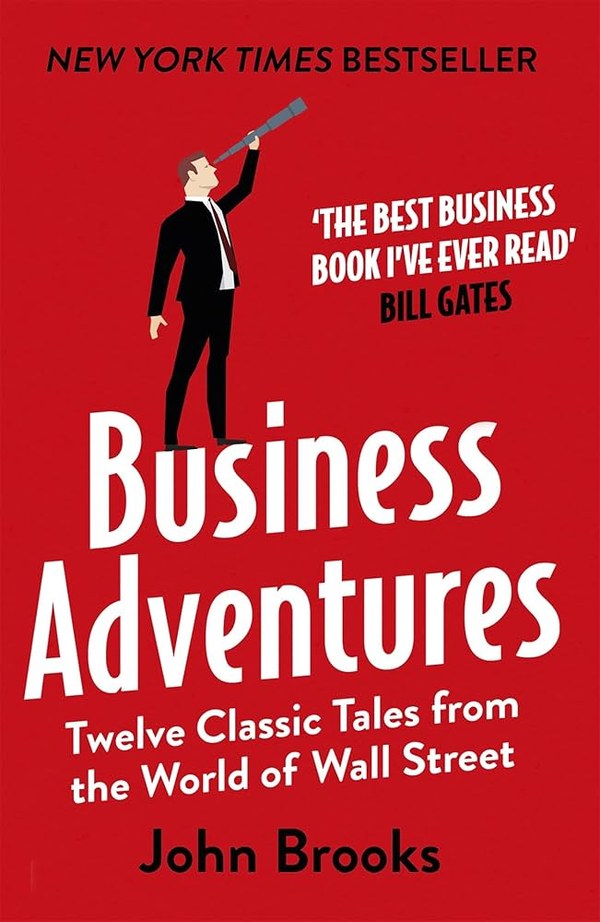
Business Adventures: Twelve Classic Tales from the World of Wall Street
John Brooks
Gates has called this his all-time favorite business book. Warren Buffett mailed him his personal copy in 1991. The twelve Wall Street stories from the 1960s hold up not as business history but as studies in how people behave under pressure and uncertainty.
-
02
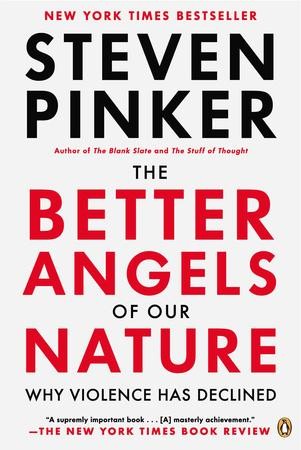
The Better Angels of Our Nature
Steven Pinker
Gates reviewed this at length on GatesNotes and has called it the most important book he has ever read. Pinker's argument—that violence has fallen dramatically across human history—runs counter to most people's intuition, and Gates finds the data-dense approach exactly right for a question that matters this much.
-
03
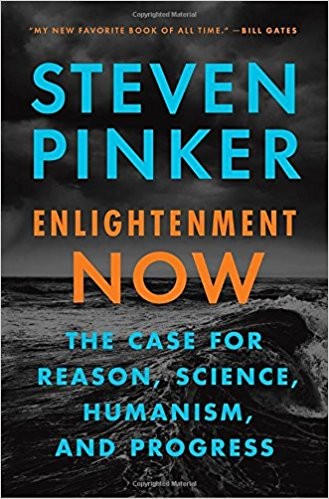
Steven Pinker
Gates wrote the foreword to this Pinker follow-up and described it as his new favorite book at the time of publication. It extends the violence argument into a broader case for reason, science, and humanism as drivers of measurable human improvement.
-
Read these with Superbook
Chat with any book on this list — ask questions, get answers tuned to you.
-
04
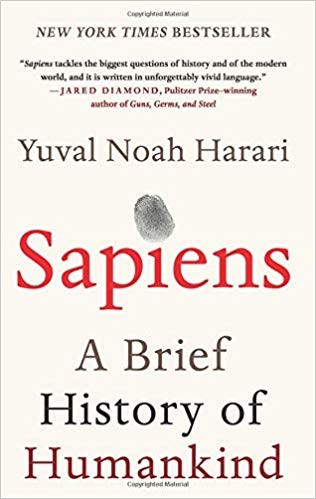
Sapiens: A Brief History of Humankind
Yuval Noah Harari
One of Gates's most frequently cited titles in his annual lists and GatesNotes reviews. He praised Harari's ability to synthesize 70,000 years of human history into a coherent argument about what makes our species unusual, while disagreeing with some of the conclusions—which he considers a feature, not a bug.
-
05
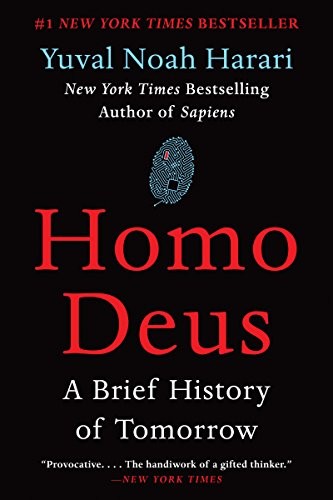
Homo Deus: A Brief History of Tomorrow
Yuval Noah Harari
Gates reviewed the Harari follow-up on GatesNotes and called it thought-provoking even where he found it speculative. Reading Sapiens and Homo Deus together tracks Harari's move from chronicling what happened to projecting what comes next, and Gates finds the tension between the two books more interesting than either alone.
-
06
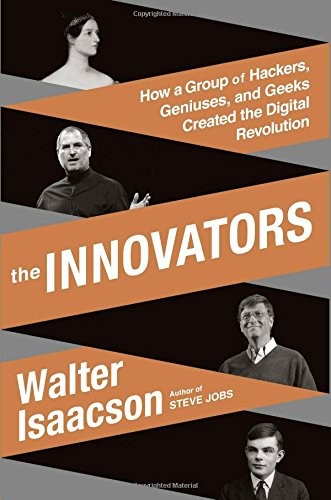
The Innovators: How a Group of Hackers, Geniuses, and Geeks Created the Digital Revolution
Walter Isaacson
Gates reviewed Walter Isaacson's history of computing pioneers on GatesNotes and noted the accuracy of the portraits of people he knew personally. He praised the book's central argument—that collaboration, not lone genius, built the digital age—as a correction to the mythology that surrounds the field.
-
07
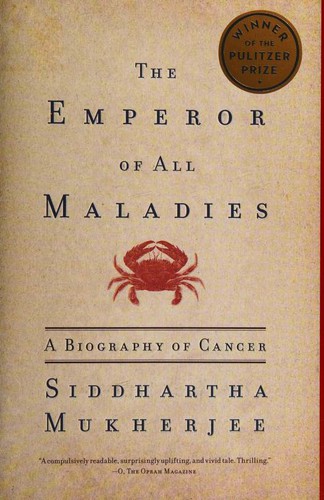
The Emperor of All Maladies: A Biography of Cancer
Siddhartha Mukherjee
Gates called this biography of cancer one of the best books he had read that year. Mukherjee's combination of clinical history, molecular biology, and patient narrative matches the way the Gates Foundation thinks about disease: root causes, systems, and the human beings inside them.
-
08
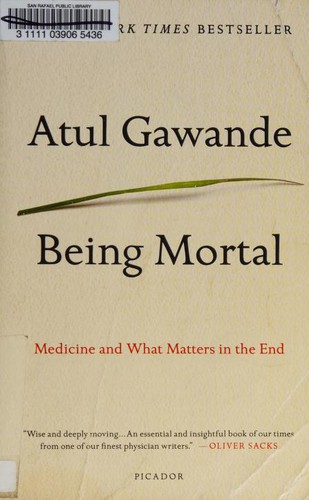
Being Mortal: Medicine and What Matters in the End
Atul Gawande
Gates reviewed Gawande's book on aging and end-of-life care on GatesNotes and wrote that it changed how he thought about his own family and about what good medicine actually means. He has since cited it as a model for how doctors and institutions should approach the limits of intervention.
-
09
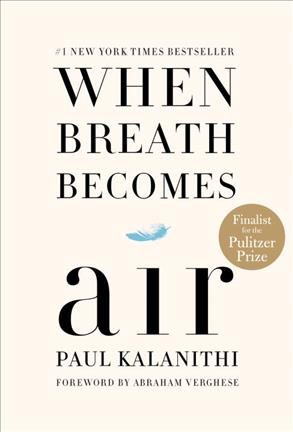
Paul Kalanithi
Recommended in one of Gates's winter reading lists. Kalanithi's memoir—written as he was dying of lung cancer at 36—works differently from the data-driven books Gates usually favors. He described it as a book about meaning in the face of mortality, and one of the most moving things he had read.
-
10
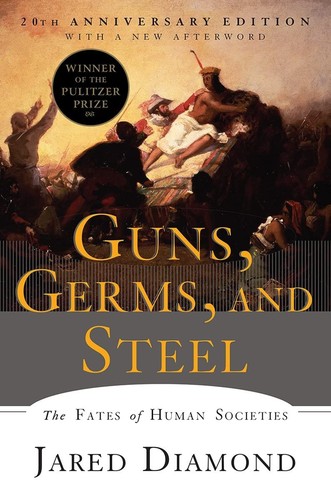
Jared Diamond
Gates has recommended Jared Diamond's account of why Eurasian civilizations came to dominate others multiple times over the years. The book's geographic and ecological framework for historical inequality informs how the Foundation thinks about why some countries remain poor despite significant aid.
-
11
Why Nations Fail: The Origins of Power, Prosperity, and Poverty
Daron Acemoglu and James A. Robinson
Gates reviewed this on GatesNotes and called the Acemoglu-Robinson thesis—that inclusive institutions, not geography or culture, determine prosperity—one of the more useful frameworks he has for evaluating development interventions. He disagrees with parts of it, which he documented in the same review.
-
12
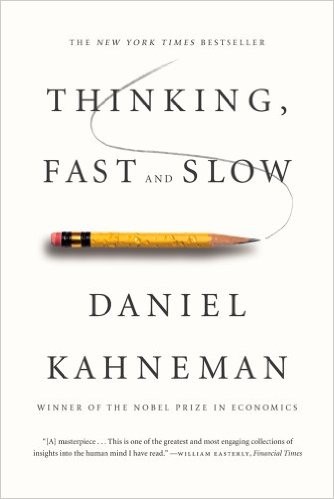
Daniel Kahneman
Gates has cited Kahneman's exploration of the two systems of human thinking in multiple contexts, including discussions of how the Foundation makes decisions and how policymakers misread risk. He considers it one of the most practically applicable books on psychology he has encountered.
-
13
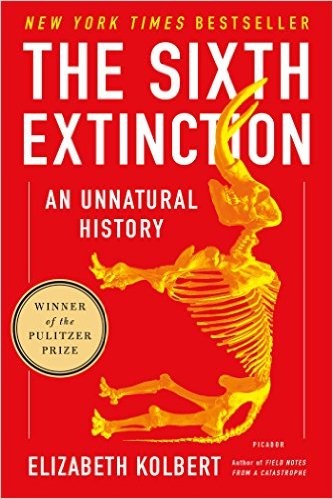
The Sixth Extinction: An Unnatural History
Elizabeth Kolbert
Gates reviewed Elizabeth Kolbert's Pulitzer-winning account of the ongoing mass extinction on GatesNotes shortly after publication and called it among the most important books on the environment he had read. He praised its combination of reportage and science and its refusal to soften the findings.
-
14
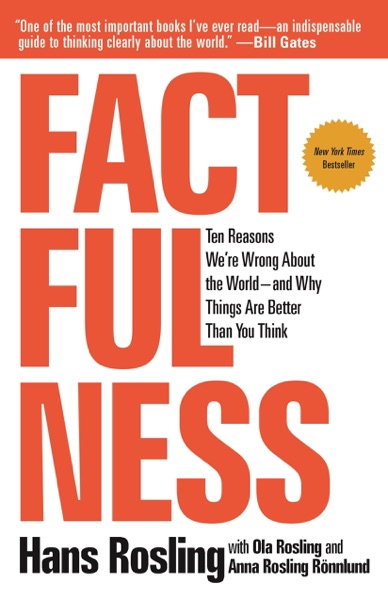
Factfulness: Ten Reasons We're Wrong About the World
Hans Rosling
Gates co-wrote the foreword with Melinda Gates and Bill Gates Jr. and has said he wishes every leader in public health and development policy would read it. Rosling's ten instincts that distort our picture of the world map directly onto errors the Foundation encounters constantly in how donors, journalists, and governments talk about global poverty.
-
15
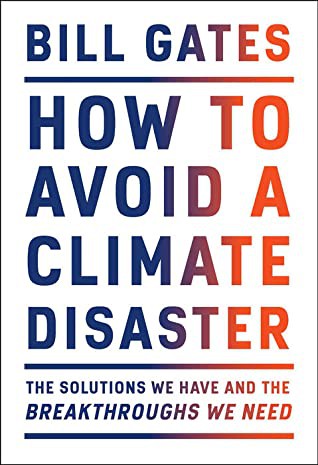
How to Avoid a Climate Disaster
Bill Gates
Gates wrote this after years of reading widely on climate and finding no single book that combined the emissions science, the economics of green premiums, and a sector-by-sector decarbonization roadmap. It appears on his GatesNotes recommended lists as the book he kept wishing existed before he decided to write it himself.
More on Bill Gates's picks
Gates's reading list grew out of his GatesNotes blog, where he has written hundreds of book reviews since 2010. The list reflects a consistent preoccupation: understanding how things actually work, at scale, over time. He is drawn to books that demolish comfortable assumptions with evidence—Pinker's case that violence has declined, Rosling's insistence that global health has improved more than we realize, Kolbert's documentation of what we are losing. The pairing of Harari's Sapiens and Homo Deus traces the arc from where humanity came from to where it might be going, and Gates has returned to both more than once in interviews.
A second thread runs through the public health and medicine titles. Gates has said that Mukherjee's biography of cancer and Gawande's work on end-of-life care shaped how the Foundation approaches disease and healthcare delivery. Kalanithi's memoir sits alongside those as a reminder of the human stakes behind statistics.
The history titles—Guns, Germs, and Steel; Why Nations Fail; The Innovators—share a common question: why do some societies, institutions, or technologies succeed when others don't? Gates has called Acemoglu and Robinson's framework one of the more useful lenses he has for thinking about development work. Isaacson's chronicle of computing pioneers hits close to home, and Gates has acknowledged his complicated feelings about seeing himself and his peers portrayed there.
Finally, two books are about the future of energy and climate. Gates reviewed The Sixth Extinction the year it came out and called it among the most important books on the environment he had read. His own How to Avoid a Climate Disaster was written in part to fill a gap he kept noticing in his reading: a book that combined the science of emissions, the economics of decarbonization, and a practical policy framework in one place.
