
Topic · 10 books
The best books on learning how to learn
Learning how to learn is the meta-skill that compounds every other investment in yourself. Cognitive science has accumulated decades of evidence on what actually works — spaced repetition, retrieval practice, interleaved training — and the gap between those findings and how most people study is startling. Reading widely in this field gives you a reliable toolkit for acquiring any new skill faster, retaining it longer, and knowing when to push through struggle versus when to step back.
-
01
Peter C. Brown, Henry L. Roediger and Mark A. McDaniel
The closest thing this field has to a consensus textbook. Brown, Roediger, and McDaniel synthesize retrieval practice, spaced repetition, and interleaving into a coherent account of durable learning — and systematically dismantle the highlighting and re-reading habits most people rely on. Start here.
-
02
Barbara Oakley
Oakley wrote this after failing math repeatedly as a young adult and later earning a PhD in engineering. It operationalizes the focused/diffuse mode distinction and shows how procrastination and illusions of competence sabotage learning. More practical than most neuroscience-adjacent books.
-
03
Peak: Secrets from the New Science of Expertise
Anders Ericsson and Robert Pool
The actual Ericsson research, not the Gladwell version. Deliberate practice is not mere repetition — it requires well-defined tasks at the edge of current ability, immediate feedback, and mental representations that guide correction. The book is precise about what this looks like in music, surgery, chess, and sport.
-
Read these with Superbook
Chat with any book on this list — ask questions, get answers tuned to you.
-
04
Daniel Coyle
Coyle visited talent hotbeds — a Brazilian soccer clinic, a Russian tennis academy, a tiny music school in upstate New York — and found a common thread: deep practice that triggers errors and forces correction. The myelin framework gives the neuroscience a concrete image that makes the practice principles stick.
-
05
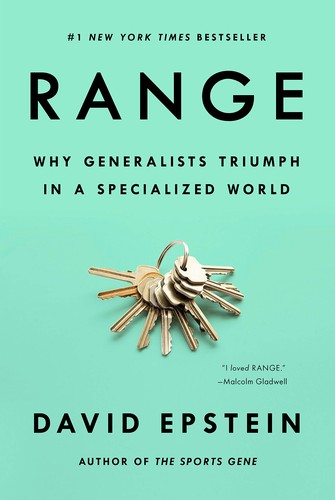
Range: Why Generalists Triumph in a Specialized World
David Epstein
Epstein's counter-argument to early specialization. In domains with clear rules and fast feedback, early focus helps. In wicked domains — most of professional and intellectual life — broad sampling and late commitment produce more durable expertise. Changes how you think about the cost of breadth.
-
06
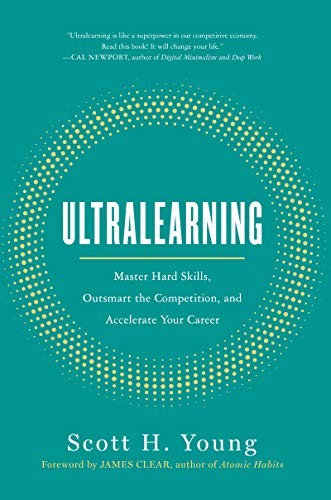
Scott Young
Young's synthesis from running extreme self-education projects. The nine principles — metalearning, focus, directness, drill, retrieval, feedback, retention, intuition, experimentation — map cleanly onto the research elsewhere in this list while staying grounded in what actually works outside a laboratory.
-
07
Joshua Foer
Foer trained for the US Memory Championship while reporting on it and won. The book is nominally a journalist's stunt, but the serious content is an account of how memory works, why modern life atrophies it, and what deliberate mnemonic training reveals about the plasticity of mind.
-
08
Mindset: The New Psychology of Success
Carol S. Dweck
Dweck's fixed-versus-growth distinction has been overused in corporate training, but the underlying research on how beliefs about ability shape learning behavior is solid. The core insight — that treating difficulty as evidence of inadequacy vs. evidence that you're at the right edge — matters especially early in skill acquisition.
-
09
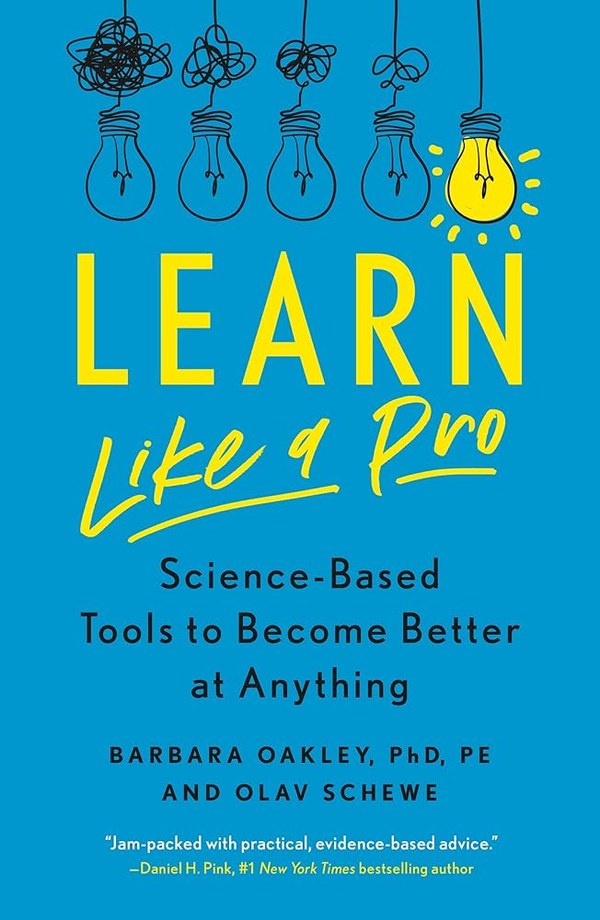
Barbara Oakley and Olav Schewe
Oakley's shorter follow-up, co-authored with Sejnowski. More tactical than A Mind for Numbers: Pomodoro structuring, active recall protocols, exercise's role in memory consolidation. Useful as a companion volume that translates the science directly into study habits.
-
10
Josh Waitzkin
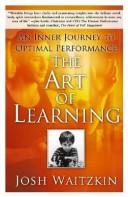
Waitzkin became a chess master and then a world champion in Tai Chi Push Hands — two very different skill domains. His account of what transferred across them is unusually specific: building trigger responses, using adversity as information, the role of mental recovery between intense sessions. More reflective than prescriptive, and better for it.

More about this list
The books here trace an arc from the laboratory to the practice floor. It starts with the science: Make It Stick distills decades of cognitive psychology into the handful of techniques with the strongest evidence, and its findings upend most of what school taught you about studying. A Mind for Numbers runs the same research through the lens of someone who had to re-learn how to think — Oakley failed math through her twenties and built a career in engineering; the book earns its advice.
From the science of memory the list moves to the science of expertise. Ericsson's Peak is the primary source for deliberate practice — the actual research behind the ten-thousand-hours idea, which Gladwell's retelling got significantly wrong. Ericsson's insight is that naive repetition almost never builds mastery; what matters is the feedback structure around practice. Coyle's The Talent Code covers adjacent ground but focuses on myelin and the neural underpinning of skill, making the mechanism vivid in a way that changes how you design your own training sessions.
Then the list widens. Range challenges the early-specialization orthodoxy with evidence that breadth and interleaved exposure often outperform deep early focus — especially for complex, ambiguous domains. Ultralearning offers a practitioner's synthesis: Scott Young ran his own experiments (MIT curriculum in one year, four languages in a year) and extracted principles that bridge the research and the messy reality of self-directed learning.
The final books go deeper into specific mechanisms: working memory, focus, the role of sleep, and the art of transferring knowledge across domains. Read in sequence, each title reframes the one before it. By the end, the first book — Make It Stick — reads differently than it did the first time.
