
Topic · 12 books
The best books on marketing and growth
Marketing and growth is the discipline of finding, winning, and keeping customers — from how you position a product in the mind of a prospect to how you engineer the habits and referral loops that make a business scale. It spans timeless psychology (what makes people buy, share, and return) and modern practice (product-led growth, viral coefficients, activation metrics). Done well, it bridges product, psychology, and distribution into a repeatable engine.
-
01
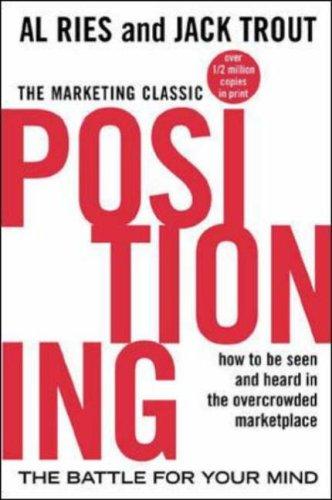
Positioning: The Battle for Your Mind
Al Ries and Jack Trout
The book that gave marketers the concept of the mind as a battlefield. Ries and Trout's central argument — that positioning is about what you do to the mind of a prospect, not to the product — remains the sharpest lens for brand strategy. Read before anything else on this list.
-
02
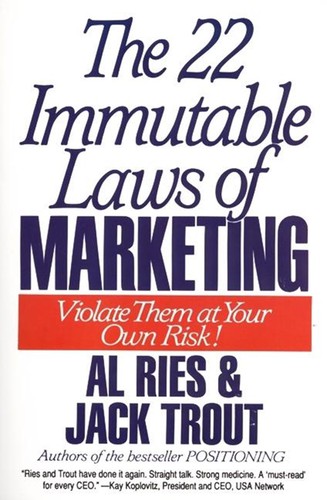
The 22 Immutable Laws of Marketing
Al Ries and Jack Trout
Ries and Trout's follow-up distills positioning theory into 22 rules, most of which violate what companies actually do. The Law of the Category (if you can't be first in a category, create one you can be first in) is worth the price of the book alone.
-
03
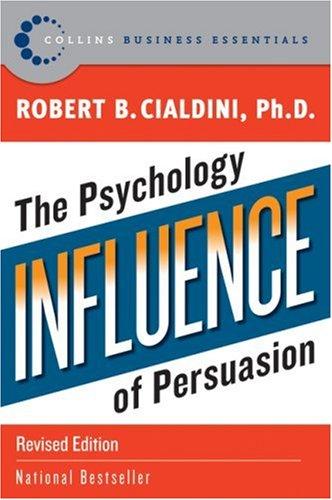
Influence: The Psychology of Persuasion
Robert B. Cialdini
Cialdini's foundational study of six principles of persuasion — reciprocity, commitment, social proof, authority, liking, scarcity — drawn from years embedded with salespeople, fundraisers, and compliance professionals. Every marketing tactic maps back to one of these principles.
-
Read these with Superbook
Chat with any book on this list — ask questions, get answers tuned to you.
-
04
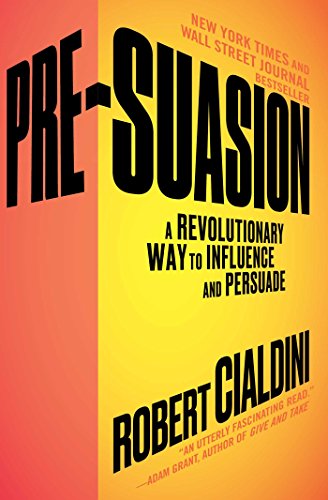
Pre-Suasion: A Revolutionary Way to Influence and Persuade
Robert B. Cialdini
Cialdini's 2016 follow-up argues that what happens before a message lands is as important as the message itself. The concept of 'privileged moments' — capturing attention in a way that primes receptivity — reframes how to think about campaign sequence and placement.
-
05
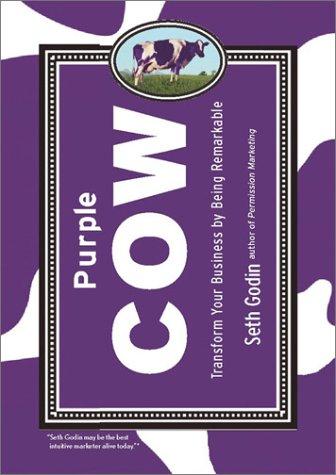
Purple Cow: Transform Your Business by Being Remarkable
Seth Godin
Godin's core argument: in a world of advertising clutter, the only marketing that works is being remarkable enough that people talk about you. The cow metaphor is simple; the strategic implication — build the remarkable in, don't add marketing on top — took the industry years to absorb.
-
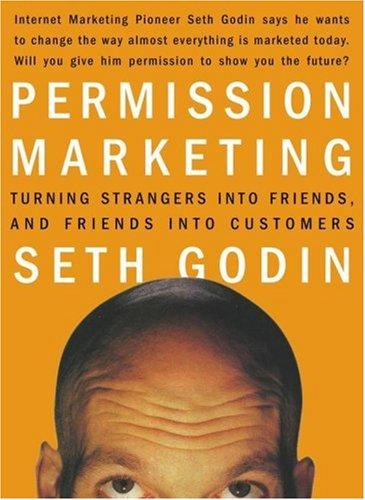
06
Seth Godin
Godin's earlier book, written at the dawn of email marketing, that defined the paradigm shift from interruption to permission. Still the clearest articulation of why earning the right to communicate with customers is a fundamentally different business model than buying their attention.
-
07
Seth Godin
Godin reframes the marketer's job as storytelling: customers don't buy products, they buy the story the product lets them tell about themselves. The examples date, but the frame — authentic stories that match the customer's worldview — has only gotten more relevant.
-
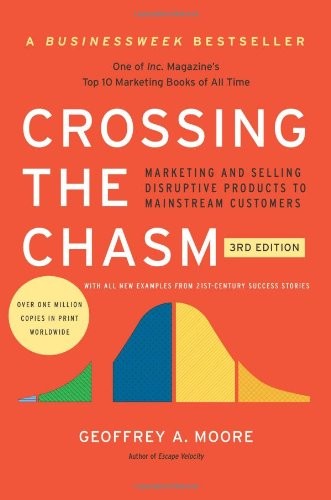
08
Geoffrey A. Moore
Moore's strategic map for technology adoption remains essential for anyone selling to enterprises or niche early-adopter markets. The chasm between visionaries (who buy on potential) and pragmatists (who buy on references) explains why most B2B startups stall at the same point.
-
09
Contagious: Why Things Catch On
Jonah Berger
Berger's research-backed framework — STEPPS (Social Currency, Triggers, Emotion, Public, Practical Value, Stories) — explains why some ideas, products, and messages spread while others don't. Empirical rather than anecdotal, which makes it more reliable than most word-of-mouth advice.
-
10
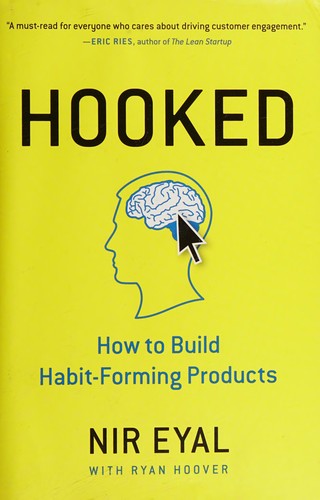
Hooked: How to Build Habit-Forming Products
Nir Eyal
Eyal's Hook Model (Trigger → Action → Variable Reward → Investment) is the standard framework for designing habit-forming products. Explains why Instagram, Slack, and TikTok generate the usage patterns they do, and how to engineer the same loops deliberately.
-
11
Sean Ellis and Morgan Brown
Sean Ellis — who coined 'growth hacking' — and Morgan Brown explain the cross-functional growth team model: small squads running data-driven experiments across acquisition, activation, retention, and revenue. The most practical guide to the discipline that reshaped Silicon Valley product development.
-
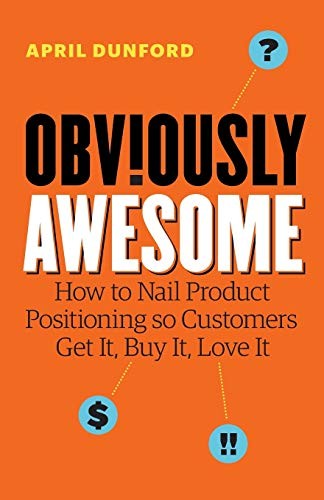
12
April Dunford
April Dunford's hands-on guide to positioning for B2B products. Where Ries and Trout are conceptual, Dunford is operational: she gives you a five-component framework and a process for running a positioning workshop with your team. The clearest modern treatment of the craft.



More about this list
This list moves through the field roughly chronologically by intellectual era. Ries and Trout laid the conceptual foundation in the 1980s: positioning is about owning a word in the prospect's mind, not about product features. Their 22 Immutable Laws sharpened that into practical rules. Cialdini's Influence arrived in 1984 and gave marketers a vocabulary for the psychological levers that underlie every persuasive message — scarcity, social proof, reciprocity — and Pre-Suasion (2016) shows the frame matters as much as the message.
In the internet era, Seth Godin reoriented the entire field around permission and ideas worth spreading. Purple Cow argued that remarkable products market themselves; All Marketers Are Liars argued that what marketers really sell is a story the customer tells herself. Crossing the Chasm addressed the harder problem: how a new technology product crosses from early adopters to the mainstream market — still the best strategic map for B2B and enterprise sales.
The data-driven growth era brought a new vocabulary. Hacking Growth codified the growth team model (cross-functional squads running rapid experiments) that companies like Facebook, Uber, and Airbnb used to scale. Product Led Growth takes that further, arguing the product itself should be the primary acquisition channel. The Cold Start Problem is the most rigorous treatment of network effects and how products escape the cold-start trap.
Running through all of this: behavioral economics. Predictably Irrational and Contagious explain why people share and buy in ways that defy the rational-actor model. Hooked explains how the best consumer products engineer habits. Together, these books form a coherent arc — from positioning the offer, to earning attention, to building the loop that keeps customers coming back.
