
Topic · 10 books
The best books on money and psychology
Money and psychology is the study of how emotions, cognitive biases, childhood conditioning, and social comparison shape financial decisions far more than spreadsheets or interest-rate theory ever could. The field draws on behavioral economics, clinical psychology, and personal finance practice to explain why people overspend despite knowing better, avoid investing out of anxiety, and repeat destructive financial patterns across decades. Understanding it doesn't just explain bad decisions — it maps the internal terrain that any durable money behavior change has to work with.
-
01
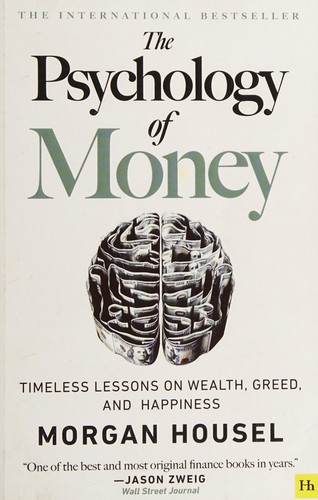
Morgan Housel
Housel's central argument — that doing well with money depends more on behavior than knowledge — is the thesis that organizes this entire list. His chapters on 'reasonable' vs. 'rational' financial decisions and the role of personal history in shaping risk tolerance are particularly precise.
-
02
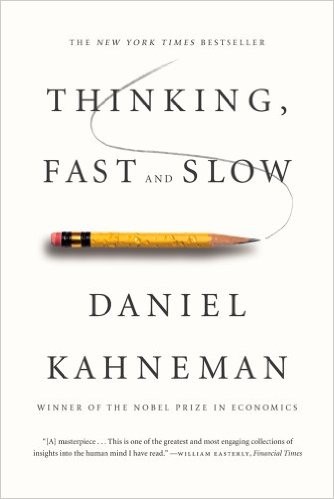
Daniel Kahneman
Kahneman's System 1 / System 2 framework is the foundation for most of what the money-psychology field borrows from behavioral economics. Prospect theory — the asymmetry between how losses and gains are experienced — is the single most important insight for understanding why investors sell at market bottoms.
-
03
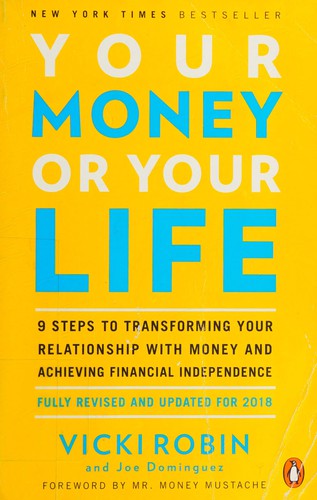
Vicki Robin
Robin and Dominguez reframe the core question from 'how do I manage money?' to 'what is money exchanged for?' The life-energy accounting method they introduce is less a budgeting tool than a values-clarification exercise — one that makes the link between spending and identity concrete and trackable.
-
Read these with Superbook
Chat with any book on this list — ask questions, get answers tuned to you.
-
04
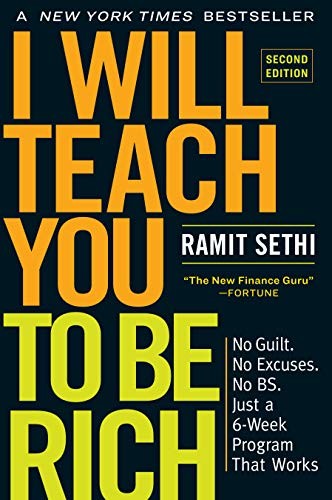
Ramit Sethi
Sethi's contribution to money psychology is behavioral rather than analytical: he designs financial systems that work with human laziness and inconsistency rather than against them. His argument that automation beats willpower as a financial strategy is well-supported by the literature on ego depletion and habit formation.
-
05
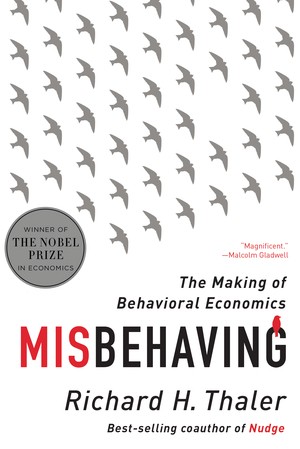
Misbehaving: The Making of Behavioral Economics
Richard H. Thaler
Thaler's memoir of behavioral economics includes his foundational research on mental accounting — why people treat money differently depending on where it came from or what mental 'bucket' it sits in. This explains a range of irrational money behaviors, from gambling with winnings to refusing to sell losing stocks.
-
06
Jason Zweig
Zweig, the Wall Street Journal's investing columnist, applies neuroscience research directly to investor behavior — showing how the brain's reward circuits activate during bull markets and threat circuits during crashes, producing the buy-high sell-low pattern. More technically grounded than most popular books in this space.
-
07
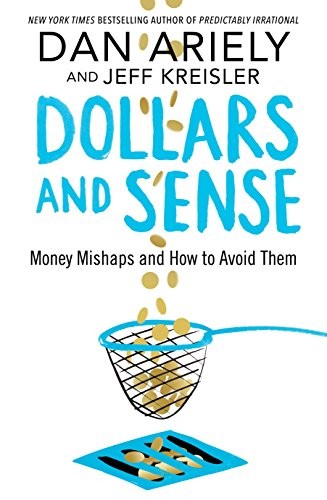
Dan Ariely
Ariely and Kreisler's book on money irrationality covers pain of paying, opportunity cost neglect, and the psychology of credit card spending. It extends Ariely's earlier research into financial contexts specifically, and the experiments here are among the most readable in the genre.
-
08
Claudia Hammond
Klontz and Klontz introduced the concept of money scripts — inherited, often unconscious beliefs about money formed in childhood — and this book is the clearest account of the four script types: money avoidance, money worship, money status, and money vigilance. The clinical case material grounds the theory in ways that purely empirical books don't.
-
09
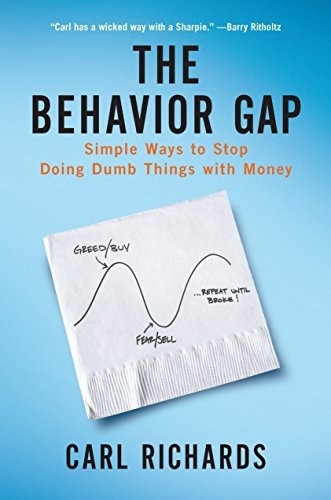
Carl Richards
Carl Richards, a financial planner, uses simple sketches to map the distance between what people know they should do with money and what they actually do. His treatment of financial decisions as emotional events first and numerical events second is practically useful in a way that academic behavioral finance rarely is.
-
10
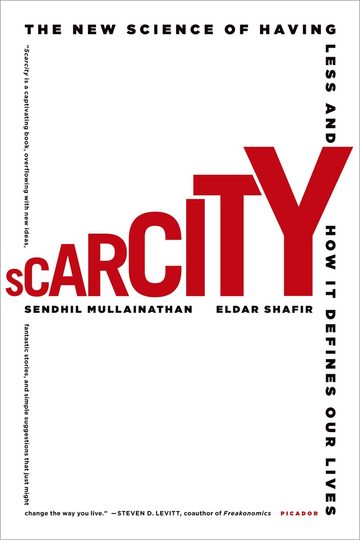
Scarcity: Why Having Too Little Means So Much
Sendhil Mullainathan and Eldar Shafir
Mullainathan and Shafir's research on cognitive bandwidth shows that financial scarcity — not just poverty but any experience of not having enough — tunnels attention in ways that make long-term planning harder and short-term mistakes more likely. It reframes willpower-based explanations of financial failure without excusing the structural causes.

More about this list
The arc of this list moves from behavior to belief to system.
It starts with the empirical: Housel's observation that financial outcomes depend less on intelligence than on temperament and time horizon, and Kahneman and Tversky's downstream influence on how we understand loss aversion and the way framing warps choices about money. Ariely's work on mental accounting and Thaler's on the endowment effect sit in this empirical layer too — they explain why people treat a tax refund differently from a salary, and why losses feel roughly twice as painful as equivalent gains.
The list then moves into clinical and identity territory. Klontz's research on money scripts — the unconscious beliefs inherited from family that drive financial self-sabotage — represents the most direct bridge between therapy and personal finance. Mullainathan and Shafir's scarcity research (not in our catalog yet) extends this into cognitive bandwidth: poverty and financial stress don't just result from bad decisions, they impair the mental resources needed to make better ones.
The final layer is prescriptive but grounded. Robin's Your Money or Your Life asks the question that reframes everything: what is money actually for? Sethi's approach is behavioral rather than budgetary — automate the infrastructure, reduce decision friction, stop relying on willpower. Zweig's Your Money and Your Brain maps the neuroscience of investor irrationality. Together, these books don't converge on a single program; they converge on the insight that money psychology is personal, not generic, and that self-knowledge is the leverage point.
