
Reading list · 13 books
Brené Brown's reading list
Brené Brown is a research professor at the University of Houston who has spent more than two decades studying courage, vulnerability, shame, and empathy. Her TED talk on vulnerability is one of the most-watched ever recorded, and her books — including Daring Greatly, The Gifts of Imperfection, and Atlas of the Heart — have made her research accessible to millions. On her podcasts Unlocking Us and Dare to Lead, she regularly names the books that shaped her thinking and that she returns to in her work with leaders and organizations.
-
01
Viktor E. Frankl
Brown has called this one of the books she recommends most often — Frankl's concept of choosing meaning inside suffering maps directly onto her research on resilience and post-traumatic growth. She references it across multiple Unlocking Us episodes when discussing what wholehearted living actually costs.
-
02
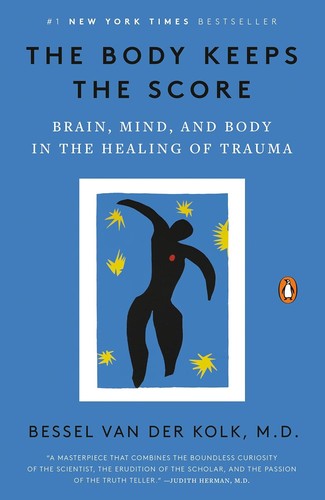
Bessel van der Kolk
Van der Kolk's research on trauma and the nervous system underpins Brown's understanding of why shame is not merely cognitive. She has cited it in her Dare to Lead work to explain why vulnerability practices that ignore embodied experience tend to fail in organizations.
-
03
When Things Fall Apart: Heart Advice for Difficult Times
Pema Chödrön
Pema Chödrön's teaching on groundlessness — sitting with discomfort rather than leaping to resolution — is one Brown returns to explicitly in discussions of uncertainty and courage. She has recommended it on Unlocking Us as the book she reaches for when clients are in the middle of a freefall.
-
Read these with Superbook
Chat with any book on this list — ask questions, get answers tuned to you.
-
04
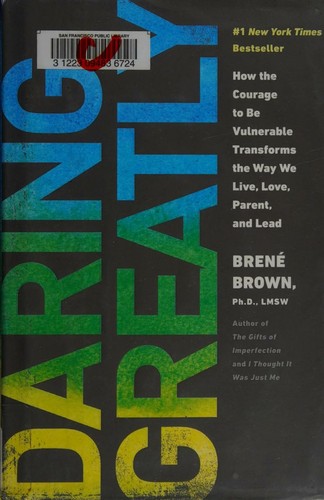
Brené Brown
Brown's own breakthrough book, which brought her vulnerability research to a mainstream audience and introduced the armor metaphors she would develop further in Dare to Lead. It remains the clearest synthesis of her first decade of shame and vulnerability research.
-
05
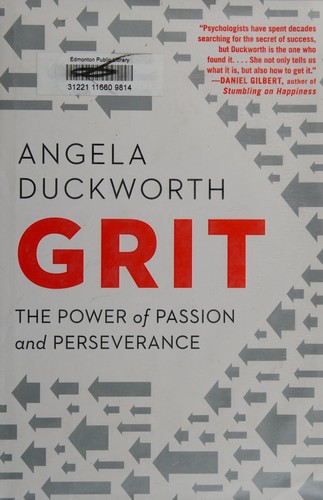
Grit: The Power of Passion and Perseverance
Angela Duckworth
Duckworth's work on perseverance and passion is something Brown has discussed in the context of what she calls the 'valley of despair' — the messy middle of hard projects. She cites it as a corrective to the romanticized version of courage that ignores sustained effort.
-
06
Mindset: The New Psychology of Success
Carol S. Dweck
Dweck's fixed-versus-growth framework appears frequently in Brown's leadership work, particularly in her writing on how shame responses calcify into fixed self-concepts. Brown and Dweck have spoken together publicly about the overlap between shame resilience and growth mindset.
-
07
Elizabeth Gilbert
Gilbert's argument that creativity is not about suffering but about curiosity and permission is something Brown has endorsed as a counter-narrative to perfectionism. She has discussed it on Unlocking Us as a book that gave her language for the creative process she observes in her research participants.
-
08
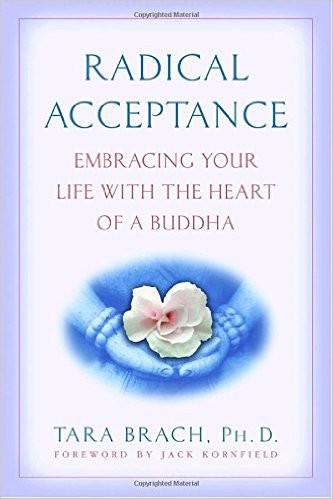
Tara Brach
Tara Brach's integration of Buddhist psychology and Western therapy resonates with Brown's emphasis on self-compassion as a prerequisite for courage. Brown has recommended it specifically for readers who recognize their patterns of self-judgment but cannot locate a way out.
-
09
Brené Brown
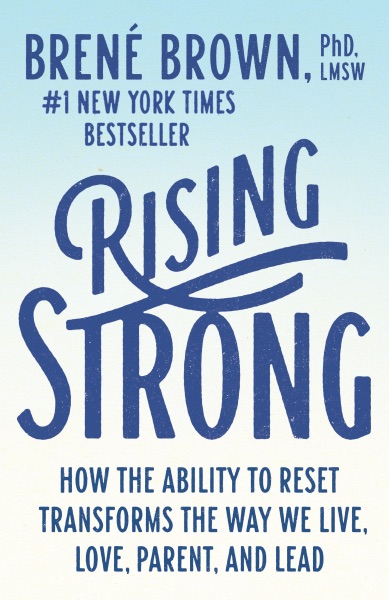
Brown's study of how people get back up after failure — what she calls the 'reckoning, rumble, and revolution.' It is arguably her most narrative-driven book, built from stories collected during a particularly difficult period in her own life following the viral success of her TED talk.
-
10
Brené Brown
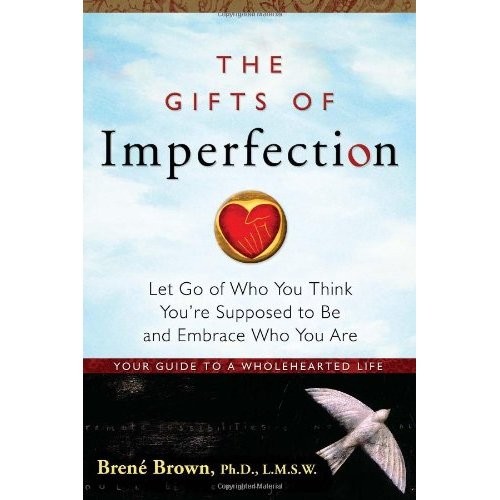
Her earlier, more personal book, written before the TED talk changed her public profile. It reads as a field guide for letting go of the perfectionism and people-pleasing she documented in her early shame research, and it remains the entry point she most often recommends to new readers.
-
11
Brené Brown
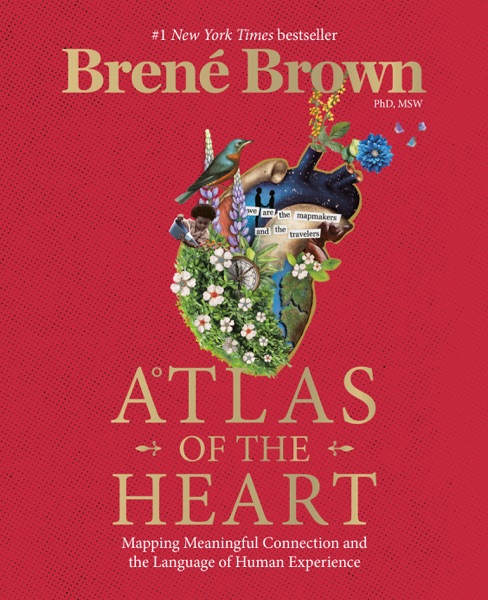
Brown's most recent major work — a mapping of 87 emotions and experiences, drawing on a decade of additional research. She has described it on her podcast as the book she needed to write before she could accurately name what she had been studying for twenty years.
-
12
I Thought It Was Just Me (but it isn't)
Brené Brown
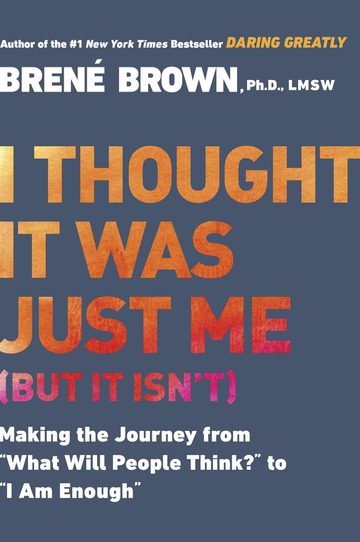
Brown's first mainstream book, emerging directly from her doctoral research on shame in women. Less widely read than Daring Greatly but more forensic in its analysis of how shame operates — she has called it the research foundation that everything else was built on.
-
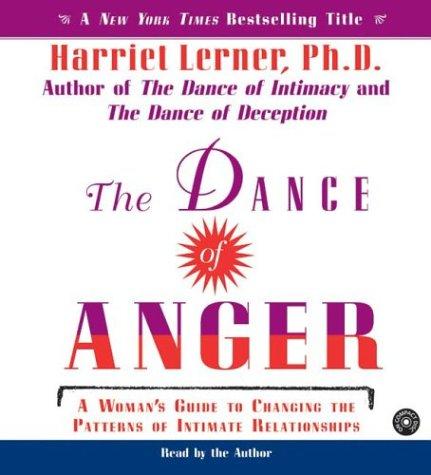
13
Harriet Lerner
Lerner's work on anger in relationships appears across multiple Brown podcast conversations as a book she returns to when discussing the connection between authentic expression and relational health. Brown sees Lerner's framework for functional anger as a companion to her own work on shame and vulnerability.




More on Brené Brown's picks
Brown draws from a wide intellectual tradition — trauma research, existential philosophy, developmental psychology, and mythology — to ground what might otherwise read as self-help in hard science and rigorous inquiry.
The books she returns to most often on her podcasts and in her writing tend to cluster around two questions: what does it mean to live wholeheartedly in the face of uncertainty, and how does shame operate as a social force? Frankl and Pema Chödrön address the first from opposite ends of the 20th century. The trauma literature — van der Kolk in particular — helped Brown understand why shame lives in the body and not just the mind.
Her own books on this list are included not as self-promotion but because they are the clearest record of how her thinking evolved: from the exhausted perfectionism of The Gifts of Imperfection, through the aftermath of failure in Rising Strong, to the granular emotional vocabulary project of Atlas of the Heart. Reading them in sequence is reading the research develop in real time.
The outliers — Duckworth on grit, Dweck on mindset, Gilbert on creativity — she has cited repeatedly as books she gives to people who are stuck between who they are and who they want to become. Harriet Lerner's work on anger and connection appears throughout Brown's discussions of relational boundaries and honest communication.
