
Topic · 12 books
Essential Investing reading list
Investing has two distinct traditions that rarely talk to each other: the value school, which holds that patient analysis of intrinsic worth beats the market, and the index school, which holds that no one can consistently beat the market and you should stop trying. Reading across both — plus the behavioral research that explains why both camps are partly right — gives a more complete picture than either tradition offers on its own. This list traces the canon from Graham's margin of safety through Bogle's case for indexing, Housel's account of the psychology that derails both approaches, and Dalio's macro framework for navigating debt cycles.
-
01
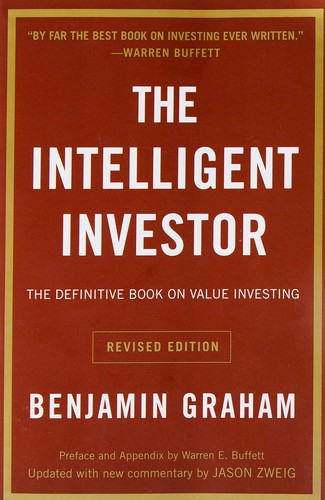
Benjamin Graham
Graham's 1949 classic, revised by Jason Zweig. The chapter on Mr. Market — the moody business partner who offers to buy or sell at different prices every day — is the most durable single idea in investment writing. The defensive investor chapters hold up better than the enterprising ones.
-
02
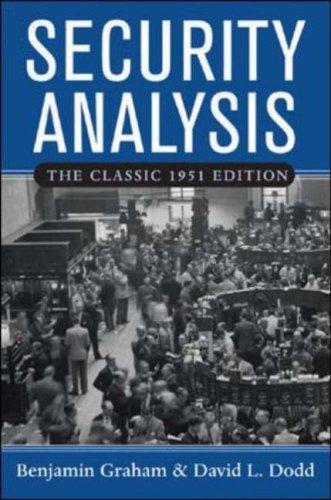
Benjamin Graham
Graham and Dodd's original 1934 text, substantially harder than The Intelligent Investor. Worth reading for the historical context — written in the aftermath of the 1929 crash — and for the chapters on bond analysis that never made it into the popular version.
-
03
Charlie Munger
Munger's collected talks and essays, assembled by Peter Kaufman. The Almanack is where Buffett's analytical framework gets its philosophical underpinning: the lattice of mental models, the virtue of inversion, the insistence on understanding the domain rather than memorizing formulas.
-
Read these with Superbook
Chat with any book on this list — ask questions, get answers tuned to you.
-
04
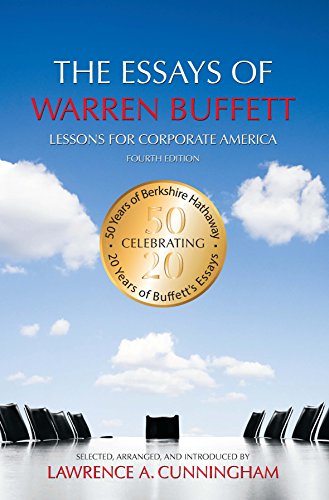
Warren Buffett
Lawrence Cunningham's arrangement of Buffett's annual letters by theme rather than chronology. The sections on accounting, management quality, and the nature of competitive moats make this the most efficient distillation of Buffett's thinking on what makes a business worth owning.
-
05
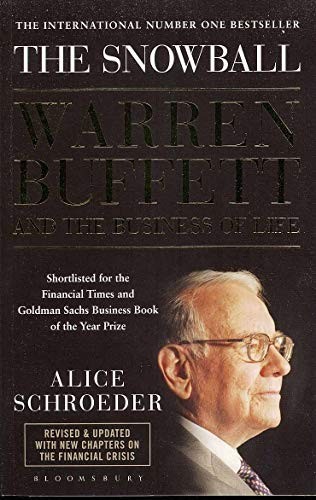
The Snowball: Warren Buffett and the Business of Life
Alice Schroeder
Alice Schroeder's authorized biography. Long, but the investment decisions are narrated with specificity that no other Buffett book matches — you see the actual reasoning, including the mistakes, rather than the retrospective justifications.
-
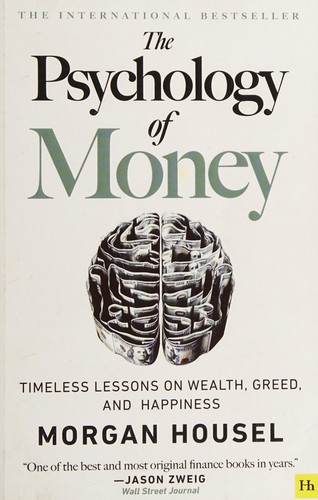
06
Morgan Housel
Morgan Housel's 19 short essays on the behavioral and psychological forces that determine financial outcomes. The chapter distinguishing getting wealthy from staying wealthy is the clearest statement of why the skills are different and why most people conflate them.
-
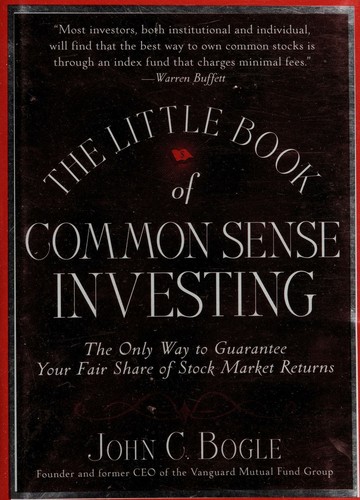
07
The Little Book of Common Sense Investing
John C. Bogle
Bogle's case for index funds in book form. The core argument — that costs compound against the investor just as returns compound for them, and that active management reliably underperforms after fees — is backed by decades of data and has only gotten stronger since publication.
-
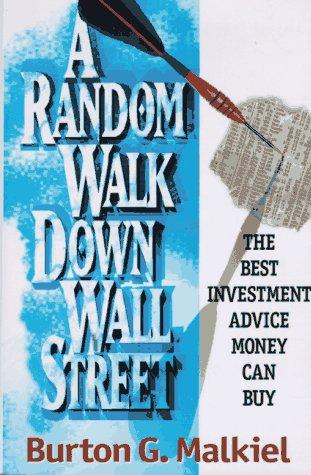
08
A Random Walk Down Wall Street
Burton G. Malkiel
Malkiel's academic case for market efficiency, updated through multiple editions. The first two thirds — the historical bubbles, the technical analysis critique, the efficient market hypothesis — are the most durable. His asset allocation chapters are less original.
-
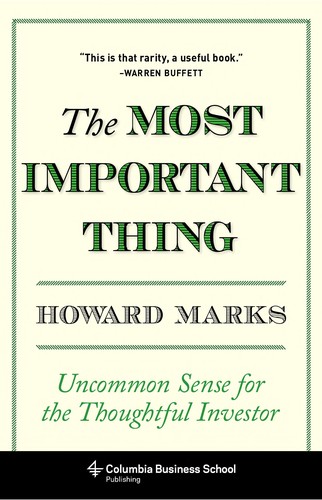
09
Howard Marks
Howard Marks distills the memos he has sent to Oaktree clients for decades into a single argument: superior investing is about second-level thinking — not 'this is a good company' but 'the market thinks this is a good company and I think they're wrong.' The book on investment temperament.
-
10
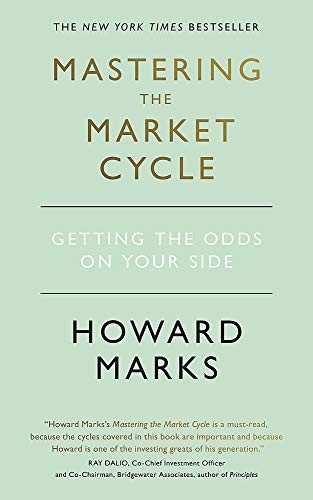
Howard Marks
Marks's follow-up goes deeper on where in the cycle the market is and what that implies for risk-taking. Less prescriptive than it sounds — his point is calibration rather than market timing — and the chapter on the credit cycle is especially relevant after 2008.
-
11
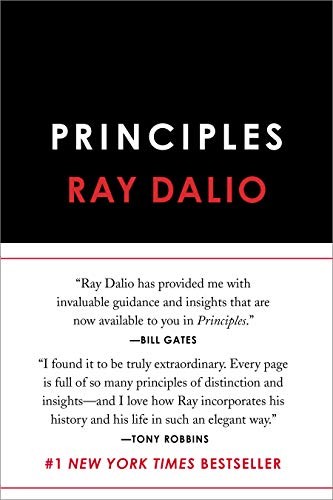
Ray Dalio
Dalio's investment principles occupy the second half of this book, preceded by his unusual autobiography. The template of 'pure alpha' overlaid on 'beta' and his systematic approach to tracking the debt cycle are the most original ideas here, even if the corporate-culture sections haven't aged well.
-
12
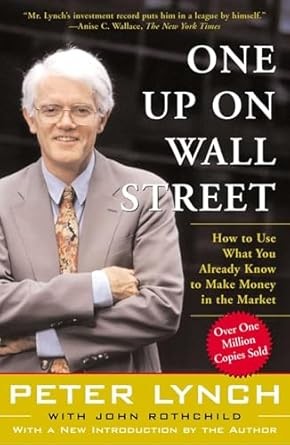
Peter Lynch
Peter Lynch's account of how retail investors can beat professional fund managers by knowing their own consumer habits before Wall Street does. More useful as a framework for how to think about competitive advantage than as a literal guide to stock-picking.

More about this list
The list starts with Benjamin Graham, whose Security Analysis and The Intelligent Investor established the vocabulary that everyone in this field still uses — intrinsic value, margin of safety, Mr. Market. Every book written after 1949 on stock-picking is in dialogue with Graham whether or not it acknowledges him.
Warren Buffett extended Graham's framework in practice, and the books about Buffett (Snowball, The Warren Buffett Way, The Essays of Warren Buffett) are the best record of how the framework evolved under real conditions. Charlie Munger's Poor Charlie's Almanack adds the second pillar: the multidisciplinary mental models that sit behind the investment decisions.
The behavioral turn comes in the middle of the list. Kahneman, Thaler, and Housel explain why investors — including professional ones — persistently underperform the indices. The Psychology of Money is the most useful single book for understanding why smart people do stupid things with their savings. It belongs before, not after, the value-investing canon.
John Bogle's case for indexing sits here as a counterweight: if markets are mostly efficient and costs compound, the sensible default for most people is to own the whole market at minimal cost. Malkiel's A Random Walk Down Wall Street makes the same argument more academically. Both are right about most investors, most of the time.
The list ends with macro and crisis. Dalio's Principles for Navigating Big Debt Crises is the most systematic account of how leverage cycles work. Michael Lewis's The Big Short and Lowenstein's When Genius Failed are case studies in what happens when leverage unwinds. Howard Marks's The Most Important Thing and Mastering the Market Cycle tie the lessons together: the edge in investing is not a smarter valuation model but a better understanding of where in the cycle everyone else is.
