
Reading list · 12 books
Stewart Brand's reading list
Stewart Brand edited the Whole Earth Catalog from 1968 to 1972, founded the WELL online community, and co-founded the Long Now Foundation. His books — How Buildings Learn, The Clock of the Long Now, and Whole Earth Discipline — span architecture, deep time, nuclear energy, and genetic engineering. His reading taste is shaped by cybernetics, ecology, and an insistence that civilization-scale problems require civilization-scale thinking grounded in hard science.
-
01
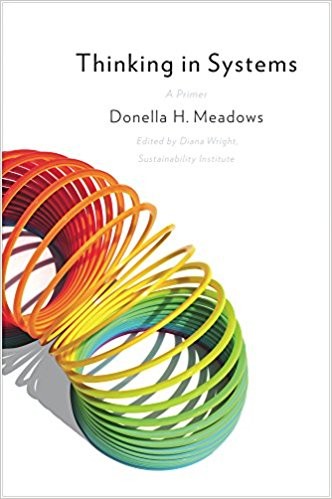
Donella H. Meadows
Donella Meadows's primer on systems dynamics is the closest thing the Whole Earth tradition has to a foundational text. Brand drew on systems thinking throughout his work; this book makes the feedback loops, stocks, and leverage points explicit in a way that changes how you read everything else.
-
02
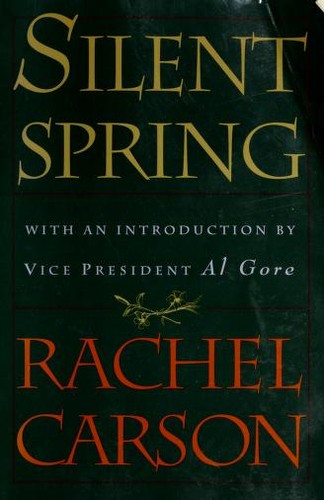
Rachel Carson
Rachel Carson's 1962 indictment of pesticide use is the book that made ecology a political issue. Brand came of age with it; his environmentalism has always been shaped by her empirical approach — show the data, name the mechanism, then let the implication land.
-
03
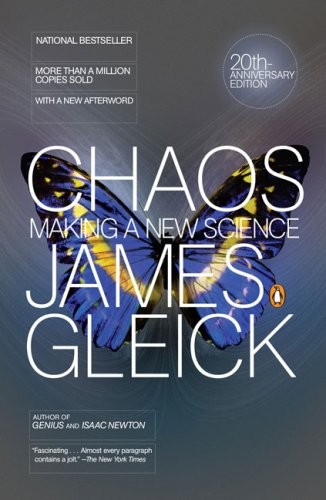
James Gleick
James Gleick's account of complexity and nonlinear dynamics tracks the same intellectual moment Brand was living through in the 1980s, when the Santa Fe Institute crowd began seeing order and turbulence as two sides of the same phenomenon. Gleick writes the history of ideas the way Brand curates them: sideways, through the people.
-
Read these with Superbook
Chat with any book on this list — ask questions, get answers tuned to you.
-
04
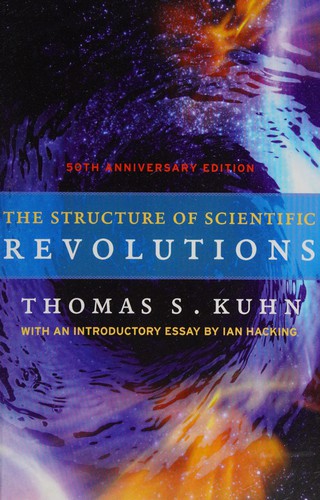
The Structure of Scientific Revolutions
Thomas S. Kuhn
Kuhn's argument that science advances through paradigm shifts rather than steady accumulation has been a touchstone for Brand since the Whole Earth era. It provided intellectual permission for the catalog's eclecticism: if the dominant paradigm is always provisional, then heterodox tools and ideas deserve shelf space.
-
05
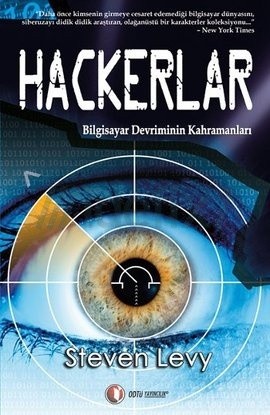
Hackers: Heroes of the Computer Revolution
Steven Levy
Steven Levy's account of hacker culture from MIT to the Homebrew Computer Club covers the same milieu Brand helped create. He appears in the book and wrote about this world in his own work. For readers who want the social history behind the machines, this is the primary source.
-
06
The Electric Kool-Aid Acid Test
Tom Wolfe
Tom Wolfe's portrait of Ken Kesey and the Merry Pranksters is a document of the world Brand inhabited before the Whole Earth Catalog. He appears in it. The book captures both the utopian energy and the internal contradictions of the counterculture Brand would spend decades translating into practical tools.
-
07
Jared Diamond
Jared Diamond's deep-time explanation of why some civilizations conquered others operates at the civilizational scale Brand has always cared about. The Long Now Foundation was built around the premise that we think too short; Diamond's ten-thousand-year frame is part of what Brand means by thinking long.
-
08
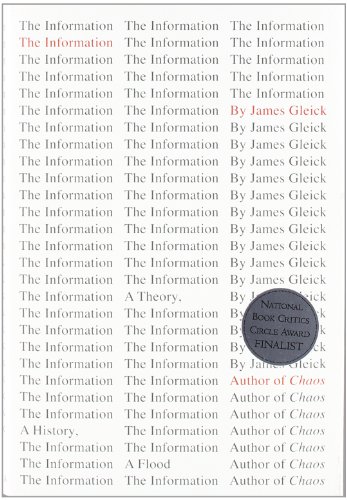
The Information: A History, a Theory, a Flood
James Gleick
James Gleick's history of information — from African drums to Claude Shannon — touches on every domain Brand has inhabited: communication, computing, ecology. Brand has cited Gleick's work repeatedly; this book traces the invisible medium that makes everything else in the list possible.
-
09
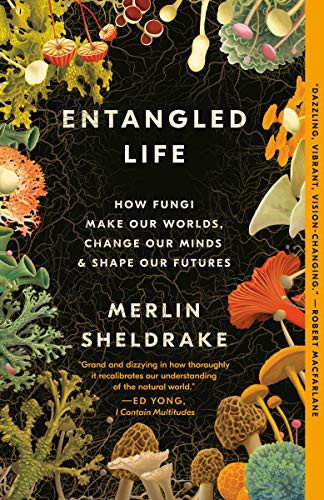
Entangled Life: How Fungi Make Our Worlds, Change Our Minds and Shape Our Futures
Merlin Sheldrake
Merlin Sheldrake's investigation of fungi as a distributed intelligence without a center is exactly the kind of science Brand gravitates toward: organisms that challenge the categories we use to organize life. Brand's ecology has always been interested in the edges where things refuse to be classified.
-
10
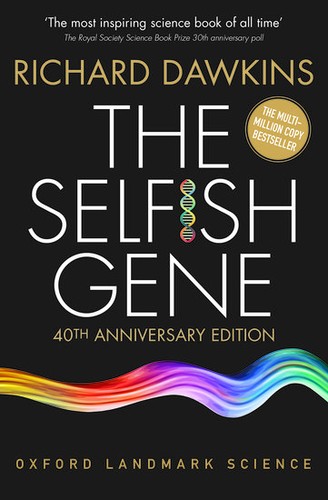
Richard Dawkins
Dawkins gave Brand a mechanism for evolution at the level of the gene, not the organism or the species. The meme concept — cultural replication by analogy — is the frame Brand used to think about how ideas spread through the Whole Earth network and beyond.
-
11
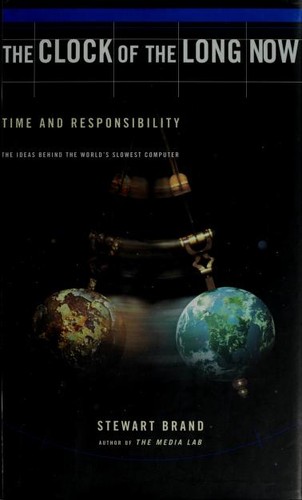
Stewart Brand
Brand's own argument for ten-thousand-year thinking, built around the Long Now Foundation's project to construct a mechanical clock that will run for a millennium. It is the clearest statement of his civilizational design philosophy: institutions and artifacts can be built to outlast the attention spans of their makers.
-
12
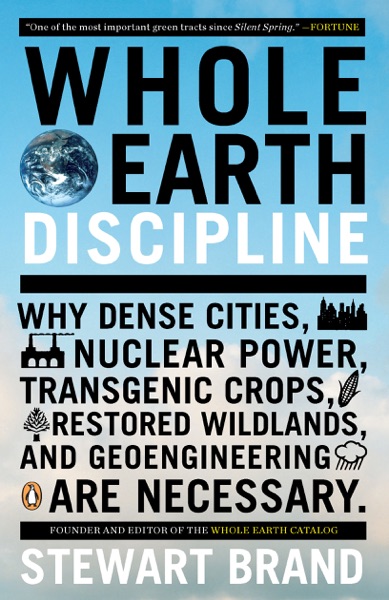
Stewart Brand
Brand's 2009 pivot on environmentalism — arguing for nuclear power, dense cities, and genetic engineering as tools for planetary stewardship. It is the book where his empirical environmentalism most explicitly breaks with movement orthodoxy, and where the reading list behind the Whole Earth Catalog becomes a reading list for the Anthropocene.

More on Stewart Brand's picks
Brand's list reflects someone who has spent decades at the hinge between counterculture and technology. The Whole Earth Catalog was itself a curated reading list — a tool-access guide for people who wanted to shape their own lives and, by extension, the planet. What ties these books together is a commitment to systems over symptoms: you don't fix the stream by pulling trash out; you understand the watershed.
The early picks — systems thinkers, evolutionary biologists, historians of science — lay the conceptual ground. The middle cluster moves into the built environment and computing, where Brand has spent most of his working life. The final books address long-horizon concerns: climate, genetic change, and institutional decay. Brand has said he distrusts both cornucopianism and doom; what he looks for in a book is someone who takes the evidence seriously and follows it wherever it leads.
